K'taka HC stays order directing Ola to pay compensation to woman for 'sexual harassment' by driver
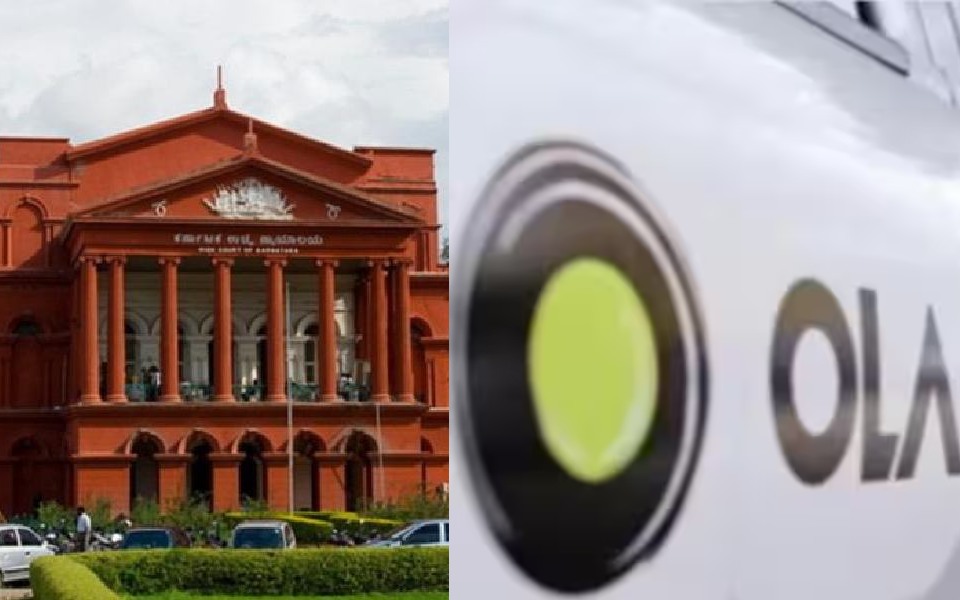
Bengaluru, Oct 5: The Karnataka High Court has stayed a single judge order, directing app-based cab aggregator Ola to pay a compensation of Rs 5 lakh to a woman who alleged sexual harassment by an Ola driver in 2019.
A division bench of Justices S R Krishna Kumar and M G Uma passed an interim order on ANI Technologies Private Limited's (Ola) appeal against the single judge verdict dated September 30.
In his verdict, the single judge bench had held that the relationship between ANI Technologies Private Limited (Ola) and its drivers was that of employer-employee.
He had directed Ola and its Internal Complaints Committee (ICC) to pay a compensation of Rs 5 lakh, along with Rs 50,000 in legal costs, to the woman who had filed the sexual harassment complaint against the driver.
The judge had also termed as 'unjustified' Ola’s refusal to act on the complaint based on the claim that drivers are not employees under the Sexual Harassment of Women at Workplace (Prevention, Prohibition and Redressal) Act, 2013 (PoSH Act).
Subsequently, the company filed a writ appeal challenging the ruling of the single judge, which required Ola to address complaints of sexual harassment involving its drivers.
During the hearing on Friday, senior advocate Dhyan Chinnappa, representing Ola, argued that the earlier judgment had erred in establishing an employer-employee relationship.
He contended that drivers merely use Ola’s platform to offer cab services and are not direct employees of the company.
Let the Truth be known. If you read VB and like VB, please be a VB Supporter and Help us deliver the Truth to one and all.
UP SIR: Over 84 lakh voters added in final list, total electorate rises to 13.39 crore
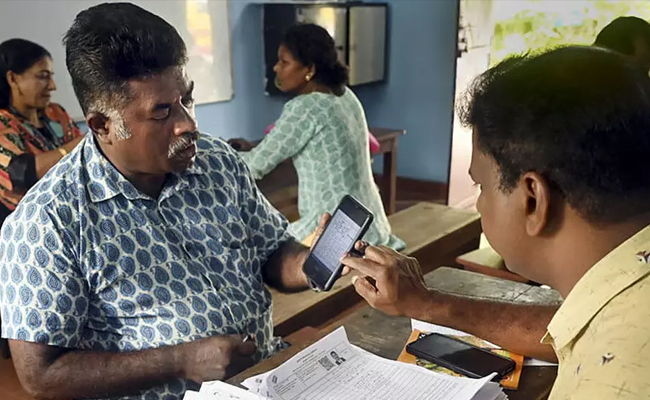
Lucknow (PTI): Uttar Pradesh's electorate grew by over 84 lakh to 13.39 crore after the completion of the Special Intensive Revision (SIR), according to the final voter list published on Friday.
Addressing a press conference at the Lok Bhawan Media Centre here, Uttar Pradesh's Chief Electoral Officer Navdeep Rinwa said the SIR exercise was conducted from October 27, 2025, to April 10, 2026, covering all 75 districts, 403 assembly constituencies and polling stations across the state.
He said the 166-day exercise was carried out with the contribution of 75 District Election Officers (DEOs), 403 Electoral Registration Officers (EROs), 12,758 Assistant EROs, 18,026 BLO supervisors and 1,77,516 Booth Level Officers (BLOs). In addition, 5,82,877 booth-level agents of recognised political parties and crores of voters extended cooperation.
Print, electronic and digital media also played a key role in awareness efforts, he added.
Rinwa said the draft electoral roll published on January 6, 2026, had a total of 12,55,56,025 voters, including 6.88 crore male voters, 5.67 crore female voters and 4,119 third gender voters.
The number of voters in the 18-19 age group stood at 3,33,981, while the gender ratio was 824 female voters per 1,000 male voters.
The final electoral roll published on April 10 shows the total number of voters at 13,39,84,792, he said.
Of these, male voters number 7,30,71,071 (around 54 per cent), female voters 6,09,09,525 (45.46 per cent) and third gender voters 4,206 (less than 0.01 per cent).
The number of voters in the 18-19 age group has risen to 17,63,360, accounting for 1.32 per cent of the total electorate. The gender ratio has also improved to 834 female voters per 1,000 male voters.
Comparing the draft and final rolls, Rinwa said the total increase in the number of voters is 84,28,767. This includes an increase of 42,27,902 male voters, 42,00,778 female voters and 87 third gender voters.
The 18-19 age group registered a rise of 14,29,379 voters, while the gender ratio improved by 10 points from 824 to 834, he said.
Among districts, Prayagraj recorded the highest increase in voters at 3,29,421, followed by Lucknow at 2,85,961, Bareilly at over 2,57,000, Ghaziabad at 2,43,666 and Jaunpur at 2,37,590.
The CEO said the successful completion of the revision exercise reflects coordinated efforts by election officials, political parties and voters across the state.