K'taka readies to implement by November NEP for children above 3 years of age
pilot project in 20K anganwadis
Bengaluru, Aug 25: Karnataka is preparing to implement by November the National Education Policy (NEP) under the early childhood education component for those aged above 3 years. In the first phase, the NEP would be rolled out in 20,000 anganwadis/schools.
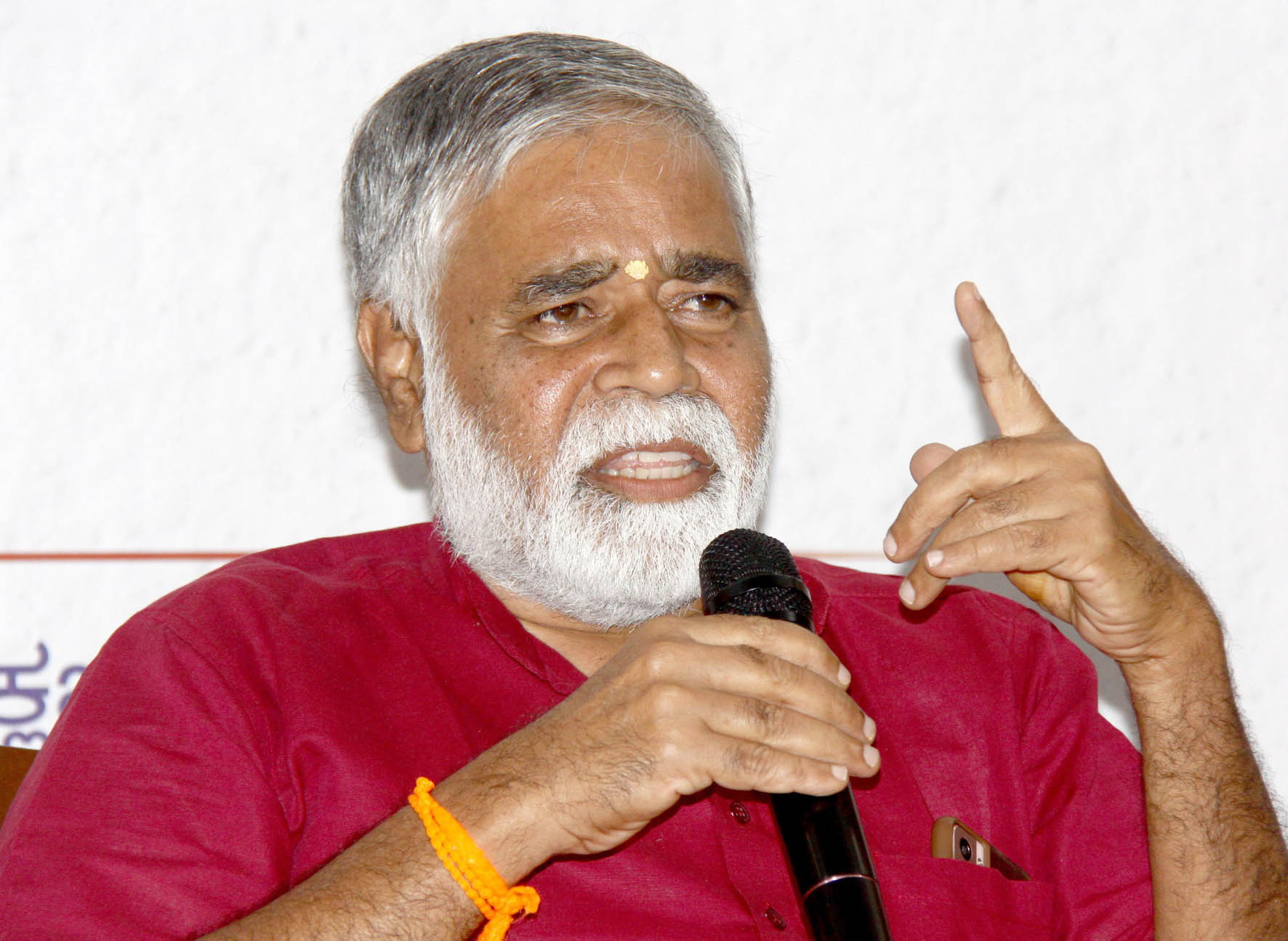
School Education and Literacy Minister B C Nagesh and Women and Child Development Minister Halappa Achar said this on Thursday in a joint press conference.
Stating that the National Curriculum Framework (NCF) from the Union Education Ministry is expected in September, Nagesh said after that, the State's curriculum framework would be finalised in October, and expert teams were already working on it, "and if things go as planned we will do it by November in about 20,000 anganwadis/schools."
Once the State's curriculum framework is finalised, training would be given to anganwadi workers based on it, he said.
The NEP would be implemented by School Education and Literacy Department in partnership with the Department of Women & Child Development (DWCD).
There are 66,361 anganwadi centres in the State, Achar said. Among the anganwadi workers, 732 are postgraduates, 6,017 are graduates, 14,303 have completed pre-university education and 40,786 have completed SSLC (class 10).
There may be some constraints with respect to anganwadi workers with SSLC as their qualification, but efforts to train them would be made, he said. "Hence in the first phase, 20,000 anganwadis, where there are workers with PG, graduate or PUC as qualification, have been chosen."
About 14,000 anganwadi teachers have been trained by the Tata Foundation in the backward Kalyana Karnataka region, the Ministers said, adding that based on the qualification of the anganwadi workers it is intended to provide different types of training.
Let the Truth be known. If you read VB and like VB, please be a VB Supporter and Help us deliver the Truth to one and all.
No need for guv: DMK leader Kanimozhi
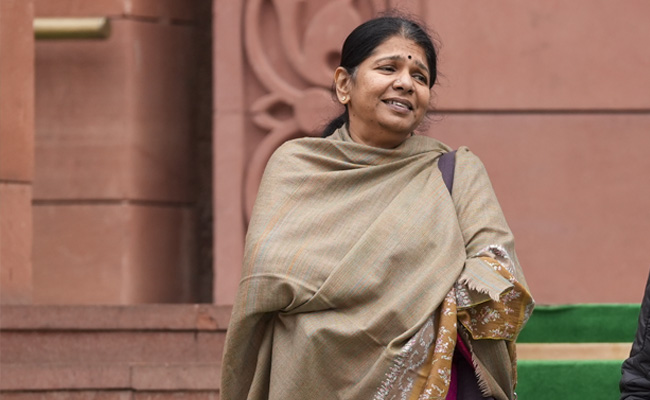
Chennai (PTI): Senior DMK leader Kanimozhi Karunanidhi on Friday reiterated her party’s opposition to the office of the governor amid uncertainty over government formation in Tamil Nadu after a fractured election mandate.
Speaking to PTI Videos, Kanimozhi emphasised that the DMK’s demand for the abolition of the governor’s post remained unchanged, especially as questions arise over constitutional propriety during the current political transition.
"Our position that we do not need a governor at all is something the DMK has never changed at any point in time," she said.
When asked about the governor’s actions following the election results—particularly the delay in inviting the leading party to form the government—Kanimozhi pointed to what she described as the "inherent friction" between the office of the governor and the political interests of the state.
She said the current situation "raises a lot of questions" and requires introspection regarding constitutional procedures.
Kanimozhi described the election results as lacking a "clear mandate", which she identified as the primary reason for the prevailing political uncertainty in the state.
"What the people decide is supreme," she said, adding that while the mandate was not decisive, it must be respected.
The Thoothukudi MP attributed the ongoing delays and "many confusions" to the absence of a decisive majority for any single party.
She firmly dismissed rumours about the DMK potentially supporting the AIADMK from outside to help stabilise the government.
She described such reports as mere "speculation" and "rumours".
"We can’t be responding to every rumour," she said, declining to comment on the AIADMK’s claims regarding its numbers to form the government.
The political situation in Tamil Nadu remains fluid as stakeholders await the governor’s next constitutional step in an Assembly where no party has secured a clear majority.
The DMK and AIADMK—both of which suffered significant losses to the TVK—are reportedly exploring tactical manoeuvres to navigate the hung Assembly.
The TVK, with 108 seats and the support of Congress’s five MLAs, is still short of the majority mark. The DMK and AIADMK secured 59 and 47 seats, respectively.