K'taka records highest per capita income in India with 93.6% decade-long growth: Report

Bengaluru: Karnataka has secured the top spot in per capita income in India for the fiscal year 2024–25, crossing the Rs 2 lakh threshold, according to data presented by the Ministry of Finance in the Lok Sabha.
The data, cited by The New Indian Express on Tuesday, showed that the state’s per capita Net State Domestic Product (NSDP) at constant prices has climbed to Rs 2,04,605.
Karnataka’s per capita income for 2024–25 is the highest among all states and union territories, followed by Tamil Nadu at Rs 1,96,309. Karnataka’s decade-long economic performance has outpaced most major states. Compared to 2013–14, when its per capita income stood at Rs 1,01,858, the state saw an 88.5% rise by 2023–24.
Meanwhile, India’s per capita Net National Income (NNI) rose from Rs 72,805 in 2014–15 to Rs 1,14,710 in 2024–25, reflecting a 57.6% increase over the decade.
In terms of decade-long growth, Karnataka ranks second in the country with a 93.6% increase, just behind Odisha, which recorded a 96.7% rise.
However, comprehensive national comparisons are limited due to missing data from several states and union territories as not all states have reported their figures for 2024–25. The per capita income data for Arunachal Pradesh, Goa, Gujarat, Jharkhand, Kerala, Mizoram, Nagaland, Sikkim, Tripura, Uttar Pradesh, Andaman and Nicobar Islands, Chandigarh, Delhi, and Ladakh, are marked as “Not Available” in the government’s reply, added TNIE.
While states like Karnataka have posted impressive economic gains, others have lagged significantly. Punjab, for instance, recorded only a 41.3% increase over the past decade, while Uttarakhand reported 33.5%, and Puducherry just 32.8%, the lowest among all reported states.
Let the Truth be known. If you read VB and like VB, please be a VB Supporter and Help us deliver the Truth to one and all.
Justice Swarana K Sharma starts contempt case against Kejriwal, Manish Sisodia over excise posts
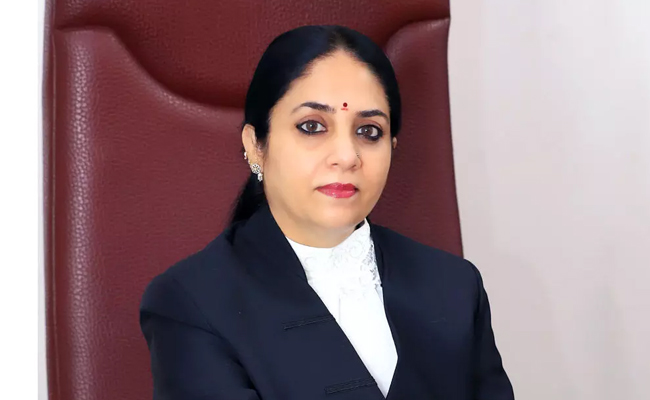
New Delhi (PTI): Delhi High Court judge Justice Swarana Kanta Sharma on Thursday initiated criminal contempt proceedings against AAP leaders Arvind Kejriwal, Manish Sisodia, Durgesh Pathak, Sanjay Singh, Saurabh Bhardwaj and others over their "vilifying" social media posts against her in relation to the excise policy case.
Justice Sharma said the former Delhi chief minister "orchestrated a calculated campaign" of vilification against her on social media instead of pursuing his legal remedies and clarified that the CBI's petition against the discharge of all accused persons would now be taken up by another bench.
The judge took exception to several social media posts by the proposed contemnors that attributed "political allegiance" to her and allegedly targeted her by posting a misleading "edited" video of a speech given by her at an educational institution in Varanasi.
"Arvind Kejriwal sought to destroy my reputation instead of availing legal remedies after I refused to recuse and a deliberate attempt to lower the court's authority can't be permitted in guise of free speech," Justice Sharma said.
She clarified that she was not recusing herself but was only transferring the case to another bench as she has initiated the contempt proceedings.
Solicitor General Tushar Mehta, appearing for CBI, thanked Justice Sharma for upholding the institution's dignity.