K'taka to convene inter-departmental meeting on food contamination
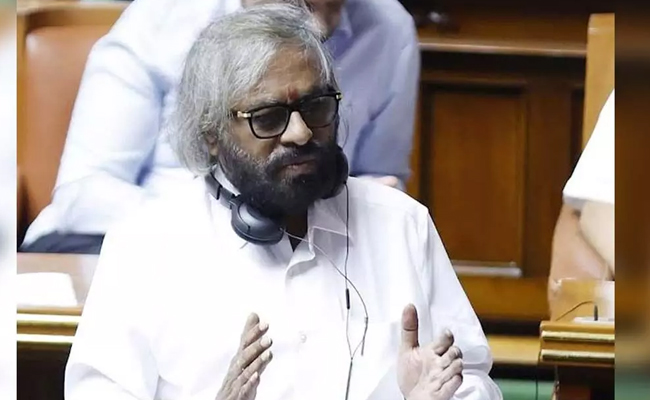
Bengaluru (PTI): The Karnataka government on Thursday said it would convene a meeting of all departments concerned and Bengaluru legislators to address concerns over rising food contamination, including chemicals and heavy metals found in vegetables, milk and poultry products.
Responding to a discussion in the Assembly, Forest and Environment Minister Eshwar Khandre said the government recognises the seriousness of pollution affecting food, air and water, particularly in the state capital Bengaluru.
"There is pollution in food, in air, in water and even in milk. In Bengaluru the problem is increasing day by day," Khandre said, adding that the government will call a meeting -- possibly next week , after consulting deputy Chief Minister DK Shivakumar to discuss the issue with legislators and experts.
He said pollution in water bodies and inadequate sewage treatment infrastructure were major causes. Bengaluru, with a population of about 1.4 crore, requires around 1,800 MLD (million litres a day) of sewage treatment capacity but currently has about 1,200 MLD, he said, noting that delays in building treatment plants and land constraints have worsened the situation.
The minister also pointed to issues such as solid waste management, untreated sewage flowing into lakes, construction-related pollution and the need for stronger public awareness on environmental protection.
The debate began after BJP MLA C N Ashwath Narayan raised concerns about food contamination, citing reports of high levels of heavy metals and pesticide residues being found in commonly consumed vegetables.
The Malleswaram MLA told the House that residues of more than 200 pesticides and over 11 heavy metals had been detected in vegetables and leafy greens.
"Levels of heavy metals like lead, chromium, copper and iron are more than 20 times higher than permissible limits in some samples, posing a serious threat to public health," Narayan, a former deputy CM, said.
According to him, vegetables such as beans, beetroot, cabbage, capsicum, chilli and cucumber showed alarming contamination levels.
The findings were based on studies conducted under directions from the National Green Tribunal and the Central Pollution Control Board, with participation from the state pollution control authorities and agricultural experts.
Leader of Opposition R Ashoka said food safety had become a serious public health concern in Bengaluru, pointing to a rise in lifestyle and organ-related diseases.
"Today milk, eggs, poultry and vegetables have all become a problem. We need a monitoring centre to test and regulate food quality," the BJP leader said.
Ashoka alleged that vegetables arriving from surrounding districts were often contaminated and said steroid use in poultry farming and polluted water used for fodder cultivation could also affect food safety.
He urged the government to create a monitoring mechanism involving departments such as agriculture, horticulture, veterinary services, health and the pollution control board.
Supporting the demand, Rural Development and Panchayat Raj Minister Priyank Kharge said the issue could not be handled by a single department.
"Agriculture, horticulture, fisheries and veterinary departments all have to work together because the food consumed in Bengaluru is produced in rural areas," Kharge said.
He noted that pollution of soil, air and water, pesticide residues, veterinary drugs and chemicals migrating from plastic food packaging could all contribute to contamination.
The government, he said, had already begun issuing orders to curb unsafe practices in food outlets, such as the use of artificial colouring in 'Kebabs' and plastic materials in cooking.
Kharge added that the state was working on a circular economy policy that includes sustainable waste management, recycling and grey-water treatment, while also expanding solid waste management initiatives in rural areas.
During the discussion, Ashwath Narayan also suggested adopting advanced sewage recycling technologies and improving tertiary treatment of wastewater to reduce contamination risks.
Khandre assured the House that the government would study the reports cited by legislators and hold consultations with relevant departments to formulate guidelines and preventive measures.
Let the Truth be known. If you read VB and like VB, please be a VB Supporter and Help us deliver the Truth to one and all.
Late flourish masks CSK’s batting woes on lively Chepauk track, hosts post 158/7
Chennai (PTI): Bowlers calling the shots in a format dominated by big hitters is a rarity, but that script played out at Chepauk on Sunday as Gujarat Titans exploited a lively, bounce-friendly surface to stifle Chennai Super Kings before the hosts managed a late flourish to reach 158 for 7.
On a pitch that offered sharp carry, stroke-making demanded discretion and adaptability. Instead, CSK’s batters often opted for high-risk shots without fully assessing conditions, and paid the price with a flurry of miscued dismissals.
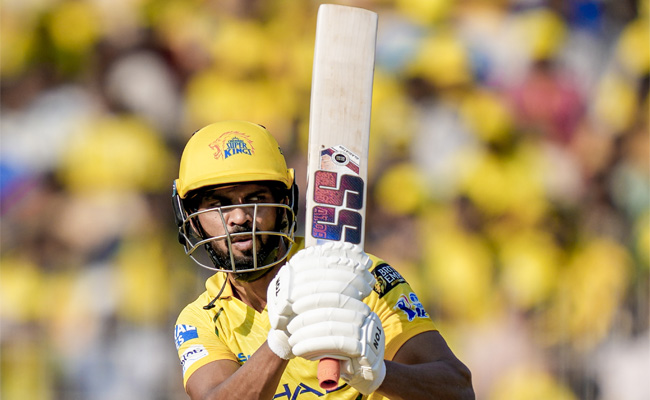
Invited to bat, CSK never quite found rhythm but skipper Ruturaj Gaikwad’s maiden half-century (74 not out) of the current IPL season lent a semblance of respectability to the total in a season where 200-plus scores have become commonplace.
Gaikwad's knock came off 60 balls with six fours and four sixes after a laboured start.
The tone was set early by GT pacer Mohammed Siraj, who extracted steep bounce and forced errors.
Sanju Samson (11) began watchfully, negotiating the first over before opening up against Kagiso Rabada to bring up his 5000 IPL runs milestone. However, Rabada’s bounce soon accounted for him as a hard slash outside off resulted in a faint edge that Jos Buttler pouched safely.
The dismissal triggered a collapse. Urvil Patel (4) fell in the same Rabada over attempting an ambitious pull, while Sarfaraz Khan (0) succumbed to Siraj’s extra lift, mistiming a short ball to offer a simple catch.
At 28 for 3 inside the Powerplay, CSK were already in trouble.
Gaikwad and Dewald Brevis (2) needed to rebuild, but the latter’s impatience against spinner Manav Suthar led to his downfall, holing out after failing to get to the pitch of the ball.
The mounting wickets forced Gaikwad into a shell — an approach that, while understandable, further stalled the momentum. His reluctance to improvise allowed dot balls to pile up, with CSK reaching 50 only in the 12th over.
The skipper eventually broke free, taking on Arshad Khan and Jason Holder with a couple of towering sixes, but the acceleration came too late.
Shivam Dube, dropped thrice on 6, 11 and 22, struggled for fluency before Arshad cleaned him up.
Kartik Sharma (15) and Jamie Overton (18) provided late impetus with a few lusty hits, but the damage had already been done.
On a pitch that rewarded discipline and smart shot selection, Titans' bowlers executed their plans to perfection, while CSK’s batters failed to read the conditions in time, a lapse that ultimately defined the innings.