Karnataka: Villagers lay siege to residence raided by forest department officials
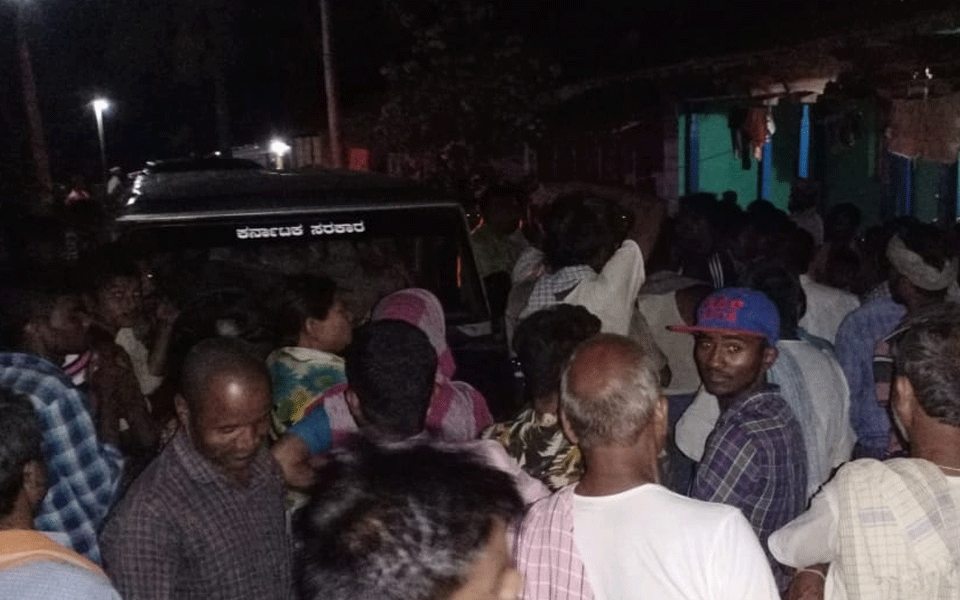
Mundagoda: In an incident that reportedly occurred on Friday night, Zonal officials and staff from the Forest Department had arrived at a residence in Kendalageri village to carry out a raid when the people of the village laid siege to the residence forcing the department’s officials to remain stuck inside in the house.
Reportedly, a local had informed the Forest Department that a resident of the village had indulged in deer hunting. Based on that information, the forest department staff had raided the latter’s house. However, they did not find any item in the house to indicate the claim. Angered by the raid, the villagers laid siege outside the residence forcing RFO Suresh Kullolli, who led the raid and other Forest Department staff to an inadvertent house arrest.
PSI Basavaraj Mabanur and police staff reportedly arrived at the village and placated the villagers. Later, while the police tried to take the Forest Department staff in their jeep, the villagers are said to have obstructed their path for another half an hour to stop the Forest Department officials from leaving. The villagers were adamantly demanding that the Forest Department officials reveal the identity of the informant who said that a villager had indulged in deer hunting, it is learned. ‘
After 1.5 hours of appealing and talks, the police reportedly managed to convince the villagers and take the Forest Department officials and staff away from the village.

Let the Truth be known. If you read VB and like VB, please be a VB Supporter and Help us deliver the Truth to one and all.
NEET student hangs self in Rajasthan's Sikar

Jaipur (PTI): A student preparing for the NEET examination allegedly committed suicide by hanging himself in a rented room in Rajasthan's Sikar on Friday, police said.
According to the police, the student allegedly hanged himself from a ceiling fan using his sister's scarf while one sister was attending coaching classes and the other was in the bathroom.
He had appeared in the NEET UG exam 2026, which was cancelled due to paper leak, they said.
Udyog Nagar SHO Rajesh Kumar said that the deceased, identified as Pradeep Meghwal, was a resident of Kanika ki Dhani village in Jhunjhunu's Gudha Gaudji area.
He had been living in a rented room in Sikar's Jaldhari Nagar area with his two sisters while preparing for NEET over the last three years.
His elder sister later found him hanging and informed the landlord and police after bringing him down, officials said.
The SHO said the body was kept at SK Hospital mortuary, and a postmortem had not been conducted.
The student's father, Rajesh Kumar Meghwal, told police that Pradeep's NEET examination had gone well and the family was expecting him to score around 650 marks.
Former Rajasthan deputy chief minister Sachin Pilot expressed grief over the incident and linked it to anxiety among students after reports of irregularities and paper leaks in NEET 2026.
Pilot said repeated paper leak incidents and cancellation of examinations were affecting students' mental health and demanded a time-bound investigation and strict action against those responsible.