Lab technician, ASHA worker suspended for issuing false COVID-19 certificates in Bengaluru
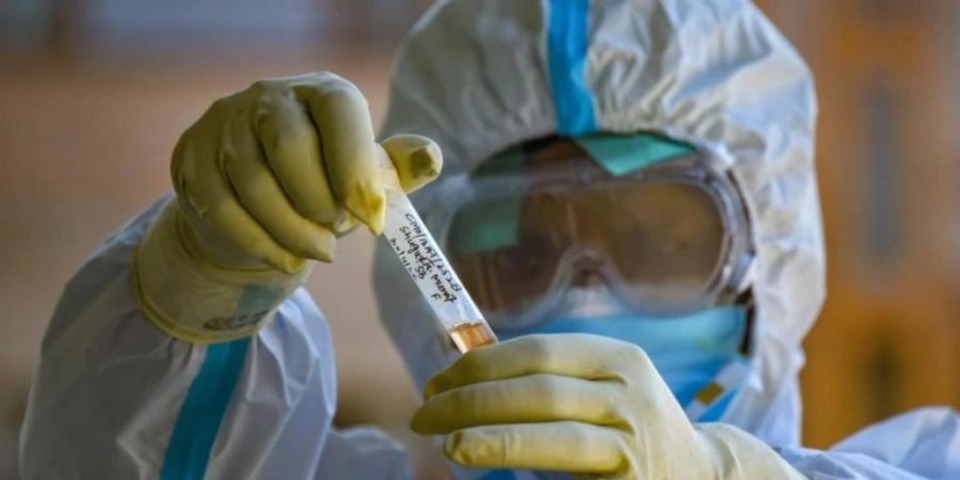
Bengaluru: A lab technician of a city civic body run hospital here and an ASHA health worker has been suspended for allegedly issuing false-negative COVID-19 certificates while Health Minister K Sudhakar on Tuesday assured steps to prevent such irregularities.
The Minister also said the government viewed the incident seriously and a criminal case would be filed against the two.
Speaking to reporters, Sudhakar said the issue of false-negative reports at the hospital came to his notice following which a team comprising joint commissioner and health officers was sent for inspection.
"An FIR will be registered against the lab technician who was on contract and the ASHA worker who were issuing negative COVID-19 reports," he said.
According to Bruhat Bengaluru Mahanagara Palike (BBMP) sources, the two had charged up to Rs 1,500 for a negative COVID-19 certificate to people whose samples turned positive.
In some cases, even tests were not done, they said.
Sudhakar said a strict regulation will be introduced to rectify loopholes and to make sure that such incidents were not repeated in the future.
"As a doctor, this incident has hurt me. It is a dishonor to the medical profession to make money through immoral ways," Dr. Sudhakar, a medical professional himself, added. PTI GMS SS VS
Let the Truth be known. If you read VB and like VB, please be a VB Supporter and Help us deliver the Truth to one and all.
Climate Change crisis: IMD to change parameters to declare heatwaves
Thiruvananthapuram (PTI): The IMD, along with its technical partners, will soon revise the criteria for declaring heatwave conditions in the country, as the present parameters do not suit India’s geographical conditions, according to official sources here.
Kerala, in particular, has faced difficulties in issuing heatwave warnings because of the limitations of the existing parameters.
Sources in the India Meteorological Department said the state experienced severe heat and humidity this summer and, for the first time, weather forecasts were made based on the anti-cyclone system that formed near the Karnataka–Maharashtra coast.
"We have never had an anti-cyclone system form closer to the South before, and this time we had to predict the weather based on it," a senior IMD official told PTI.
Anti-cyclonic systems are common over north-western parts of India, but this year one formed near the southern region, leading to unusually hot nights.
The anti-cyclone caused downward air movement, which pushed warm air towards the surface and prevented it from dispersing at night, the official added. As a result, Kerala recorded night temperatures 3 to 4 degrees Celsius above normal.
Because Kerala has experienced a steady temperature increase during the summer months for the last few years, changing the parameters for declaring heat waves would benefit the state, enabling the authorities to issue warnings more efficiently, the official added.
The IMD currently issues hot and humid weather warnings, although the situation warrants a heatwave warning, as the existing parameters do not allow the department to issue one.
At present, the IMD issues a heat wave warning in coastal areas when the maximum temperature reaches 37 degree Celsius or more with a temperature departure of 4.5 degree Celsius over the recorded maximum temperature.
For plains, the threshold is 40 degrees Celsius with a departure of 4.5 degrees Celsius or more from normal, while for hilly regions it is 30 degrees Celsius with a departure of 4.5 degrees Celsius or more.
Officials said the current heatwave declaration parameters also require these conditions to be recorded at two stations in the state to issue the warnings.
"In Kerala, we hardly get to record these conditions in two areas; moreover, we have severe heat stress that can easily cause a heat stroke. So we have decided to rework the heatwave declaration parameters and the changes will be implemented shortly. There will be a consultation with the Disaster Management Authority also before finalising the parameters," the official said.
Throughout Kerala, temperatures recorded this summer were three to four degrees Celsius higher than usual. The state also reported multiple cases of heatstroke despite regular warnings issued by the IMD and the state disaster management authority.
According to experts, Kerala has become a climate change hotspot, with a steady increase in atmospheric temperatures and erratic monsoons.
The IMD has also predicted a below-normal monsoon this year, as this is the first time two consecutive El Nino years are being witnessed.