Lalitha Mahal Palace Hotel in Mysuru to be handed over to private firms; state govt to call tenders
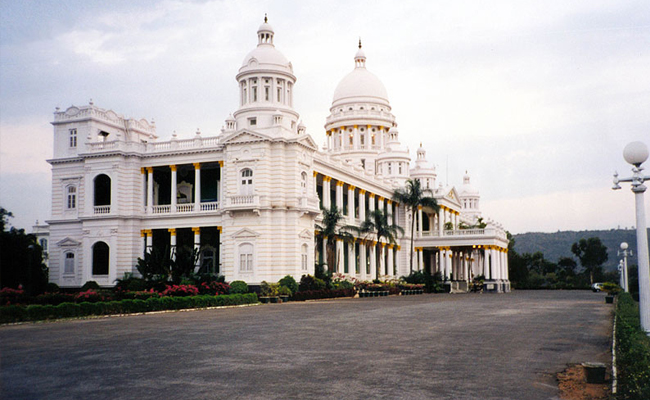
Bengaluru: Lalitha Mahal Palace, the five-star heritage hotel in Mysuru, will be handed over to private operators, with the Cabinet of ministers in Karnataka clearing the proposal to invite tenders for the palace during a meeting on Thursday.
The iconic structure, constructed in 1921, was run as a heritage hotel from 1974 to 2018 by the Ashok Group for the Indian Tourism Development Corporation before it was handed over to the state government in 2018. Currently, it is in the charge of the government enterprise Jungle Lodges and Resorts, however, as the state government was finding the maintenance of the heritage hotel a burden, the Cabinet has decided to hand over the reins to a private firm, reports The Indian Express.
Karnataka Law Minister HK Patil, when asked about the issue, confirmed that the works of maintenance, management, repairs and modernization of the Lalitha Mahal Palace Hotel in Mysuru will be handed over from the Jungle Lodges and Resorts to private companies. Tenders will be called to appoint a hotel operator, the minister added, on Thursday.
“The Lalitha Mahal Palace Hotel, nevertheless, will be preserved as a heritage property, regardless of modernization. The government was finding it difficult maintain five-star hotels, which requires a high investment of Rs 40-50 crore, especially due to low occupancy and decided to hand over the responsibility to private companies,” Patil explained.
The minister, however, clarified, “Jungle Lodges and Resorts is not running at a loss but is also not making profits. The facilities it provides at the hotel, including the number of rooms, are limited.”
Lalitha Mahal Palace Hotel was built by the Maharaja of Mysore Krishnaraja Wadiyar IV as a place of residence for the British Governor General of India. It is modelled on the St Paul’s Cathedral in London and the second largest palace in Mysore after the Maharajah’s palace.
Let the Truth be known. If you read VB and like VB, please be a VB Supporter and Help us deliver the Truth to one and all.
Opponents acting as BJP's agencies, will restore voter rights of disenfranchised citizens: Abhishek
Murshidabad (PTI): TMC national general secretary Abhishek Banerjee on Saturday labelled Chief Election Commissioner Gyanesh Kumar, and two politicians as "agencies" of the BJP and promised to restore voting rights of disenfranchised citizens within a month of returning to power.
Addressing a poll rally at Rejinagar, Banerjee alleged that Congress leader Adhir Ranjan Chowdhury and AJUP president Humayun Kabir, besides the CEC, are the three "agencies" working to undermine people and strengthen the BJP in West Bengal's Murshidabad district.
He accused Kumar of "taking away voting rights" of the poor under the guise of logical discrepancies in electoral rolls, and warned that a weakened TMC would hurt the local people more than the party.
"If the Trinamool Congress is weak in this soil, the loss for you is much more than the loss for TMC," Banerjee, considered number two in the party's hierarchy, told the gathering.
Training his guns on Kabir, he referred to a purported viral video in which a person resembling Kabir, the chief of Aam Janata Unnayan Party (AJUP), was heard talking of a Rs 1000 crore deal with the BJP to dislodge TMC from power in West Bengal.
"(The money was) not for the mothers and brothers of Murshidabad, not for roads, not for housing; but to put in his own pocket," he alleged.
He also claimed the purported video showed Kabir describing Muslims, who are in the majority in Murshidabad district, as "very foolish and easily misled".
Dismissing Kabir's claim that the video was AI-generated, Banerjee wondered why AJUP's state president Pirzada Khobayeb Amin resigned, if it was so.
"And why did Asaduddin Owaisi of AIMIM leave your side?" he asked.
After the purported video surfaced, the alliance between AJUP and AIMIM collapsed on Friday, barely a fortnight after it was stitched.
Banerjee also referred to Kabir's past political stance, asking why he had no issue in joining the BJP in 2019, the party that demolished the Babri Masjid in 1992, and alleged that AJUP is now acting at the behest of the saffron party in Murshidabad.
The TMC leader claimed that Kabir, who joined the Trinamool later, had met and told him (Banerjee) he would "only lay the bricks (for the proposed Babri Masjid in Murshidabad) and then throw them away."
Banerjee said that he had told Kabir, "TMC does not indulge in politics with religion. The BJP is doing politics with the Ram Mandir, and you are doing politics with Babri Masjid. Where is the difference? If you have to build the Babri Masjid, do it. You retire from politics. Both cannot happen together."
Kabir was suspended from the TMC after he announced his plan to build a mosque modelled on the Babri Masjid of Ayodhya.
Alleging a wider nexus, Banerjee challenged Adhir Chowdhury, ISF MLA Naushad Siddiqui, Asaduddin Owaisi and Humayun Kabir to 'give up' central security cover if they have no links with the BJP.
Siddiqui is the only MLA in the outgoing state assembly, who does not belong to TMC or BJP.
On the restoration of voter rights, Banerjee assured those dropped from electoral rolls that they would get their voting rights back within one month of the "Ma-Mati-Manush (mother-land-people)" government taking charge on May 4, when poll results will be announced.
"You are citizens of this country, citizens of this state. No one should be worried or panicked," he said.
Stepping up his attack on opposition alliances, Banerjee likened the Congress, CPI(M) and others to a food prepared with "rotten potatoes, onions and brinjal" that would cause stomach trouble.
Banerjee said he has taken personal responsibility for the district's development.
"The responsibility for the development of all 22 seats is mine. I am fulfilling the debt of love through development," he declared.
Addressing another election rally at Sainthia in Birbhu district, Banerjee claimed that of the 90 lakh names deleted in the Special Intensive Revision (SIR) exercise, 57.5 lakh are Hindu Bengali voters.
"They are branding Hindu Bengalis as Bangladeshis and striking their names off the electoral rolls," he claimed at the rally.
Banerjee asked Prime Minister Narendra Modi to clarify the status of Sheikh Hasina, who has been living in Delhi since August 2024.
"Hasina has been given shelter in Delhi by you. Is she an infiltrator or a refugee?" he asked.
On the BJP's poll promises, Banerjee claimed that Modi had pledged Rs 2,500 per month to women if the party won in Delhi, but "not a paisa" had reached beneficiaries even after 14 months.
He termed the BJP's guarantees a "chit fund", alleging that "the seller disappears after the sale", and alleged that in Bihar, BJP leaders were demanding money back from pre-poll beneficiaries.
In contrast, Banerjee said, the TMC's Lakshmir Bhandar scheme, under which women from the general category receive Rs 1,500 and SC/ST women get Rs 1,700 per month.
"As long as TMC exists, no one can stop Lakshmir Bhandar," he said.
Banerjee also challenged the BJP to present a report card of the work done in Birbhum over the last 10-12 years and described this election as a "vote for revenge" against the BJP.
_vb_10.jpeg)