Landslide, tree fall on Goa-Karnataka border hit traffic on South Western Railway

Panaji (PTI): The movement of five trains were affected on the South Western Railway due to a landslide between Dudhsagar and Sonaulim sections on the Goa-Karnataka border shortly after Thursday midnight, an official said on Friday.
The track was also closed after a tree fell between Londa and Tinaighat (Karnataka side of the border) affecting the overhead power supply.
South Western Railway’s Chief Public Relations Officer Dr Manjunath Kanamadi said that both incidents were reported at 0.55 am on Friday, and the train traffic resumed around 6 am after clearing the debris and the fallen tree.
ALSO READ: Bengaluru: NHAI clears nod for heavy vehicles to ply on Peenya flyover after 3 years
The official said that Train No 17310, which arrived at 1 am at Sonaulim was backed to Kulem station (in Goa), while Train No 17419 was regulated at Londa (Karnataka) from 01.40 am onwards.
Train No. 17309 was regulated at Alnavar station (Karnataka) from 01.55 am onwards, while Train 12780 was regulated at Belagavi (Karnataka) from 01.35 am onwards. Vasco-Jasidih Express (17321) was rescheduled to leave from Vasco at 07.50 am, he said.
After the tracks were cleared, Train No. 17419 departed from Londa at 06.00 am and Train 17309 left Alnavar at 06.05 am, he said.
Let the Truth be known. If you read VB and like VB, please be a VB Supporter and Help us deliver the Truth to one and all.
Unidentified men set fire to TVK campaign office near Srirangam
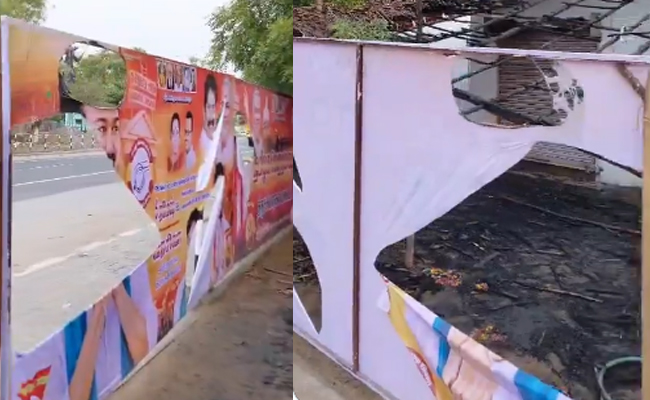
Tiruchirapalli (PTI): A campaign office of the actor Vijay-led TVK was allegedly torched by unidentified miscreants in Kamanayakkanpalayam village near Srirangam in the early hours of Friday, police said.
According to the police, the damage is minimal. Fire had engulfed the thatched roof providing shade at the entrance of the building that served as the party’s election office for the Srirangam constituency.
While on social media, a CCTV footage of two unidentified men fleeing on motorbike is being circulated as the culprits, police said the video footage is yet to be verified.
Based on a complaint lodged by TVK, the Pettaivaithalai Police have registered a case and initiated a search for the perpetrators.
திருவரங்கம் தொகுதியில் த.வெ.க வேட்பாளரின் தேர்தல் அலுவலகம் மர்ம நபர்களால் தீவைக்கப்பட்டு சேதப்படுத்தப்பட்டுள்ளது. @TNelectionsCEO @ECISVEEP#TVKVijay #தமிழகவெற்றிக்கழகம் pic.twitter.com/ImDZfTkuAq
— Thanjavur_District_Head (TVK) (@TVK_Thanjai) May 1, 2026