Lanka terror: Grief-stricken kin waiting to bring remains home

Bengaluru, Apr 23: Yet to come to grips with the loss of their dear ones, shattered kith and kin of those killed in the devastating serial blasts in Sri Lanka are now faced with the problem of bringing the dismembered bodies home which, according to a relative, have started decomposing.
Family members are anxiously waiting for the bodies to take them back to India and perform the last rites, said a relative of a JDS worker killed in the blast that ripped through Shangri-La Hotel in Colombo on Easter Sunday.
S Shivakumar, who is in Sri Lanka, told PTI over phone Tuesday that the autopsy on his relative H Shivakumar's body has been completed but the problem was to fly it to India.
"The body is dismembered. There is no storage facility here. It is decaying fast. We have to bring it to Bengaluru.
There are eight bodies here:
They (Sri Lankan authorities) told us that three bodies could be flown today and rest will be flown tomorrow," a distraught Shivakumar said.
As many as 321 people were killed in a chain of blasts that ripped through churches and hotels in Sri Lanka on April 21.
The Islamic State has claimed responsibility for the terror strike, the deadliest to shake the island nation since the end of the country's civil war in 2009 after the defeat of the LTTE.
From India, Karnataka bore the brunt of the mayhem as 10 deceased are from the state, including eight JDS workers.
The victims are: Ramesh, K M Lakshminarayan, M Rangappa, K G Hanumantharayappa, H Shivakumar, Narayan Chandrashekar, A Mare Gowda, H Puttaraju, Shettypalya R Nagaraj and Razeena Khader Kukkady, according to information from the state government.
Barring Nagaraj and Kukkady, the others were JD(S) workers.
Chief Minister H D Kumaraswamy gave the name of the JD(S) workers in a tweet.
The Karnataka government too has intensified efforts to bring the bodies back home.
A senior IAS officer told PTI that the body of Shettypalya Nagaraj will be flown to India tonight.
"As per our information, which we have received from the High Commission of India in Sri Lanka, they are coordinating everything.
One body will be coming today that of Shettypalya Nagaraj at 8.20 pm by Sri Lankan Airlines," principal secretary in the department of personnel and administrative reforms, Parvez Anjum, said.
Anjum has been appointed by the State government as the nodal officer to coordinate with the Indian Embassy in Sri Lanka to bring the bodies to Bengaluru.
Let the Truth be known. If you read VB and like VB, please be a VB Supporter and Help us deliver the Truth to one and all.
My party will complete 5-year term, says CM Siddaramaiah
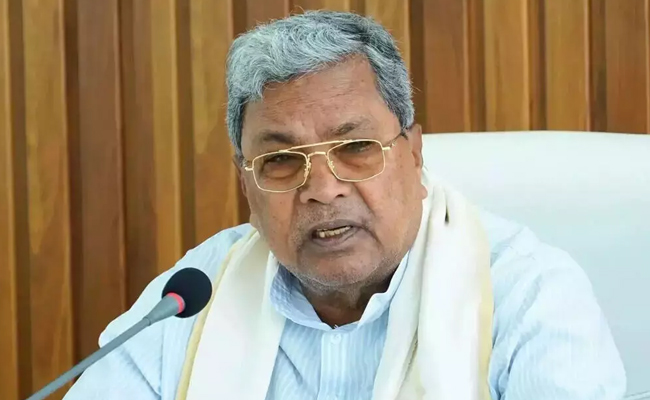
Mysuru (Karnataka) (PTI): Karnataka Chief Minister Siddaramaiah on Wednesday asserted that the Congress government would complete its five-year term, while sidestepping questions on whether he personally would remain in office for the full duration.
Addressing reporters here, he maintained that decisions on the leadership would rest with the party high command and refrained from giving a direct answer on his own tenure.
“Our party will complete five years,” Siddaramaiah said, when asked if he would complete a full term as Chief Minister.
On the issue of leadership, he reiterated that the final call would be taken by the party leadership, saying, “The high command will decide. There’s no point asking the same thing again.”
Indicating his readiness to travel to the national capital if required, he said, “If I am called to Delhi, I will go,” adding that he would seek an appointment with Rahul Gandhi if needed.
The talks on leadership change have intensified in the power corridor of the state where claims were made that Siddaramaiah would make way for his Deputy Chief Minister D K Shivakumar.
The Chief Minister also underlined that recent by-election victories in Bagalkote and Davanagere South assembly segment reflected public support for the government, stating that this clearly shows that people have appreciated the Congress government and its programmes.
The CM also dismissed the opposition’s claims, alleging they lacked strategy, and said local body elections would be conducted as per rules.