Lokayukta police summon Karnataka CM Siddaramaiah for questioning in MUDA case on Wednesday
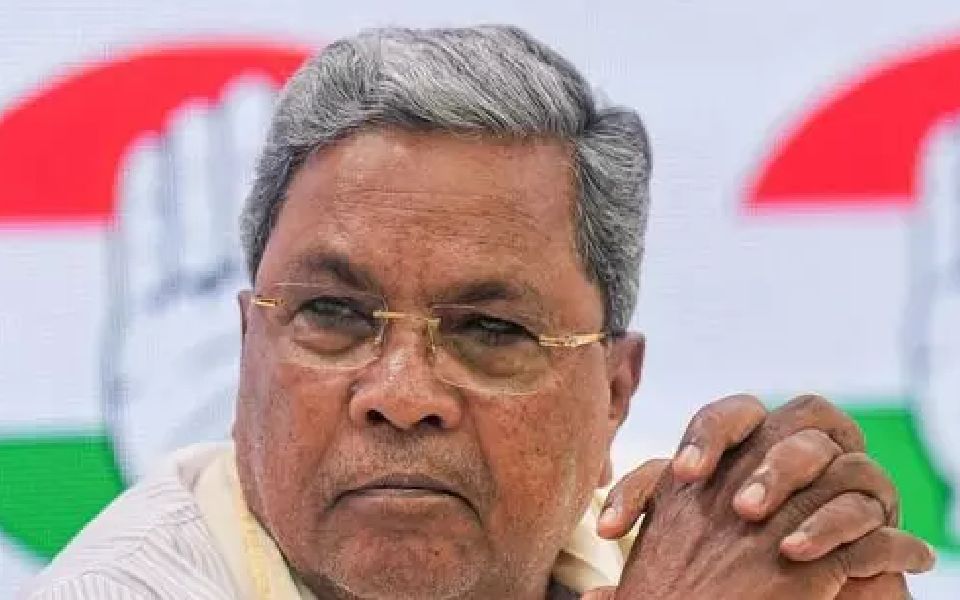
Mysuru, Nov 4: The Lokayukta police have summoned Karnataka Chief Minister Siddaramaiah for questioning in the MUDA site allotment case on November 6, official sources said on Monday.
They had on October 25 questioned his wife Parvathi B M, who is also an accused in the case.
"We asked him to appear on Wednesday morning," a senior Lokayukta official told PTI.
The CM is facing allegations of illegalities in the allotment of 14 sites to his wife by the Mysuru Urban Development Authority (MUDA).
Reacting to Lokayukta police summons, Siddaramiah, speaking to reporters in Haveri district, said: "I will go..."
Siddaramaiah, his wife, brother-in-law Mallikarjuna Swamy and Devaraju -- from whom Swamy had purchased a land and gifted it to Parvathi -- and others have been named in the FIR registered by the Mysuru-located Lokayukta police establishment on September 27. Swamy and Devaraju have also deposed before the Lokayukta police.
The Chief Minister on October 24 filed an appeal before the division bench of the High Court, challenging the decision of a single judge bench in connection with the MUDA site allotment case that had come as a setback to him.
The bench of Justice M Nagaprasanna had on September 24 dismissed the CM's petition challenging Governor Thaawarchand Gehlot's approval for a probe against him in the case, observing that the gubernatorial order nowhere "suffers from want of application of mind".
Siddaramaiah had challenged the legality of Gehlot's sanction for the investigation against him in the alleged irregularities in the allotment of 14 sites by MUDA in a prime locality.
Following the High Court order, a Special Court here on the very next day had ordered a Lokayukta police probe against Siddaramaiah, and directed to file the investigation report by December 24.
The Special Court exclusively to deal with criminal cases related to former and elected MPs/MLAs had issued the order directing the Lokayukta police in Mysuru to initiate an investigation on the complaint filed by RTI activist Snehamayi Krishna.
Parvathi, meanwhile, had written to MUDA to cancel 14 sites allotted to her and the MUDA had accepted it.
On September 30, the ED filed an enforcement case information report (ECIR) to book the CM and others taking cognisance of the Lokayukta FIR.
In the MUDA site allotment case, it is alleged that 14 compensatory sites were allotted to Siddaramaiah's wife in an upmarket area in Mysuru (Vijayanagar Layout 3rd and 4th stages), which had higher property value as compared to the location of her land which had been "acquired" by MUDA.
The MUDA had allotted plots to Parvathi under a 50:50 ratio scheme in lieu of 3.16 acres of her land, where it developed a residential layout.
Under the controversial scheme, MUDA allotted 50 per cent of developed land to the land losers in lieu of undeveloped land acquired from them for forming residential layouts.
It is alleged Parvathi had no legal title over this 3.16 acres of land at survey number 464 of Kasare village, Kasaba hobli of Mysuru taluk.
Let the Truth be known. If you read VB and like VB, please be a VB Supporter and Help us deliver the Truth to one and all.
RR beat RCB by six wickets in IPL
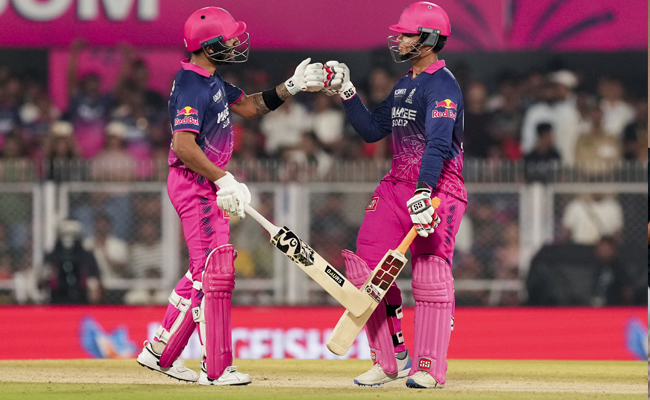
Guwahati (PTI): Blistering fifties by Vaibhav Sooryavanshi and Dhruv Jurel powered Rajasthan Royals to a six-wicket win over Royal Challengers Bengaluru in their IPL match here on Friday.
Sent in to bat, RCB rode on a fighting half-century by skipper Rajat Patidar (63) to post 201 for 8.
Virat Kohli (32), Romario Shepherd (22) and Venkatesh Iyer (29) also chipped in with useful contributions.
In reply, Sooryavanshi (78 off 26 balls) and Dhruv Jurel (81 not out off 43 balls) shared a 37-ball 108-run partnership for the second wicket to set the platform. Krunal Pandya (2/30) tried to bring them back with back-to-back wickets.
But Jurel, in the company of Ravindra Jadeja (24), completed the task with another 68-run stand, with two overs to spare.
For RR, Jofra Archer (2/33), Ravi Bishnoi (2/32) and Brijesh Sharma (2/37) took two wickets.
Brief scores:
Royal Challengers Bengaluru: 201 for 8 in 20 overs (Rajat Patidar 63; Jofra Archer 2/33, Ravi Bishnoi 2/32, Brijesh Sharma 2/37).
Rajasthan Royals: 202 for 4 in 18 overs (Vaibhav Sooryavanshi 78, Dhruv Jurel 80 not out; Krunal Pandya 2/30, Josh Hazlewood 2/44).