Lorry owners strike enters sixth day: Supply of essential commodities hits
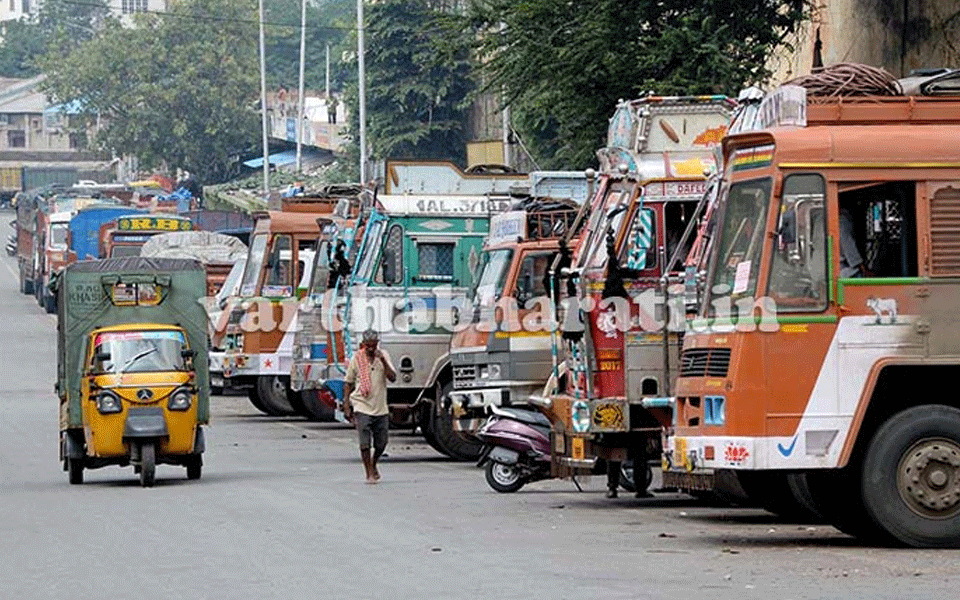
Bengaluru, July 25: The lorry owners strike being conducted across the country demanding toll-free movement, cutting of diesel price and other demands entered 6th day on Wednesday, affecting supply of essential commodities. As the goods careers stayed off the roads, the capital city is also experiencing the heat.
The supply of industrial raw materials hit the industry due to which small and medium industries have been suffering. On Wednesday, the number of goods vehicles coming from other states has come down. Normally, Bengaluru APMC usually receives 100 loads of potato and 200 loads of onion from Punjab, Uttar Pradesh, Haryana, Maharashtra and other states. Because of the strike, more than 100 loads of onion and potato lorries have not reached the city.
The intensity of the strike is gradually increasing. If the situation continues for another two days, the supply of essential commodities will affect considerably. Already, the prices of potato, onion, rice, pulses, and other things are skyrocketing and this has forced the people to stay away from the market, said Yeshwanthpur APMC Yard Merchants Association president BL Shankarappa.
Potato supply had come down for the last two days due to which, the prices have gone up. Before the strike, 50 kg potato cost Rs 750 to Rs 950. Now, Rs 50 was increased for the same quantity. Even they have not received potato from Hassan, he said.
APMC yard closed, protest
Lorry owners closed the Yeshwanthpur APMC Yard and staged a protest against the central government alleging that it has neglected the lorry owners demands in spite of conducting the strike for the last five days. So, they would not withdraw their strike till their demands were met, they said.
Federation of Karnataka Lorry Owners and Agents Association state president GR Shanmugappa said that they have been protesting for the last five days without affecting the normal life of the people. But the government has not come forward to fulfill their demands. So, they have decided to intensify their strike. As part of this decision, they would block roads, he added.
Lakhs of lorries were off the roads due to strike. Every day, the lorry owners were incurring a loss of Rs 1,000 Cr and the central government was incurring a loss of Rs 1 lakh crore and the state government was incurring the loss of Rs 7,000 crore revenue, he said.
No problem due to strike
KR Market Merchants and Consumers Association president RV Gopi said that there was no problem due to lorry strike so far. The greens and vegetables, fruits and flowers were being supplied in mini vehicles. Mini vehicles have been transporting the vegetables, fruits and flowers from Tamil Nadu, Kerala and Andhra Pradesh. The problem could be aggravated if the vehicular movement was completely stopped, he said.


Let the Truth be known. If you read VB and like VB, please be a VB Supporter and Help us deliver the Truth to one and all.
Three company directors held in Rs 100-crore investment fraud in Kochi

Kochi (Kerala) (PTI): Police on Sunday arrested three directors of a firm accused of cheating hundreds of investors of over Rs 100 crore through a fake investment scheme linked to agricultural tourism here, officials said.
The accused were identified as Muraleedharan, Ashik Murali and Akhil Murali, all natives of Thrissur.
The arrests were made by the Kalamassery police in connection with a fraud involving ATCOS (Agri Tourism Cooperative Society), a firm headquartered at Pathadipalam here.
Police said the company had promised high returns by collecting investments from the public in the agricultural tourism sector, but allegedly cheated hundreds of people and fled with the money.
ATCOS was registered under the Multi-State Cooperative Societies Act and operated 13 branches across various districts in Kerala, besides a branch in Coimbatore in Tamil Nadu, officials said.
When investors failed to receive their promised returns or the invested amount, complaints were filed with the police.
Officials said around 54 cases have been registered against the firm in 32 police stations across the state, including 29 cases at the Kalamassery police station alone.
Following instructions from Kochi City Police Commissioner K S Mahesh Kumar, a special investigation team was formed under the supervision of Deputy Commissioner of Police (Law and Order) Shehensha and Thrikkakara ACP Manoj Kumar.
The team traced the accused to an apartment in Amala Nagar in Thrissur, where they had been hiding after secretly renting the flat, officials said.
The bank accounts of the accused have been frozen, and steps have been initiated to trace their assets, officials said.
Police also conducted a raid at the company’s office at Pathadipalam and seized several documents related to the case.
The accused were produced before the Judicial First Class Magistrate Court in Kalamassery, which remanded them to judicial custody and sent them to Kakkanad jail.
Police said they would seek the custody of the accused for further interrogation as the investigation continues.