Malabar Gold & Diamonds publishes India’s 2000 year old jewellery tradition
Malabar Gold & Diamonds has brought out the 5th Edition of Brides of India Coffee Table Book.
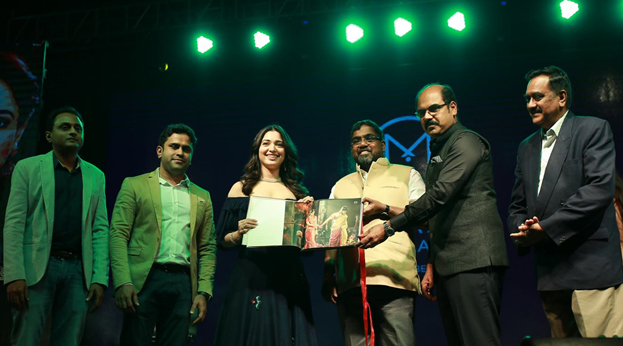
Bangalore: Malabar Gold & Diamonds has brought out the 5th Edition of Brides of India Coffee Table Book. The latest edition of the Brides of India Coffee Table Book takes the connoisseurs of ornaments through a visual experience of country’s rich jewellery tradition since first century to 20th century.
The book brings the jewellery making traditions of various royal eras of the country through vivid depiction of varied cultures.
The 5th Edition of Brides of India Collection Coffee Table Book was launched by Bollywood actress Tamannaah Bhatia at a function organized at JW Marriott Hotel in Bangalore. It was jointly unveiled by Tamannah Bhatia, Malabar Group Chairman MP Ahammed, MD India Operation Asher.O.Zonel Head Mr Iflu Rahman, Head-Corporate Media and PR Mr Narayanan KP and other management official were also seen along.
The salient feature of Brides of India collection is that it brings the intricacies and sophisticated secrets behind the jewellery making craft of the country pertaining to different regions and cultures under one roof. “The `Brides of India’ series takes jewellery lovers back in time to re-discover the historic Indian jewellery craft and reinvent and recreate them that fit the current trend. The binary of the campaign is that it brings the exquisite ornaments that existed during five regal ages of India – Gupta, Vijayanagara, Mughal, Colonial Era and the early 20th Century in a single platform.”, Malabar Group Chairman M. P. Ahammed said.
The campaign rolls the architecture of traditional craft of jewellery making and what is trending in the market place now into one, thus making a niche market for the products giving the brides a Royal Wedding. The latest bridal collection under the `Brides of India’ banner is inspired by Indian ornament tradition spanning over 2000 years. The collection has been crafted after years of diligent research of ancient jewellery making art and craft with the aid of historians, experts and artisans. The collection comes in a variety of gold, diamonds, gemstones and pearls and covers design styles of each era in its variations.
The Brides of India Collection Coffee Table Book introduces jewellery tradition of five different eras to the new generation and future generation alike. Through its five editions, the Coffee Table Book showcases 28 different wedding traditions and its ornament cultures. The 5th edition of Brides of India Coffee Table Book was inspired by the overwhelming and ebullient response the previous four editions of the Brides of India Coffee Table Book received from jewellery lovers.
Let the Truth be known. If you read VB and like VB, please be a VB Supporter and Help us deliver the Truth to one and all.
Ranchi: Temple guard bludgeoned to death during robbery attempt, 3 held

Ranchi (PTI): A 60-year-old security guard of a temple in Ranchi was bludgeoned to death with a stone during a robbery attempt, police said on Saturday.
The incident happened late on Thursday at the Jagannath Temple in the Dhurwa Smart City area, they said.
"Three persons were arrested on Friday for killing the security guard. They confessed to the crime and told police that the victim had identified them. Therefore, in fear of being caught, they killed him by attacking him with a stone on his head," SSP Rakesh Ranjan said.
"Thereafter, they took money from the donation box and fled the scene. Two of them have criminal antecedents," he added.
Ranjan said the investigators recovered Rs 3 lakh in cash that had been robbed, the stone with blood-stained marks, and the iron rod used to break open the lock of the donation box kept there.
An FIR in this regard was lodged at the Dhurwa police station, he said, adding that the accused were sent to judicial custody by a court.