Mandatory 7 day quarantine in Karnataka for those coming from U.K., Denmark & Netherlands
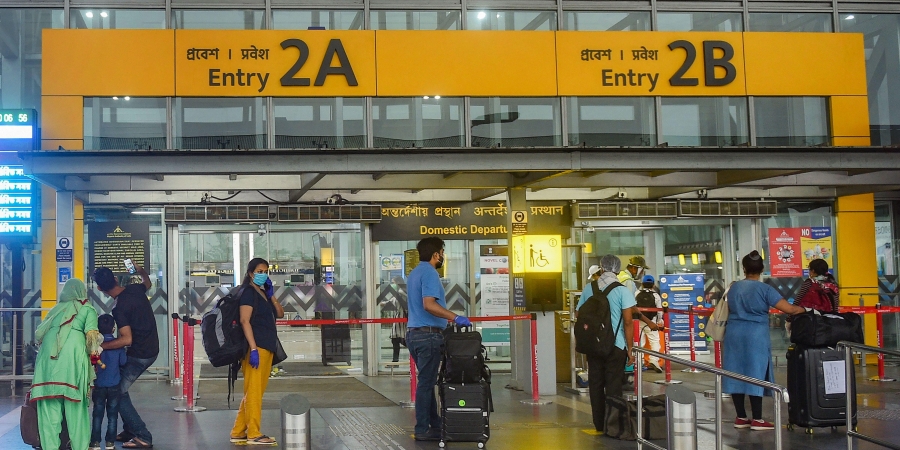
Bengaluru, Dec 21: With a new variant of coronavirus emerging in the U.K., the Karnataka government on Monday mandated a seven day quarantine for travellers arriving in the state from that country, Denmark and the Netherlands.
Health Minister K Sudhakar said that those who arrived in the state from these countries during the last 14 days would be traced in the next 24 hours and subjected to RT-PCR test.
The Minister held a meeting on Monday with the Technical Advisory Committee of Health and Family Welfare Department to discuss steps in this regard.
Sudhakar, in a tweet, said initial studies in the U.K suggested that the virus may be more contagious than the present one, but not more virulent.
Pointing out that the Centre has suspended flights originating from the U.K. from Wednesday till December 31, he said the state government, as a precautionary measure, has mandated seven day home quarantine for travellers from the U.K, Denmark and Netherlands.
"Travellers who have arrived in the state from these three countries in the last 14 days will be traced within the next 24 hours and subjected to RT-PCR test.
While there is no need to panic,I urge people to continue to follow all precautionary measures and stay safe," he said in another tweet.
The Minister said that on Monday, 291 people arrived in the state by a British Airways flight and 246 by Air India.
Of them 138 had not submitted negative test reports, his office said in a statement.
"We will trace them and do RT-PCR test on them," he said.
Sudhakar further said that kiosks would be opened at airports to screen international travellers.
Strict action would be taken against owners of hotels, resorts and pubs who violate government guidelines for Christmas and New Year celebrations, the minister warned, as he ruled out a lockdown for now.
In the wake of emergence of new variant of corona virus in the UK, held a meeting with Technical Advisory Committee of Health and Family Welfare Department. Initial studies in the UK suggest that the virus may be more contagious than the present one but not more virulent. (1/3)
— Dr Sudhakar K (@mla_sudhakar) December 21, 2020
In order to contain the spread of new variant of virus, centre has suspended flights originating from the UK from Tuesday midnight till 31st December. As a precautionary measure state govt has mandated 7 day home quarantine for travellers from UK, Denmark and Netherlands. (2/3)
— Dr Sudhakar K (@mla_sudhakar) December 21, 2020
Travellers who have arrived in the state from these three countries in the last 14 days will be traced within next 24 hours and subjected to RT-PCR test. While there is no need to panic I urge people to continue to follow all precautionary measures and stay safe. (3/3) @DHFWKA
— Dr Sudhakar K (@mla_sudhakar) December 21, 2020
Let the Truth be known. If you read VB and like VB, please be a VB Supporter and Help us deliver the Truth to one and all.
Ordinance issued to increase number of Supreme Court judges from 34 to 38
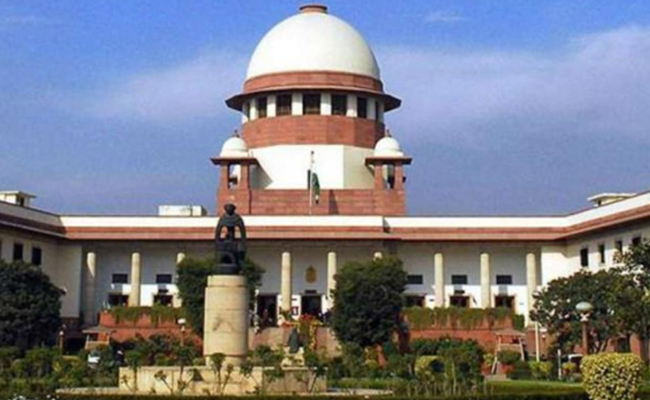
New Delhi (PTI): The government has promulgated an ordinance to increase the strength of the Supreme Court from the present 34 judges to 38, including the Chief Justice of India.
The law ministry notified the ordinance on Saturday, which amended the Supreme Court (Number of Judges) Act, 1956, to increase the sanctioned strength of the top court.
So far, the sanctioned strength of the top court was 34, including the Chief Justice of India (CJI). Now, the number of judges has been increased by four, taking the sanctioned strength to 38.
The top court will now have 37 judges, other than the CJI.
With the apex court having two vacancies at present, and the ordinance coming into force immediately, the Supreme Court Collegium will now have to recommend six names for appointment as judges in the top court.
A bill will be brought in the Monsoon Session of Parliament to convert the ordinance – an executive order – into a law passed by Parliament.
The Union Cabinet had cleared a draft bill on May 5 to increase the number of apex court judges.
The strength of the Supreme Court was last increased from 30 to 33 (excluding the CJI) in 2019.
The Supreme Court (Number of Judges) Act, as originally enacted in 1956, put the maximum number of judges (excluding the CJI) at 10.
This number was increased to 13 by the Supreme Court (Number of Judges), Amendment Act, 1960, and to 17 by another amendment to the law.
The Supreme Court (Number of Judges) Amendment Act, 1986, augmented the strength of judges from 17 to 25, excluding the CJI.
A fresh amendment in 2009 further increased the strength from 25 to 30.
Article 124(3) of the Constitution lists the qualifications required to become a Supreme Court judge.
An Indian citizen who has either served as a high court judge for at least five years, or as an advocate for 10 years, or is a distinguished jurist, can be appointed to the top court.
The strength of the Supreme Court is increased based on the recommendations of the CJI, who writes to the Union law minister. After consulting the finance ministry, the Department of Justice under the law ministry moves the Cabinet with a draft bill.