Mandya ‘5 rupees doctor’ gets ‘Indian of the Year 2022’ award
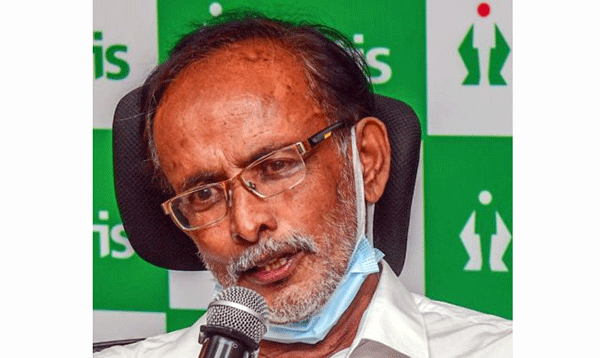
Bengaluru: Widely known as the 'Five Rupees Doctor', Dr. Shankare Gowda has been awarded as the 'Indian of the Year 2022' by CNN News 18 in the social change category.
Dr. Gowda, a dermatologist, was given the award by Union Minister Nitin Gadkari in a program held in New Delhi.
Dr. Gowda earned the nickname 'Five Rupees Doctor' for charging his patients merely five rupees since 1982.
Karnataka Chief Minister Basavaraj Bommai, congratulated the doctor on Twitter for the award. “He (Dr. Gowda) has lived a model life by serving the rural people so wholeheartedly,” the chief minister added.
Higher Education Minister Dr. C N Ashwath Narayana said Dr. Gowda getting the award was a moment of pride for the state. Congratulating Dr. Gowda the minister said utilizing one’s knowledge for the welfare of the people was an inspiration to everyone.
The minister expressed further pride that both he and Dr. Gowda had completed their medical education at the Kasturba Medical College.
5 ರೂಪಾಯಿ ಡಾಕ್ಟರ್ ಎಂದೇ ಪ್ರಖ್ಯಾತಿಗಳಿಸಿರುವ ಮಂಡ್ಯದ ವೈದ್ಯ ಶ್ರೀ ಶಂಕರೇಗೌಡರಿಗೆ @CNNNews18 ನ #IndianOfTheYear ಪ್ರಶಸ್ತಿ ಲಭಿಸಿರುವುದು ಅತ್ಯಂತ ಅಭಿನಂದನಾರ್ಹ ಸಂಗತಿಯಾಗಿದೆ. ಗ್ರಾಮೀಣ ಭಾಗದ ಜನರ ಸೇವೆಗಾಗಿಯೇ ತಮ್ಮ ಜೀವನವನ್ನು ಮುಡಿಪಾಗಿಟ್ಟ ಅವರ ವ್ಯಕ್ತಿತ್ವ ಎಲ್ಲರಿಗೂ ಮಾದರಿಯಾಗಿದೆ. ಅವರಿಗೆ ಹೃತ್ಪೂರ್ವಕ ಅಭಿನಂದನೆಗಳು. https://t.co/Kcb3yvuFF4
— Basavaraj S Bommai (@BSBommai) October 14, 2022
Let the Truth be known. If you read VB and like VB, please be a VB Supporter and Help us deliver the Truth to one and all.
Deepfake video of Nirmala Sitharaman used to dupe Belagavi man in Rs 7.9 lakh scam
Belagavi (Karnataka) (PTI): A 76-year-old man in Belagavi city was allegedly cheated of Rs 7.9 lakh in an online investment scam that used an AI-generated deepfake video misusing the name of Finance Minister Nirmala Sitharaman to lure investors, police said on Wednesday.
An online fraud case was registered at the cybercrime police station on May 1, they said.
According to Belagavi Police Commissioner Bhushan Gulabrao Borase, the victim, Prakash Gubbi, a senior citizen, stated in his complaint that in November last year, he came across a video on YouTube in which Finance Minister Nirmala Sitharaman appeared to endorse an investment scheme.
The video also mentioned a link in its description for making investments.
The victim clicked on the link, entered his details, and was later contacted on social media by a person identifying himself as Adarsh Anand, who persuaded him to invest, the officer told reporters.
Citing the complaint, the officer said the victim initially invested a small amount, after which the application began showing profits of USD 65,000.
When he attempted to withdraw the amount, the accused demanded a “customs duty” payment of Rs 4.2 lakh, claiming it was required to process the withdrawal.
The victim paid the amount, after which he was asked to pay an additional Rs 2 lakh. It was at this stage that he realised he had been cheated. In total, he lost around Rs 7.9 lakh in the fraud, the officer added.
A case has been registered under relevant provisions of the Information Technology Act, and police are investigating the matter, police said.
The commissioner cautioned the public not to trust such videos, stating that the finance minister does not endorse any such schemes.
He warned that such content is created using artificial intelligence and deepfake technology.
He further advised the public to remain vigilant, avoid offers that appear too good to be true on the internet, and invest only through legitimate, registered agencies or trusted channels.
Deepfake technology enables the creation of realistic videos, audio recordings, and images that can mislead viewers by superimposing one person’s likeness onto another, altering their words and actions. This can present a false narrative or spread misinformation.