Maternal deaths: CM Siddaramaiah assures action against guilty based on report
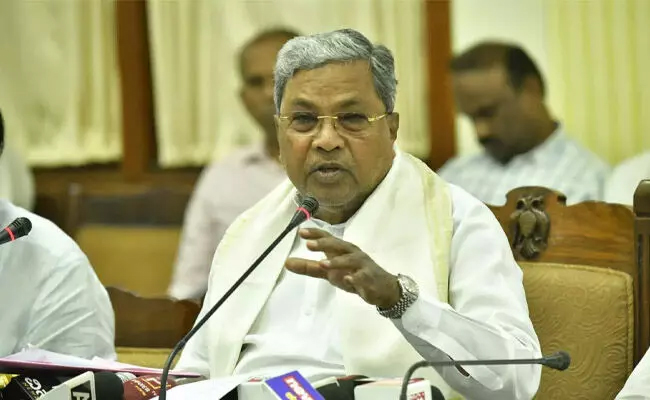
Chamarajanagara (PTI): With the number of maternal deaths in Ballari rising to five, Karnataka Chief Minister Siddaramaiah on Saturday said action will be taken against the guilty based on the report by an expert committee, headed by the Development Commissioner, inquiring into it.
Last month, four women died in Ballari. Another patient, who was undergoing treatment at Ballari Medical College and Research Centre (BMCRC), died on Thursday night.
"Fifth deaths have occurred there now. When four deaths happened, I held a meeting, we had also discussed it during yesterday's cabinet meeting. The Health Minister (Dinesh Gundu Rao) is visiting there (Ballari) today, also Health department officials," Siddaramaiah told reporters here in response to a question.
Noting that maternal deaths could be linked to substandard Ringer Lactate solution, he said the government has already suspended the Drugs Controller and also has blacklisted the company that supplied the solution.
A committee headed by the Development Commissioner was formed to inquire into it and submit a report, he added.
"Once we get the report, action will be taken against the guilty. We have already taken some action, further action will follow based on the report."
The CM had on November 30 chaired a high-level meeting regarding the recent maternal deaths in Ballari, following which he ordered an inquiry into such deaths, as he also announced compensation of Rs 2 lakh to each victims' family.
Amid concerns that the maternal deaths could be linked to substandard Ringer Lactate solution that is administered intravenously to restore hydration and fluid balance in the body, he directed suspension of the Drugs Controller and blacklisting of Paschim Banga Pharmaceutical that supplied the solution and also to prosecute the company.
Meanwhile, BJP led by former Minister B Sriramulu is holding a protest in Ballari, accusing the government of not taking the deaths seriously, and holding it responsible.
Targeting Health Minister Dinesh Gundu Rao, he said the Minister is visiting Ballari today, only to save his face when the opposition raises the issue during the Assembly session in Belagavi next week.
Demanding that the government ensure that such deaths don't recur, Sriramulu said, "Is Rs 2 lakh compensation enough? Such deaths should stop... Rs 1 crore compensation should be given to the families of each deceased."
Let the Truth be known. If you read VB and like VB, please be a VB Supporter and Help us deliver the Truth to one and all.
BJP's main agenda is to keep minorities in fear, alleges Stalin
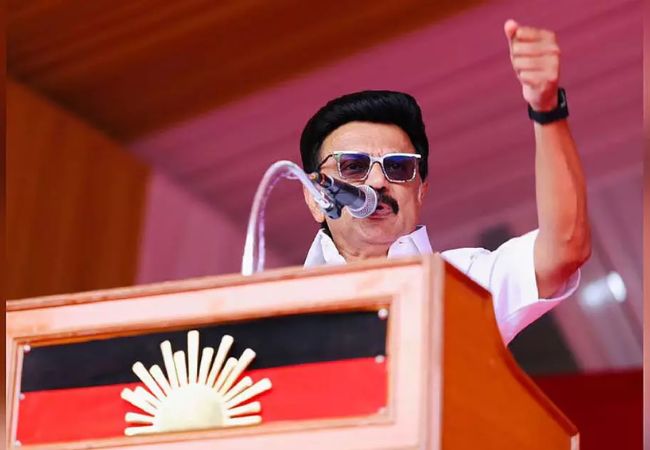
Chennai (PTI): DMK President M K Stalin has alleged that the BJP's main agenda is to keep the minorities in fear, and everyone is aware of what is happening in the states governed by the saffron party.
Stalin further alleged that Muslims continued to be subjected to attacks.
"Now, a situation has arisen where even Christmas could not be celebrated peacefully. Christians are being targeted. The entire country is a witness to what is happening in Manipur. The BJP's plan of action is that a state of insecurity for minorities should spread like a wildfire across the country," he told PTI in an interview.
That was why it first enacted the CAA, and the next was an amendment to the Waqf law, and now it is "desperate" to amend the FCRA, he alleged, and lashed out at AIADMK chief Edappadi K Palaniswami.
"Palaniswami, who supports all these three amendments and has formed an alliance with the BJP, does not have any concern for the welfare of minorities. However, the DMK is always firm in its commitment to ensure that India must always be a secular state; that people belonging to all religions must be equally respected and that the Constitutional safeguards conferred on minorities must be upheld. If any of these is threatened, the DMK will be the first party to raise its voice against it," he said.
Denying that the BJP made the minorities feel insecure, BJP state vice president M Chakravarthy said the chief minister was making the allegation due to the "fear that the Christian and Dalit votes would go to Tamilaga Vettri Kazhagam led by actor-politician Vijay."
He was depicting the BJP as a bogeyman in an attempt to create unnecessary apprehension among the minorities, the BJP leader told PTI.
On FCRA, Chakravarthy asked, "What's wrong with ensuring accountability in the use of funds?"