Minister directs officials to end the middlemen menace in Minorities Development Corporation
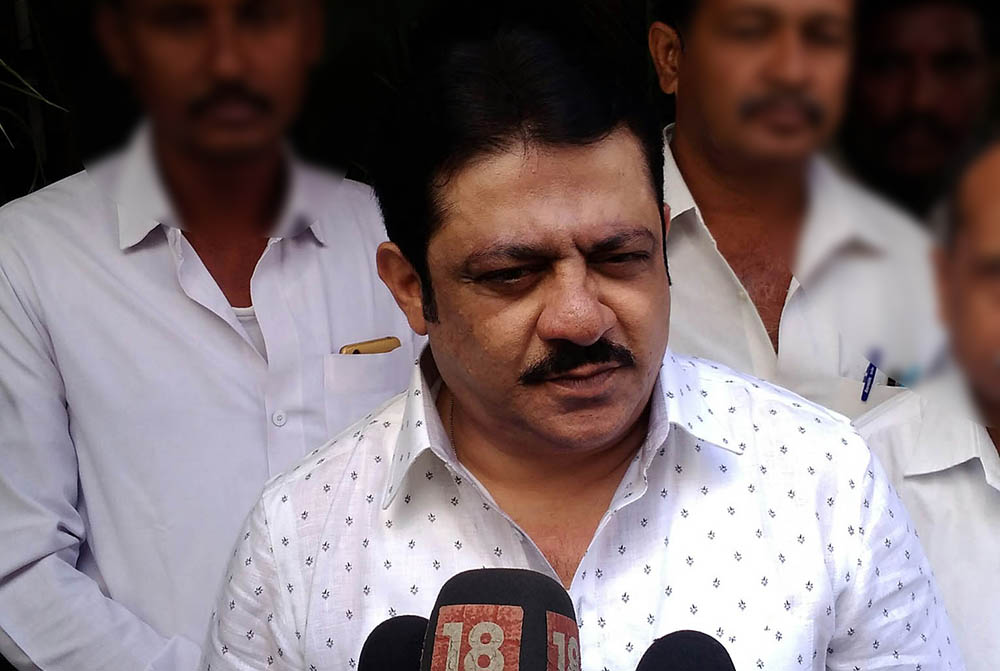
Bengaluru, Jun 13: Karnataka Housing and Minorities Welfare Minister B Z Zameer Ahmed Khan on Tuesday instructed officials concerned to put an end to the menace of middlemen in the Minorities Development Corporation and to maintain transparency in the selection of beneficiaries by giving wide publicity to the schemes of the Corporation.
Reviewing the progress at the Corporation hall here on Tuesday, he said that the Minorities Development Corporation should not have schemes for name-sake but it must be implemented effectively by promoting it across the state, according to a statement issued by his office.
There is a need for undertaking a massive campaign to make the community know of the schemes available with the Minorities Department and Development Corporation, the minister was quoted as saying.
Khan insisted that it should be made mandatory to get a 10 percent contribution from the beneficiaries in the taxi, auto, and goods vehicle loan scheme offered by the corporation. Besides, the Corporation itself must coordinate with the banks and ensure the loans are sanctioned under the Single Window scheme, he added.
ALSO READ: Former CM Bommai rubbishes Cong charge of hike in power tariff by previous BJP govt
Expressing displeasure over the 15 per cent loan recovery rate of the Minorities Development Corporation, the minister wanted the recovery to be at least 50 per cent.
As much as Rs 760 crore was disbursed as the education loan was pending and that must be recovered by offering a one-time settlement with waiving off interest on the loan amounts, the statement read.
"If women from the Minority community come forward to open startups, they must be given all financial assistance along with subsidies. For the victims of communal clashes, the funds available under the 'Maneya Malige' must be utilised for their rehabilitation," the Minister said.
Khan said the corporation has sanctioned Rs 31 crore to the slum board for the construction of houses for the poor and a progress report must be prepared to know whether this scheme has benefitted them or not.
As there is a need for the continuation of the scheme, a fresh proposal must be prepared. Besides, a detailed report must be prepared earlier to seek government grants in the state budget for the implementation of various schemes of the Corporation, he added.
"He also launched a Rs 10 crore scheme to help students to study abroad which was stalled by the previous BJP government, and also a direct loan of Rs 5 lakh to 20 lakh given to start own business," the statement said.
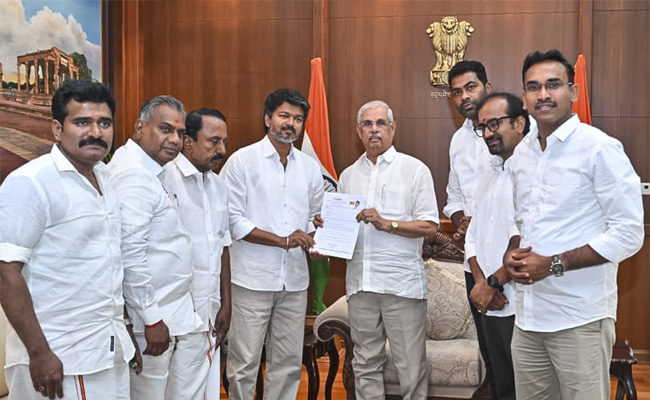
The Minister also handed over 12 taxis, 12 autos, and four goods autos to the beneficiaries.
Khan announced setting up a task force to protect Waqf assets and steps will be taken to construct compound walls for all properties.
A divisional-level office will be set up at the local level to protect waqf properties and redress grievances at the local level, he added.
Let the Truth be known. If you read VB and like VB, please be a VB Supporter and Help us deliver the Truth to one and all.
SC refuses to adjourn hearing on pleas against EC law, says this matter is more important
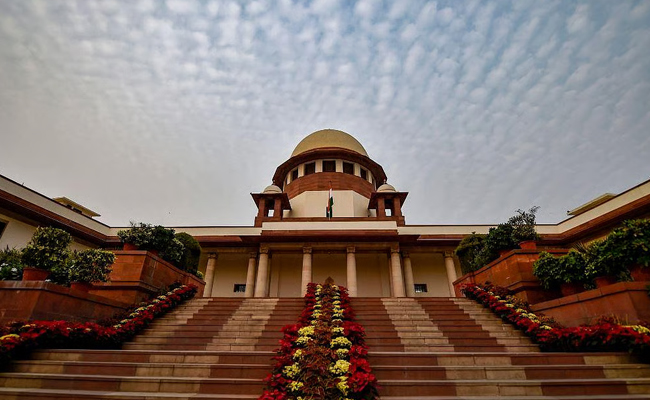
New Delhi (PTI): The Supreme Court on Wednesday refused to accede to the Centre's request to adjourn the hearing on pleas challenging the constitutional validity of a 2023 law that removed the CJI from a committee responsible for appointing the chief election commissioner and the deputies, saying the matter is "more important" than the Sabarimala case.
A nine-judge constitution bench headed by Chief Justice Surya Kant is currently hearing petitions regarding discrimination against women at religious sites, including the Sabarimala temple in Kerala, as well as the scope of religious freedom across various faiths.
A bench comprising justices Dipankar Datta and Satish Chandra Sharma turned down the request by Solicitor General Tushar Mehta, appearing for the Centre, to adjourn the hearing on the ground that he was currently occupied before a nine-judge bench in the Sabarimala reference case.
Referring to the gravity of the current challenge to the Chief Election Commissioner and Other Election Commissioners (Appointment, Conditions of Service and Term of Office) Act, 2023, Justice Datta said, "This matter is more important than any other matter."
"Let your (solicitor general's) associates take notes today. Let the petitioners start. All matters are important. We read in the newspapers that there is an observation that the PIL in Sabarimala should not have been entertained by the court. So, with due respect to the judges, nine judges are occupied in a matter where there is an observation that it should not have been entertained in the first place," Justice Datta said.
ALSO READ: Girl mauled to death by stray dogs in Punjab's Hoshiarpur
The bench then directed the petitioners to conclude their arguments by Thursday, allowing the Centre to present its submissions on a subsequent date. The bench then proceeded with the hearing which is underway.
Earlier on March 20, CJI Surya Kant recused himself from hearing the petitions. "I will be accused of conflict of interest. There is a conflict of interest," the CJI had said. The law, enacted by Parliament in December 2023, came months after a landmark verdict by which the apex court directed that election commissioners be appointed by a committee comprising the prime minister, the leader of the Opposition, and the chief justice of India.
The bench had said that the system will remain in force till a law is enacted.
Under the 2023 Act, the selection committee consists of the prime minister, a Union minister nominated by the prime minister and the leader of Opposition (or leader of the largest opposition party in the Lok Sabha).
The PILs said the exclusion of the CJI from the panel undermines the independence of the appointment process.
The law has been challenged by multiple petitioners, including Congress leader Jaya Thakur and the Association for Democratic Reforms.
Earlier, the Centre defended in the Supreme Court the appointment of two new election commissioners under the 2023 law that excludes the chief justice of India from the selection committee, saying the independence of the Election Commission does not arise from the presence of a judicial member on the committee.
In an affidavit filed in the apex court, the Union law ministry rejected the petitioner's claim that the two election commissioners were hastily appointed on March 14, 2024, to "pre-empt" the orders of the top court the next day, when the matters challenging the 2023 law were listed for hearing on interim relief.
The apex court also refused to stay the appointment of new election commissioners under the 2023 law.
A five-judge constitution bench had in March 2023 ruled that the chief election commissioner and election commissioners shall be appointed on the advice of a committee comprising the prime minister, the leader of the Opposition in the Lok Sabha and the chief justice of India.