Minister Kumaraswamy questions subsidies for Micron technology's Gujarat plant for every job created
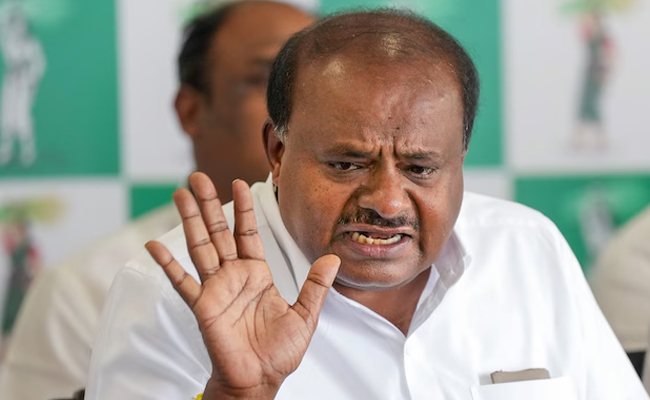
Bengaluru: Union Minister H D Kumaraswamy, from the JD(S) party, has raised concerns over the substantial subsidies allocated to US semiconductor giant Micron Technology for setting up a $2.5 billion unit in Gujarat.
Kumaraswamy questioned the allocation of approximately Rs 3.2 crore in subsidies for each job created by the new manufacturing facility, expected to generate 5,000 jobs.
In a televised address to party workers in Karnataka, Kumaraswamy initially identified Micron Technology before retracting his statement, citing lack of authorization. He emphasized the need to evaluate the justification of such hefty subsidies, which constitute 70% of the company's total investment, contrasting it with support provided to small-scale industries in local industrial estates like Peenya in Bengaluru.
Acknowledging Prime Minister Narendra Modi for assigning him the steel and heavy industries portfolios, Kumaraswamy pledged to prioritize employment generation nationwide, including encouraging job opportunities beyond Karnataka with a willingness to relocate.
Reflecting on his party's political dynamics, Kumaraswamy criticized the Congress's approach of guarantee schemes in Karnataka, advocating instead for policies that foster self-reliance through job creation. Despite past political friction with the Congress, he expressed readiness to collaborate for the state's welfare and called for setting aside political differences.
Let the Truth be known. If you read VB and like VB, please be a VB Supporter and Help us deliver the Truth to one and all.
Karnataka electoral roll SIR exercise to begin from June 20
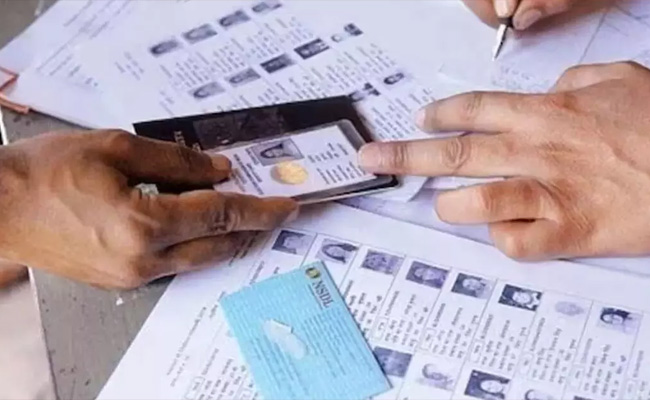
Bengaluru (PTI): Karnataka will begin SIR of electoral rolls from June 20 as part of a nationwide exercise covering 16 states and three Union territories, CEO Anbu Kumar said on Friday.
The drive will cover more than 5.55 crore electors in the state, he said.
As per the schedule notified by the Election Commission (EC), preparation, training and printing activities will be carried out from June 20 to June 29 and Booth Level Officers (BLOs) will conduct house-to-house visits from June 30 to July 29.
The rationalisation of polling stations is scheduled to be completed by July 29. The draft electoral roll will be published on August 5, following which claims and objections can be filed between August 5 and September 4.
The notice phase and disposal of claims and objections will continue from August 5 to October 3, and the final electoral roll will be published on October 7, it said.
ALSO READ: Sindhu out of Thailand Open, loses to Yamaguchi in quarterfinals
Addressing a press conference here, CEO Kumar said that in Karnataka, the Office of the Chief Electoral Officer is fully prepared to proceed with the SIR of electoral rolls.
As part of this exercise, we have successfully mapped 86.46 per cent of our voters, he said.
"The primary objective of this entire exercise is to ensure that every eligible voter is enrolled, while simultaneously ensuring that no ineligible individuals are included in the voter list. Therefore, I seek the support and cooperation of all the voters of Karnataka, all political parties, and our friends from the media," he added.
According to the statement issued by the CEO's office, 59,050 BLOs will be involved in the SIR of the electoral roll in the state. The exercise will cover approximately 5,55,74,064 electors in the state as of May 12.
The SIR is a participative and transparent exercise involving electors, political parties and the election machinery. During the revision process, BLOs will undertake house-to-house visits for the distribution and collection of enumeration forms, the statement said.
Stating that there are currently 25,284 Booth Level Agents (BLAs) appointed by recognised political parties, the CEO urged all recognised political parties to appoint BLAs for every polling station to ensure active participation and transparency in the revision process.
Electors have been requested to cooperate with BLOs during the house-to-house distribution and collection of enumeration forms.
Further details regarding the revision process, forms and schedule will be made available on the official websites of the District Election Officers, the Chief Electoral Officer, Karnataka, and the Election Commission of India, the statement said.