Minister Muniyappa asks hotels to wait for a week to overcome LPG crunch
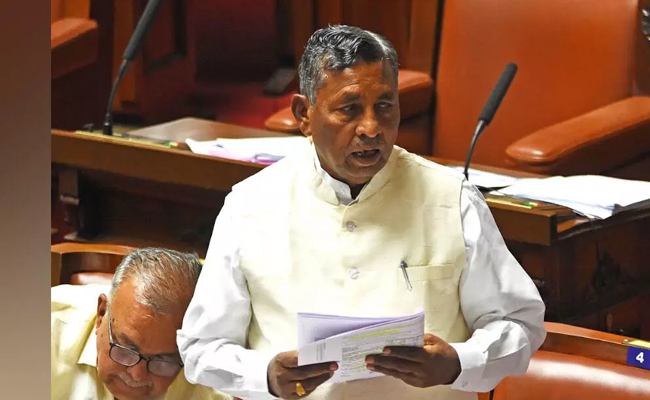
Bengaluru (PTI): Karnataka Food and Civil Supplies Minister K H Muniyappa on Wednesday said the state is facing an acute shortage of LPG cylinders for commercial use, with limited supplies forcing the government to prioritise essential sectors while asking hotels and eateries to temporarily switch to alternative arrangements.
He said the crisis has arisen due to supply constraints at the national level, with shipments stuck overseas, and that the state is making efforts to manage distribution until the situation normalises.
“We have very limited supply for restaurants, dhabas, hotels and industries, only about 1,000 cylinders. It has become very difficult to decide who should get how much from these 1,000 cylinders,” Muniyappa said in the Karnataka Legislative Council.
Citing the reason behind the shortage, he said, “The Central government is making efforts and is in constant touch with Iran. Around 16 ships are in queue and are not being released. If they are released, the situation will ease and return to normal.”
The minister said the government has urged commercial establishments to adjust operations.
“I have called a meeting of hotel owners and told them that for a week they must adjust, even if it means using electricity. This is a difficult situation, a war-like scenario, and the hoteliers should manage by using electricity for the time being,” he said.
Muniyappa said the state plans to streamline supplies by pooling available stock over a week.
“We will consolidate these 1,000 cylinders over a week and increase them to around 10,000 to 15,000 cylinders. I will call the association and discuss how to distribute them,” he said, adding that further consultations will be held next week.
Emphasising that domestic consumers remain the top priority, he said household supply will not be disrupted under any circumstances. “Priority is for domestic use. Household supply cannot be stopped at any cost. Every day, about 3,52,921 cylinders are being consumed,” he said, noting that oil marketing companies are continuing daily distribution.
The minister said the main challenge lies in commercial allocation, which has been capped by the Centre.
“The central government has allowed only 20 per cent allocation. The daily requirement for commercial cylinders is 44,000. Arrangements have been made to supply about 9,000 cylinders,” he said.
He detailed the prioritisation plan evolved in consultation with oil companies.
“We are providing 4,200 cylinders to educational institutions, student hostels, hospitals and other essential institutions,” he said.
In addition, about 1,200 cylinders are being supplied to government-run facilities and key public service points.
“For government PHU institutions, canteens located at airports, railway stations and bus stations, as well as Indira canteens, we are supplying about 1,200 cylinders as per their full requirement."
According to Muniyappa, certain sectors critical to the economy are also being supported.
“For seed processing, food processing, agriculture and allied sectors, pharmaceutical industry, fisheries, zoological parks, sports and sports hostels. Around 500 cylinders are being provided,” he said.
Responding to concerns raised by legislators, he said temporary relief measures have been extended during the ongoing Assembly session.
“As long as the Assembly session continues, we will provide about 50 per cent of their requirement. We cannot provide more than that, but considering the urgency, this arrangement has been made,” he added.
Let the Truth be known. If you read VB and like VB, please be a VB Supporter and Help us deliver the Truth to one and all.
No unannounced load shedding in Kerala, outages due to overload, says Minister
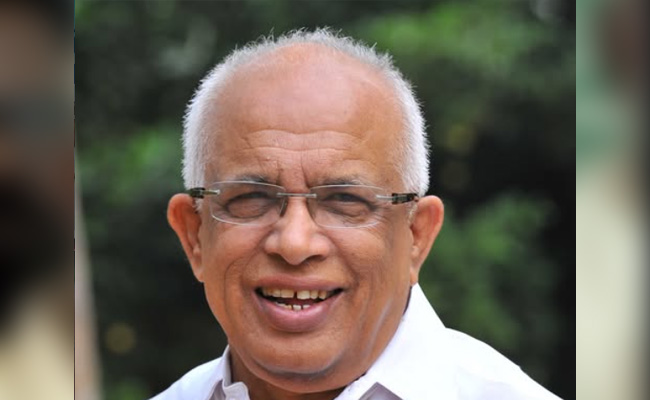
Palakkad (PTI): Kerala Electricity Minister K Krishnankutty on Saturday said there was no unannounced load shedding in the state, attributing recent power interruptions to temporary overload caused by high consumption.
Clarifying concerns raised from various parts of the state, the minister said the disruptions are not deliberate but occur when demand peaks, particularly between 10 pm and 11 pm.
"It is not being done intentionally. Power consumption has risen sharply, and when there is excessive and indiscriminate usage, the system experiences overload, leading to natural supply interruptions," he told reporters here.
His remarks come amid complaints that several areas have been witnessing frequent power cuts, often lasting around 15 minutes and occurring multiple times during the night.
Krishnankutty said the state's power demand has crossed 6,195 MW, putting pressure on the supply system. He added that around 70 per cent of Kerala's electricity is procured from outside, and existing power banking arrangements have been exhausted.
"We have approached the Regulatory Commission seeking permission to purchase more power. However, this will come at a higher cost," he said.
The minister said the government is trying to avoid increasing electricity tariffs and urged consumers to exercise restraint in usage to help manage the situation.
Responding to opposition criticism over the ruling LDF's earlier claims of a decade without power cuts, he said the current situation is not unique to Kerala.
A power crisis is emerging across the country, he said, and sarcastically asked the Opposition to take note of the role of natural factors in this.
Krishnankutty expressed confidence that the situation would improve within two days, while cautioning that long-term energy security would depend on enhancing in-state power generation.
He also warned that future generations could face serious challenges if adequate electricity production capacity is not developed within Kerala.