Minister Zameer sending 300 Hajj camp volunteers to Umrah pilgrimage: Siddaramaiah

Bengaluru, September 30: Former chief minister Siddaramaiah said that Minister Zameer Ahmed Khan was sending 300 Haj camp volunteers out of 700 to Umrah pilgrimage.
Inaugurating the process of selecting volunteers through lottery at Haj Bhavan at Thirumenahalli on Sunday, Siddaramaiah said that every Muslim would have the desire to go to Mecca and Madina once in their lifetime. But it would cost minimum Rs 80,000 to Rs 1 lakh.
But the poor could not afford this amount. Those who were selected through lottery would leave for the pilgrimage in the first week of January. Last year, he has sent 200 volunteers and this year, 300 persons would be going, he said.
Zameer Ahmed would respond to the problems of the poor due to which, he was appointed as the Minister in the Coalition government. Kuvempu had advocated the state as a peaceful garden of all communities. So, everybody should live together with peace and harmony. Then only, equality and social harmony would be established in the society, he said.
Minister Zameer Ahmed Khan, Former minister Prof Mumtaz Ali Khan, State Haj Committee CEO Sarfaraz Khan Sardar, Maulana Muzammil and others were present.


Let the Truth be known. If you read VB and like VB, please be a VB Supporter and Help us deliver the Truth to one and all.
Bihar: Over 150 children fall ill after consuming 'mid-day meal' in Saharsa
Saharsa (PTI): More than 150 children were taken ill after allegedly consuming food that was part of the mid-day meal in a school in Bihar’s Saharsa district, a senior official said on Thursday.
The incident occurred at a middle school in Baluaha village of the district.
The official said that 115 children were undergoing treatment at the Sadar Hospital, while around 50 students were admitted to Mahishi Public Health Centre.
“We received information that several children fell ill after consuming the mid-day meal in Baluaha. The children were initially treated at the primary health centre, but later, many were referred to the Sadar Hospital,” Saharsa District Magistrate Deepesh Kumar told reporters.
“According to doctors, the health condition of the children has improved, but they will be kept under observation for some time. There is no need to panic. Some kids are having mild fever. They are being treated accordingly,” Kumar said.
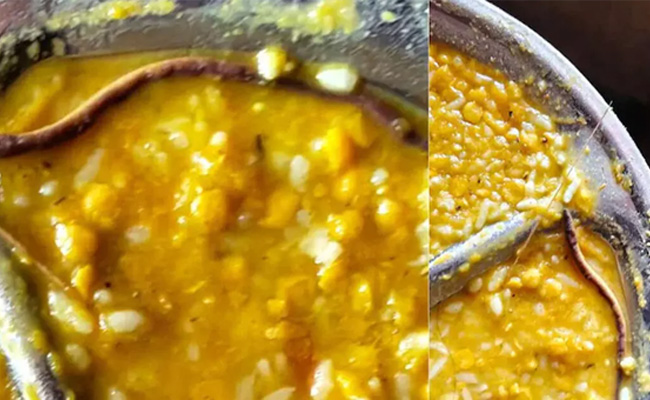
Meanwhile, family members of some children claimed that a snake was found in the container in which cooked pulses was stored at the school.
Of the 545 students present in the school, 200 had already eaten their meals by the time the snake was spotted, and later complained of stomach ache and vomiting, they said.
Regarding the claims, the DM said food samples have been collected from the school.
“We will be able to comment on this only after the results of the tested samples arrive,” he said.