Mock drills to be held at three places in Karnataka on May 7
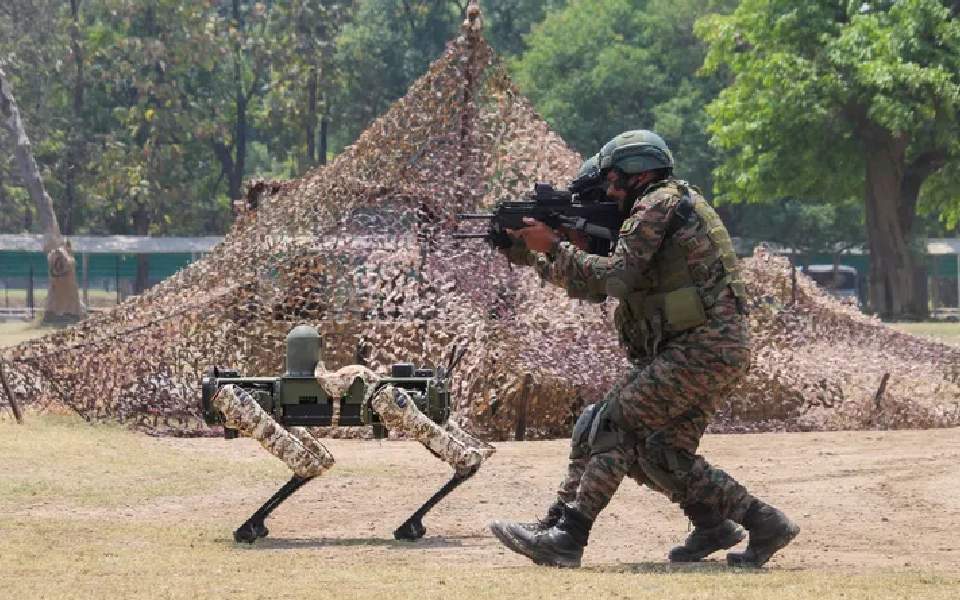
Bengaluru, May 6 (PTI): Mock drills will be conducted in Bengaluru, Karwar, and Raichur on May 7, given the "new and complex threats" that have emerged amid rising tensions with Pakistan following the Pahalgam terror attack.
Director General of Police Prashant Kumar Thakur said the drills will continue for a week and are aimed at identifying and addressing gaps in preparedness and resources.
"Mock drills will be held at three locations in the state, including Bengaluru city, which is a metropolitan area with numerous defence establishments and is a very sensitive district for Karnataka," Thakur said.
"The second location is Karwar in Uttara Kannada district, home to the Kaiga nuclear power station. The third is Raichur, selected due to the thermal power station there," he added.
Speaking to reporters, Thakur said, "We have discussed the mock drill components with the Ministry of Home Affairs."
He clarified that sirens are not the sole component of the drill. The exercise also includes hospital mobilisation, relief efforts, and rescue operations.
There are about 5,000 civil defence personnel in Bengaluru, all of whom will be activated and deployed across the city as part of the drill, he added.
The Union Ministry of Home Affairs has instructed all states to conduct such mock drills.
Thakur said the drill will be held at 4 pm tomorrow, with the timing chosen to account for both daytime and nighttime scenarios, from Northeast India to Gujarat.
The civil defence organisational structure includes people from diverse backgrounds—doctors, students, NCC cadets, and others. All of them have been trained and will be briefed and tested during the drill. By deploying them, we aim to assess and fix the gaps in preparation and resources, thereby building capability and confidence, he said.
Thakur noted that sirens have been installed at various police and fire stations.
In Bengaluru, 35 sirens have been deployed, of which 32 are functional, each with a range of approximately 3 km.
"People should know what actions to take when they hear the siren. We are expecting a formal guideline from Delhi on this. The decision regarding the drill was taken yesterday in Delhi, and we were informed last night," he said.
A video conference was held on Tuesday to finalise plans. We must assess our preparedness and address any shortcomings, he added.
According to a communication from the Ministry of Home Affairs, the measures to be taken during the mock drills include operationalising air-raid warning sirens, training civilians on civil defence procedures to protect themselves during a "hostile attack" and clearing bunkers and trenches.
Other steps include implementing crash-blackout measures, camouflaging vital plants and installations, and updating and rehearsing evacuation plans, according to a letter sent to the Chief Secretaries of all states and Union Territories.
The drills will also involve activating hotline and radio-communication links with the Indian Air Force (IAF), and testing the functionality of control rooms and shadow control rooms.
Let the Truth be known. If you read VB and like VB, please be a VB Supporter and Help us deliver the Truth to one and all.
Centre spent Rs 76.13 lakh on print media ads for RSS centenary, reveals RTI
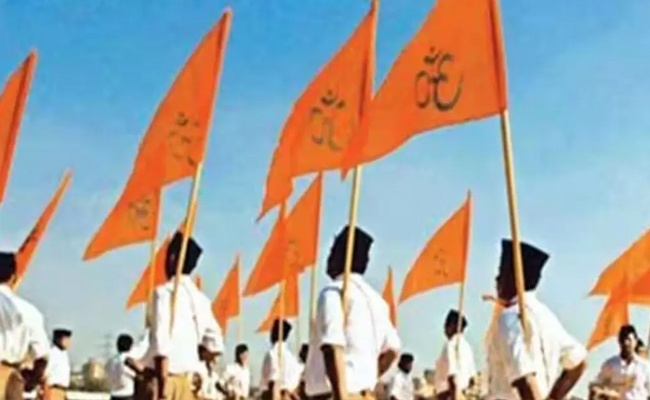
New Delhi: The Union Ministry of Culture allegedly spent Rs 76.13 lakh on print advertisements marking the 100-year celebrations of the Rashtriya Swayamsevak Sangh (RSS), according to a Right to Information (RTI) reply.
The information was sought by RTI activist Ajay Basudev Bose, who filed an application seeking details on expenditure incurred by the ministry for advertisements commemorating the RSS centenary.
Bose shared a picture of the reply from the ministry on his official ‘X’ handle.
“It is informed that an amount of Rs 76,13,129 has been spent on advertisement given in various print media by the Ministry of Culture on the occasion of the completion of 100 years of RSS,” the government’s reply stated.
RTI reply shows Min of Culture Govt of India spent a Whopping Rs 76L,13K,129 on Advertisement in Print Media on occasion of 100 yrs of #RSS
— AJAY Basudev Bose (@AjayBos93388306) April 16, 2026
When Everyone knows RSS is Not Registered & Does not Pay any Tax is it justified to spend Tax Payers Money on such Private event??@RSSorg… pic.twitter.com/dW4IUtdNCg
Bose questioned the expenditure in the post X, “when Everyone knows RSS is Not Registered & Does not Pay any Tax is it justified to spend Tax Payers Money on such Private event??”
Reacting to the development, Karnataka’s IT-BT and Panchayat Raj Minister Priyank Kharge also criticised the spending.
In a post on X, he asked why public money was being used for what he described as a “private ideological project.”
"Modi Sarkar spent Rs 76,13,129 of public money on newspaper advertisements to celebrate 100 years of the RSS. Why is Government spending taxpayers money on an unregistered, non-tax-paying organisation to celebrate their centenary?," he added.
Why is public money being used to serve a private ideological project?
— Priyank Kharge / ಪ್ರಿಯಾಂಕ್ ಖರ್ಗೆ (@PriyankKharge) April 16, 2026
Modi Sarkar spent ₹76,13,129 of public money on newspaper advertisements to celebrate 100 years of the RSS.
Why is Government spending taxpayers money on an unregistered, non-tax-paying organisation to… pic.twitter.com/EoZ6Pim3IM
According to reports, the RSS describes itself as a volunteer-based organisation and has stated that it functions as a body of individuals rather than a registered entity.
Founded by Keshav Baliram Hedgewar in 1925, the organisation is marking its centenary year beginning from Vijaydashami in 2025, with the milestone observed on October 2.