Moodigere BJP Yuva Morcha Chief arrested for instigating suicide of college girl
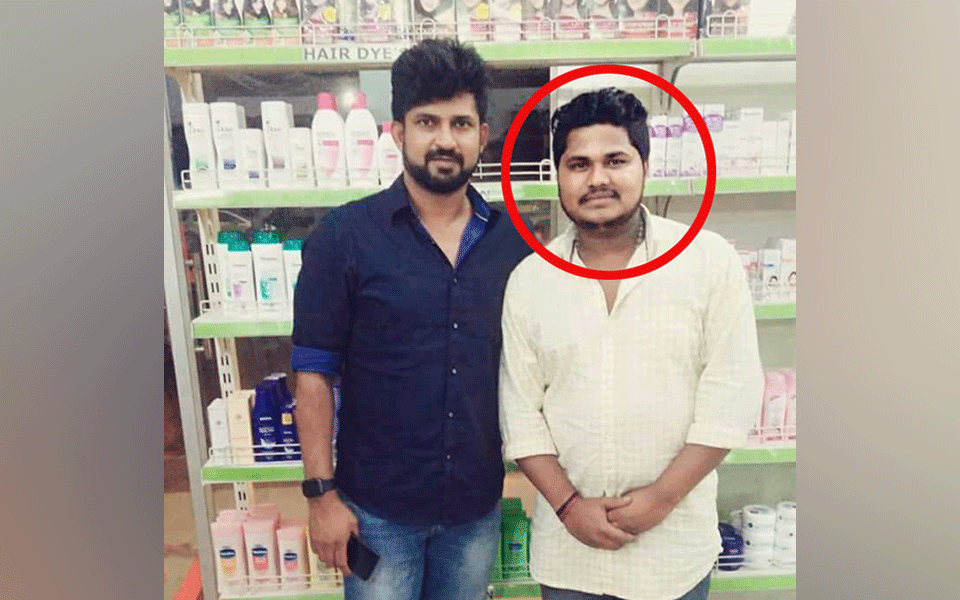
Moodigere: The Police here have arrested the Moodigere town unit BJP Yuva Morcha President M V Anil on the charges of instigating the suicide of Dhanya (20), a first year B.Com student of a first grade college in the town. Dhanya had ended her life on January 6, Saturday. Incidentally, the accused is said to be an influential man who is also known to Mysuru- Kodagu MP Pratap Sinha and MLA C T Ravi.
It is alleged that Anil along with other Sangh Parivar activists had recently been to the residence of the girl at Moodigere Chatra Maidan locality and had pulled her up for allegedly having friendship with a youth from another faith. The deceased girl was the only daughter of Yadava and Saraswathi couple.
It is said that a youth named Santosh of Belthangady had earlier chatted with Dhanya on WhatsApp wherein he had reportedly threatened her against having friendship with a youth of another community. He had taken the screenshot of the WhatsApp chat and had circulated it in the social media while also bringing the same to the notice of the Parivar activists.
It was following this that the latter had visited Dhanya's house and threatened her. Sources said they had told her parents that "their daughter was moving around with a Muslim boy and was a victim of Love Jihad."
It is believed that Dhanya who felt severely offended following this incident had taken the drastic step of ending her life by hanging herself on January 6 afternoon.
Though initially an attempt was made to hush up the incident by trying to state that she ended her life after her father snatched her mobile, later following allegations of shielding the accused, the cops filed FIR against four accused and managed to arrest one of them. The rest three are absconding and search is underway for them.
It is said Dhanya has even left behind a death note. Chikkamagaluru SP Annamalai has said that Police Department has taken this case very seriously.
Let the Truth be known. If you read VB and like VB, please be a VB Supporter and Help us deliver the Truth to one and all.
Lt Gen NS Raja Subramani to be India's next Chief of Defence Staff
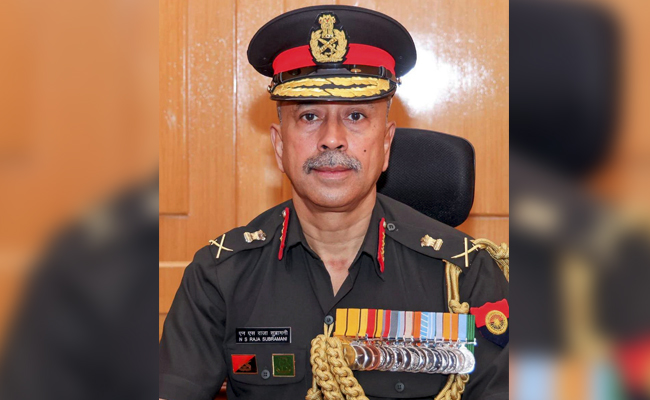
New Delhi (PTI): Lt Gen NS Raja Subramani will be India's new Chief of Defence Staff (CDS) and his key task is set to be to implement the ambitious theaterisation plan that seeks to ensure tri-services synergy.
He will succeed Gen Anil Chauhan whose tenure will come to an end on May 30.
Gen Chauhan, a former Eastern Army Commander, took charge as the country's senior-most military commander in September 2022, over nine months after the first CDS, General Bipin Rawat, died in a helicopter crash in Tamil Nadu.
The government has appointed Lt Gen NS Raja Subramani (Retd) as the Chief of Defence Staff, who will also function as the secretary of the Department of Military Affairs, the defence ministry said on Saturday.
Lt Gen Subramani is currently serving as the military adviser to the National Security Council Secretariat.
Prior to that, he was the Vice Chief of the Army Staff from July 1, 2024 to July 31, 2025, and was General Officer Commanding-in-Chief of the Central Command from March 2023 till June 2024.
As Chief of Defence Staff, Lt Gen Subramani's primary task will be to implement the theaterisation model to bring in tri-services synergy by rolling out integrated military commands.
The officer is a graduate of the National Defence Academy and the Indian Military Academy. He was commissioned into the eighth battalion of the Garhwal Rifles on December 14, 1985.
Lt Gen Subramani is an alumnus of Joint Services Command Staff College, Bracknell (UK), and the National Defence College, New Delhi. He holds a Master of Arts degree from King's College London and an MPhil in defence studies from Madras University.
In his illustrious career spanning over 40 years, Lt Gen Subramani has served across a wide spectrum of conflict and terrain profiles and tenanted a host of Command, Staff and Instructional appointments.
He commanded the 16 Garhwal Rifles in Counter-Insurgency operations in Assam as part of Operation Rhino, the 168 Infantry Brigade in Jammu and Kashmir, and the 17 Mountain Division in the Central Sector, all during a challenging operational environment.
He also has the distinction of commanding two Corps, including the Indian Army's premier strike Corps on the Western Front.