“Most unprofessional budget I have ever seen” Siddaramaiah slams Yediyurappa over Karnataka budget
Former CM added the budget was 'anti-farmer' and questioned Yediyurappa 'son of farmer' claims
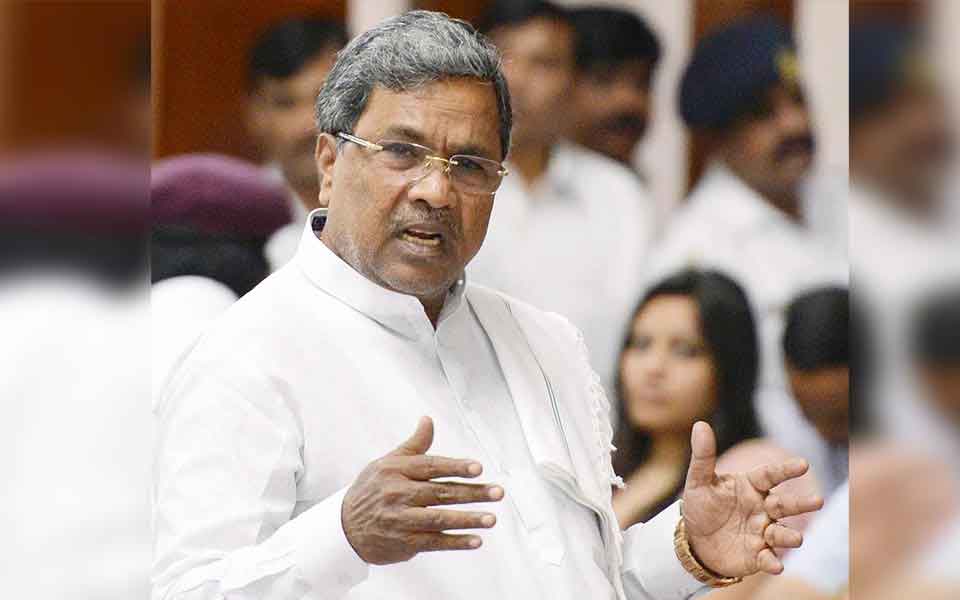
Bengaluru: Former Karnataka Chief Minister and Leader of Opposition in Karnataka Assembly, Siddaramaiah on Thursday evening slammed Chief Minister BS Yediyurappa over his government’s budget that was presented in the state assembly earlier in the day.
Siddaramaiah in a series of tweets from his twitter account criticised the budget and went on to write that it was the “most unprofessional budget” he had ever seen in his political career. He also added that Yediyurappa’s lack of confidence and lack of ability to govern was visible through his budget speech.
“The budget was discussed under just six compressed headings instead of department wise heads. This is done to mislead the public and hide their inefficiencies. This is also because the departments did not have ministers till recently & they know nothing” Siddaramaiah wrote in one of the tweets.
Adding that increase in prices and taxes of Petrol and Diesel would be a burden on common man, Siddaramaiah questioned state government’s ability to question BJP led central government about the “injustice to Karnataka in 15th FC”.
He also added that the budget was anti-farmer and that nobody would benefit from the budget presented by Yediyurappa on Thursday.
He further questioned the BJP’s tourism development agenda adding that additional Motor Vehicle taxes for sleeper buses and mini buses will increase the transportation cost in the state.
.@BSYBJP's lack of confidence & lack of ability to govern is visible in the budget speech. It is the most unprofessional budget I have ever seen.
— Siddaramaiah (@siddaramaiah) March 5, 2020
1/n#ಜನವಿರೋಧಿಬಜೆಟ್
.@BSYBJP has admitted the fact that there is huge reduction in the Central govt funds for the year 2019-2020. There is a shortfall of ₹11,887 Cr due to the failure of Central govt. The question is what were 25 elected MPs doing till now?
— Siddaramaiah (@siddaramaiah) March 5, 2020
2/n#ಜನವಿರೋಧಿಬಜೆಟ್
An unexpected budget from @BSYBJP. He calls himself as son of a farmer but this is an anti-farmer budget. No one will benefit from this budget. A complete failure to boost economy, to realise inclusive development & to improve standard of living.
— Siddaramaiah (@siddaramaiah) March 5, 2020
n/n#ಜನವಿರೋಧಿಬಜೆಟ್
There is reduction in fund allocation for Bengaluru development projects also. Only ₹500 Cr is allocated to sub urban railway project while Central govt had only allocated ₹ 1 Cr out of approx ₹3,600 Cr of their share.
— Siddaramaiah (@siddaramaiah) March 5, 2020
8/n#ಜನವಿರೋಧಿಬಜೆಟ್
.@BSYBJP has betrayed farmers. It lacks comprehensive program in the direction of doubling farmers' income. There is no clarity if they are continuing our pro farmer schemes. What is the status of Krishi Bhagya, Krishi Yanthradhare, etc?
— Siddaramaiah (@siddaramaiah) March 5, 2020
5/n#ಜನವಿರೋಧಿಬಜೆಟ್
There will also be a reduction in State's share of Central taxes in 2020-21 by ₹11,215 Cr due to 15th finance commission. But none of the @BJP4Karnataka leaders pressurized the Central govt to relook at the devolution formula.
— Siddaramaiah (@siddaramaiah) March 5, 2020
3/n#ಜನವಿರೋಧಿಬಜೆಟ್
Let the Truth be known. If you read VB and like VB, please be a VB Supporter and Help us deliver the Truth to one and all.
Sujit Nair raises concerns over speculation of DMK-AIADMK understanding to block TVK
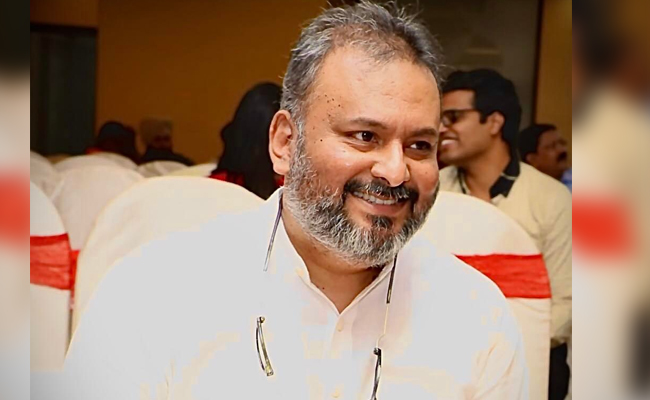
Chennai: Journalist and political commentator Sujit Nair has expressed concern over speculation that the Dravida Munnetra Kazhagam and the All India Anna Dravida Munnetra Kazhagam could explore a post-poll understanding to prevent Vijay-led Tamilaga Vettri Kazhagam from forming the government in Tamil Nadu.
In a social media post, Sujit Nair said the election verdict in Tamil Nadu reflected a clear public demand for political change and argued that the mandate should be respected irrespective of political preferences.
Referring to reports and political discussions surrounding a possible understanding between the DMK and AIADMK, he said he hoped such developments remained only speculative conversations and did not turn into reality.
Nair stated that if such an alliance were to take shape, it would raise serious questions about ideological politics in the country. He said TVK had emerged through a democratic electoral process and that the legitimacy to govern in a parliamentary democracy comes from the people’s verdict.
According to him, attempts to prevent an electoral winner from forming the government through unexpected political arrangements may be constitutionally valid, but many people could view them as politically opportunistic.
He further said that such a move could particularly affect the political image of the DMK, which has historically projected itself around ideology, social justice and opposition politics. Nair said that in ideological terms, the DMK appeared closer to TVK than to the AIADMK, and joining hands with its long-time political rival only to remain in power could weaken its broader political narrative.
He added that the same questions would apply to the AIADMK as well, as the party had spent decades positioning itself against the DMK and such an arrangement could create discomfort among its cadre and supporters.
Drawing a comparison with Maharashtra politics in 2019, Nair said he had expressed similar views when the Shiv Sena formed an alliance with the Indian National Congress and the Nationalist Congress Party after the Assembly elections.
He said post-poll alliances between long-standing political rivals often create a public perception that ideology and electoral mandates become secondary when political power equations come into play.
Nair also said such developments increase public cynicism towards politics and reinforce the belief among voters that ideology is often sidelined after elections.
He maintained that the Tamil Nadu verdict was emphatic and said respecting both the spirit and substance of the mandate was important for the credibility of democratic politics.