Mount Carmel College dress code faces criticism from students, sparks debate
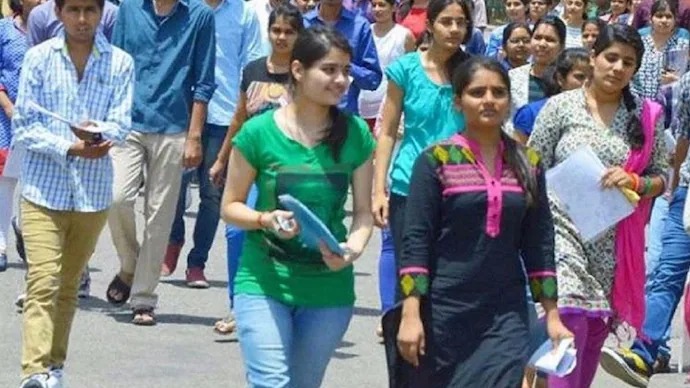
Bengaluru: A campaign opposing the dress code at Mount Carmel College has led to discussions over whether such regulations amount to moral policing and restrict students’ freedom of expression.
The campaign, shared on Instagram by Collective Bangalore, referred to the code as “new”. The college principal said the rules have existed for years, and the guidelines bar students from wearing flip-flops, cargo pants, round or V-neck T-shirts and sporting coloured hair. Male students are also required to maintain short and well-groomed hair.
Students have raised concerns not only about the dress code but also about restrictions on movement within the campus and the cancellation of student elections. Three students told Metrolife that they faced uncomfortable checks at the college gate. A first-year female student said she was once sent home for wearing pants with pockets and, on another occasion, for a sleeveless blouse despite a shirt worn over it. A male student said the rules created “unwanted fear among girls” and added that he has been repeatedly asked to cut his long hair.
Opinions from faculty and administrators across other institutions remain divided. Joshua Samuel, principal of Baldwin Methodist College, said dress codes ensure decency and equality. He added that his students generally accept them. Y C Kamala, associate professor at Government First Grade College, Malleswaram, said a dress code was “necessary” during college hours to keep the focus on academics. She also acknowledged that the idea of “decency” is subjective.
Venugopal K R, former principal of University Visvesvaraya College of Engineering, supporting uniforms said that they help reduce visible disparities among students from different economic backgrounds. He compared moderate attire in classrooms to lab coats, which he said promote discipline and concentration.
In contrast, S Japhet, former vice-chancellor of Bengaluru Central University, opposed mandatory dress codes, particularly in women’s colleges. He said dress is “a form of self-expression.” He also argued that restrictions in the name of decency amount to moral policing. According to him such decision, should be made in consultation with students, parents and alumni.
Some academics described dress codes as a form of surveillance. A journalism professor said rules rooted in vague ideas of decency often lead to micromanagement, while Rolla Das, assistant professor at a private university, said arbitrary restrictions tend to reinforce veiled patriarchy and have a greater impact on students from marginalised groups.
Drawing parallels with the hijab ban controversy, critics of strict dress codes have warned that such rules could infringe on fundamental freedoms. Supporters of the dress code argue that the step encourage discipline, equality and academic focus.
Let the Truth be known. If you read VB and like VB, please be a VB Supporter and Help us deliver the Truth to one and all.
Real Madrid fines Valverde and Tchouaméni half a million euros each for altercation
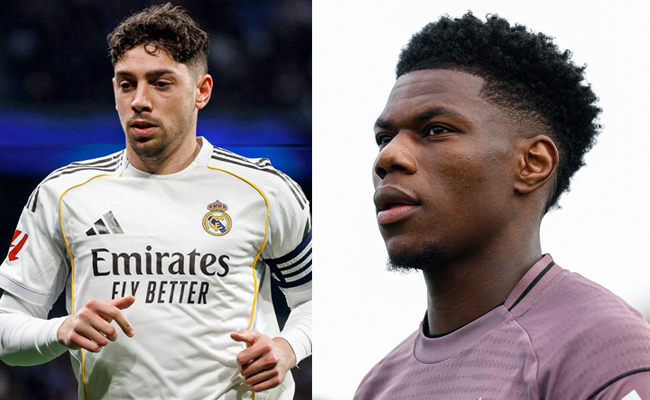
Barcelona (AP): Real Madrid slapped players Federico Valverde and Aurélien Tchouaméni with half-a-million-euro ($588,000) fines on Friday for their altercation during practice.
The massive fines came a day after the midfielders tussled when the team trained. Valverde said in a post on social media on Thursday that no punches were thrown. But Valverde knocked his head on a table and he suffered a small cut that required a brief hospital visit.
On social media, Valverde initially called it a “meaningless fight” with a teammate and said “everything has been blown out of proportion."
His employers, however, considered it a significant enough breach of team discipline to nail both Valverde and Tchouaméni with fines that bite even the bank account of a top soccer player. The half-a-million euro penalties reflect the reputational damage the club was enduring in a chaotic end to a disappointing season.
In a statement, the 15-time European champion said its disciplinary action was concluded after both players expressed to the club “their complete remorse for what happened and apologized to one another.”
Madrid added they also apologized to their teammates, the coaching staff and club supporters, as well as showing their willingness to accept whatever disciplinary action the club deemed “opportune.”
Tchouaméni was back training with Madrid on Friday, two days before they play at Barcelona in a clasico. Madrid has to win otherwise Barcelona will be crowned La Liga champion.
After being notified of the fine, he posted a public apology to the club and its fans on social media.
“What happened this week in training is unacceptable,” Tchouaméni wrote. "I say this while thinking about the example we are expected to set for young people, whether in football or at school.
“Above all, I am sorry for the image we projected of the club.”
Valverde was not at practice due to the head knock.
Both players are set to play in the World Cup next month, with Tchouaméni playing for France and Valverde for Uruguay.
Chaotic end to a poor season
===================
The run-in between the players, who for seasons have played side by side in Madrid's midfield, came after they argued this week in previous training sessions. But tempers boiled over on Thursday. Spanish media was rife with reports that the players previously disagreed over the club's decision to let coach Xabi Alonso go after just months on the job.
It was not the only altercation involving Madrid players during training this week. Álvaro Carreras confirmed he was in a “minor” incident with a teammate. Spanish media said he and fellow defender Antonio Rüdiger got into a scuffle.
Álvaro Arbeloa, the coach who was promoted from Madrid's reserve team when Alonso was fired in January, will face tough questions on what went wrong inside the changing room when he gives a press conference on Saturday ahead of the clasico at Camp Nou.
Madrid is facing a second consecutive campaign without a major trophy amid rumors in the Spanish media that club president Florentino Pérez is considering bringing back Jose Mourinho to straighten out his underperforming team.