MUDA case: Surjewala slams BJP for 'fake propaganda'

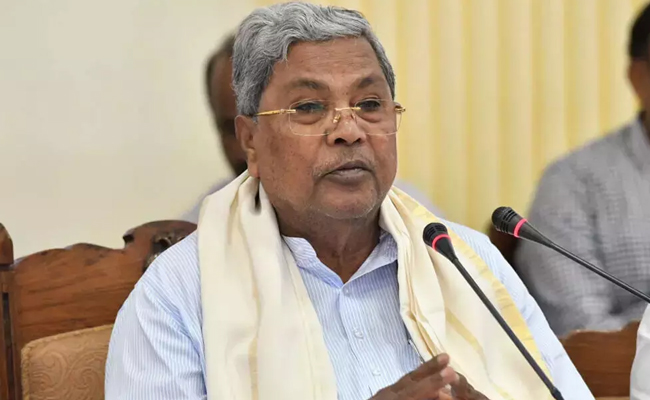
Bengaluru (PTI): AICC General Secretary in-charge of Karnataka Randeep Singh Surjewala on Monday accused the BJP of "manufacturing" false allegations against Chief Minister Siddaramaiah over MUDA case as he welcomed the Supreme Court’s decision to uphold the Karnataka High Court judgment, which quashed the ED notice in the case.
Referring to media reports, he said the apex court ruling has invalidated what he termed as "fake propoganda" of ED-BJP partnership.
In a post on X, he said, "BJP manufactured false allegations against Karnataka CM, @siddaramaiah over MUDA ! BJP protested for months against Karnataka CM, @siddaramaiah over MUDA ! BJP misused the Office of Governor and unleashed the ED against Karnataka CM, & his wife over MUDA ! BJP maliciously hounded and levelled false allegations against Karnataka CM, over MUDA !"
"The Supreme Court today and High Court earlier, rejected and quashed the fake propaganda of ED-BJP partnership. Truth has won! Satyamev Jayate," he said.
The Mysuru Urban Development Authority case involves alleged irregularities in land allotted to Parvathi Siddaramaiah, wife of Chief Minister Siddaramaiah.
In the MUDA case, it is alleged that compensatory sites were allotted to Parvathi in an upmarket area in Mysuru, which had higher property value as compared to the location of her land, which had been "acquired" by the MUDA.
The MUDA had allotted plots to Parvathi under a 50:50 ratio scheme in lieu of 3.16 acres of her land, where it developed a residential layout.
Under the controversial scheme, MUDA allotted 50 per cent of developed land to the land losers in lieu of undeveloped land acquired from them for forming residential layouts.
It is alleged that Parvathi had no legal title over the 3.16 acres of land at survey number 464 of Kasare village, Kasaba hobli of Mysuru taluk.
The Lokayukta as well as the ED (Enforcement Directorate) are probing the matter simultaneously.
The ED had issued notices to both under the Prevention of Money Laundering Act (PMLA), which were later quashed by the Karnataka High Court.
The ED had challenged the High Court’s decision before the Supreme Court through Special Leave Petitions (SLPs).
Let the Truth be known. If you read VB and like VB, please be a VB Supporter and Help us deliver the Truth to one and all.
Two arrested in K'taka for assaulting minors, uploading CSAM content

Bengaluru (PTI): Two men were arrested for allegedly sexually assaulting two minor girls, recording the acts on mobile phones and uploading the videos online as child sexual abuse material, police said on Thursday.
The accused have been identified as Kiran Kumar (29), hailing from Chitradurga district, and Aditya M K (20), hailing from Shivamogga district, they said.
A probe was initiated after information was received from the NCRP portal regarding a suspected instance of creation of Child Sexual Abuse Material (CSAM) for online dissemination, police said.
Accordingly, a case was registered at Kaggalipura Police Station under relevant sections of the IT Act on May 10, they added.
Investigation revealed that two minor girl victims were exploited and videos were created and uploaded to the internet. The child victims have subsequently recorded their statements as per procedure and further necessary legal steps have been taken, Pronab Mohanty Director General of Police, Cyber Command, said in a statement.
Based on the statements of the victims, the accused persons, who allegedly assaulted the minors, recorded the acts on mobile phones and uploaded the videos online, were arrested, he said.
Following the probe, sections 65(2) (rape) and 70 (gangrape) of the Bharatiya Nyaya Sanhita, along with relevant sections of the POCSO Act, have been added to the FIR, police said.
Officials collected relevant information and on May 12, arrested the accused persons and seized three mobile phones belonging to them, in which the videos had allegedly been recorded, he said.
The accused were later produced before the court and taken into police custody for further investigation, he added.
According to him, in CSAM cases, police usually apprehend offenders who have downloaded such content or have kept them in their possession after obtaining them from elsewhere, usually the internet.
"The present case is one of the very few instances where content creators and uploaders have been apprehended," Mohanty added.