NCBC summons Karnataka Chief Secretary over Muslim quota inclusion
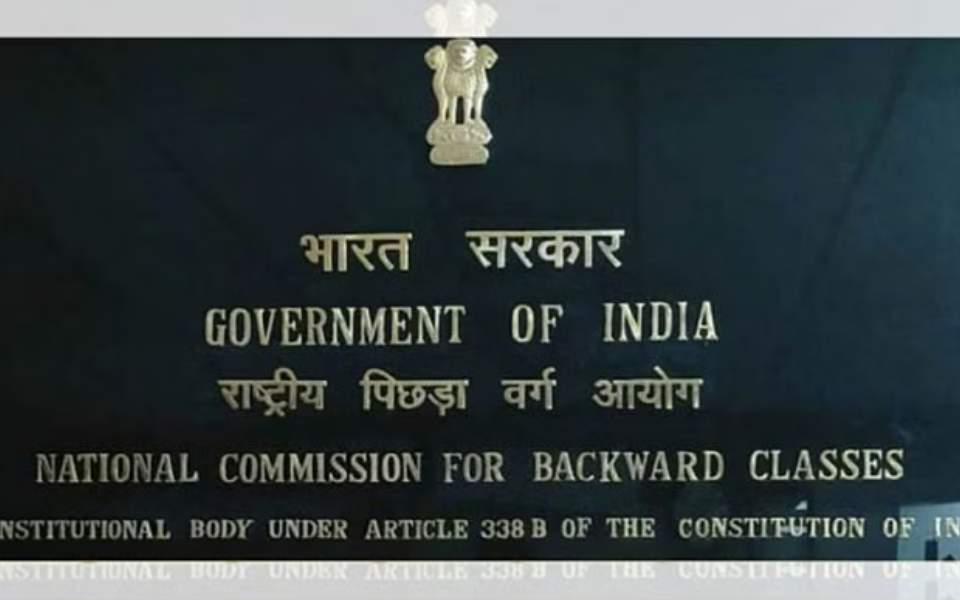
New Delhi: The Chairman of the National Commission for Backward Classes, Hansraj Ahir, has called upon the Karnataka Chief Secretary to elucidate the rationale behind the inclusion of the entire Muslim community in the OBC category in Karnataka.
Prime Minister Narendra Modi has levied accusations against the Congress party, alleging the transfer of reservation benefits from other backward classes to their electoral constituencies.
"This is a blatant effort to Islamize India and sow division within the nation. Similar endeavours were undertaken during the UPA government's tenure, which the BJP vehemently opposed. Disregarding the Justice Verma Committee Report and the Sachar Committee Report, this is an attempt by the Congress to plunder the reservation entitlements of other backward classes, SCs, and STs," asserted Uttar Pradesh CM Adityanath.
In response to these developments, the NCBC Chairman has summoned the Chief Secretary of Karnataka, instructing them to furnish a comprehensive report outlining the criteria used to classify the Muslim community as educationally and socially backward, thereby granting them 4 percent reservation under Category 2B.
Karnataka's state government currently extends reservation to 17 socially and educationally backward Muslim communities under Category 1 and 19 communities under Category 2A.
Let the Truth be known. If you read VB and like VB, please be a VB Supporter and Help us deliver the Truth to one and all.
Thumbay Group begins work on Sharjah’s first private integrated psychiatric, rehabilitation hospital
Sharjah: Thumbay Group has laid the foundation stone for the Thumbay Psychiatric and Rehabilitation Hospital at Sharjah Healthcare City, a 120-bed facility that the company says will be the region’s first private, fully integrated hospital dedicated to psychiatric care, neuro-rehabilitation and addiction recovery.
The groundbreaking ceremony was led by Dr. Abdelaziz Saeed Al Mheiri, who is also a member of the Sharjah Executive Council, in the presence of Dr. Thumbay Moideen.
Spread across 110,000 square feet, the hospital is being developed to address growing demand for specialised mental health and rehabilitation services in the UAE and the wider Gulf region.
The facility will include inpatient and outpatient services in psychiatry, neuro-rehabilitation, addiction treatment, child and adolescent mental health, and care for mood and anxiety disorders. It will also feature VIP inpatient villas designed to provide privacy and support long-term recovery.
A mosque, named the Thumbay Masjid, will be constructed within the campus and will be open to the public.
The hospital is being designed to meet standards for Commission on Accreditation of Rehabilitation Facilities (CARF), an internationally recognised accreditation system for rehabilitation facilities.
Speaking at the event, Dr. Abdelaziz Saeed Al Mheiri said the project reflects Sharjah’s commitment to strengthening healthcare infrastructure in all aspects of wellbeing.
“Mental health and rehabilitation have long needed dedicated infrastructure, and we are proud to support a private partner whose vision matches the ambition of this Emirate,” he said.
Dr. Thumbay Moideen said the project was a response to a growing need for specialised mental healthcare services in the region.
“We have spent over three decades building healthcare in this region, and the one conversation that has grown louder every year is mental health. Families have been carrying this quietly for too long. This hospital is our answer. It is purpose-built, not retrofitted, and it has been designed around dignity, recovery, and outcomes that families can trust,” he said.
Construction is scheduled to begin in June 2026, and the hospital is expected to become operational by mid-2027.
Once completed, the facility will become part of Thumbay Group’s network of healthcare, education and diagnostic institutions across the UAE.