Nearly 700 km of Karnataka rivers polluted; cities, towns depend on contaminated water
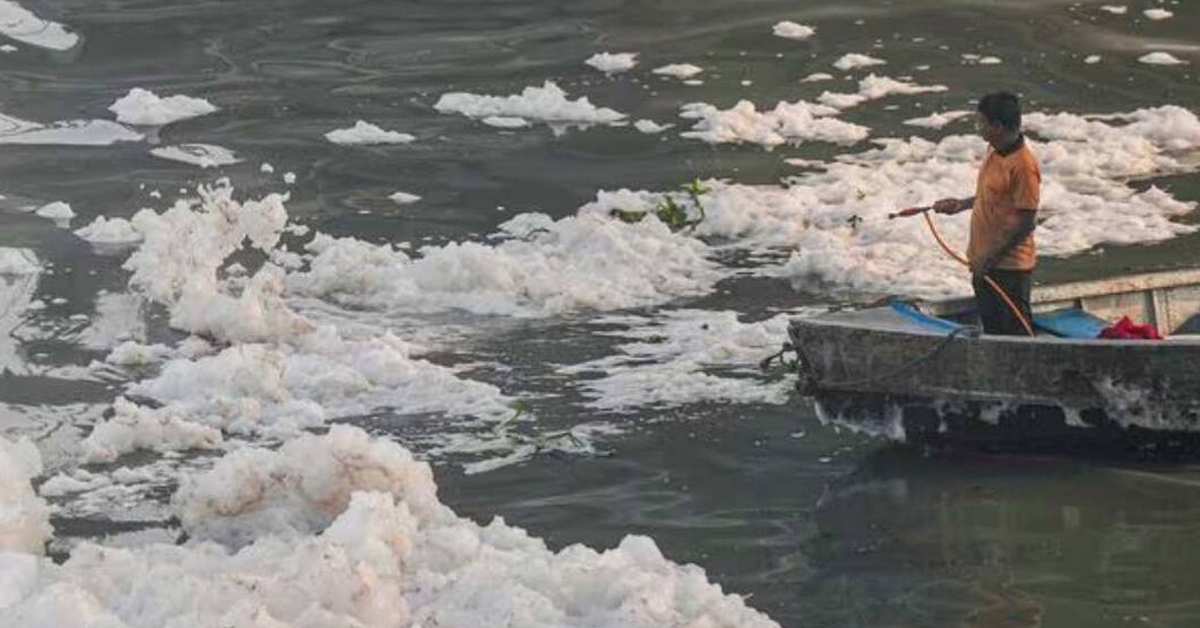
Shivamogga: A total of 693.75 of river stretches across Karnataka are polluted, and water from several of these rivers is being supplied to towns and cities, the State government informed the Legislative Assembly.
According to a report published by The New Indian Express on Monday, replying to an unstarred question by Thirthahalli MLA Araga Jnanendra during the winter session in Belagavi, Forest, Environment and Biodiversity Minister Eshwar Khandre said rivers are classified into five categories, P1 to P5, based on Biochemical Oxygen Demand (BOD) levels, with P1 being the most polluted.
He reportedly said untreated domestic wastewater from urban and rural areas is the main reason for river pollution. Arkavati, Lakshana Teertha, Tungabhadra, Bhadra, Tunga, Cauvery, Kabini, Kagina, Krishna, Shimsha, Bheema and Netravati are the polluted rivers and so far, 112 polluted drainages along these rivers have been identified.
Khandre explained that rivers are classified into five pollution categories P1 to P5. The Arkavati River has been placed in the P1 category, while no rivers fall under P2 and P3. Tungabhadra, Bhadra and Shimsha are categorised under P4, and eight other rivers fall under P5.
Khandre allegedly said domestic wastewater from municipalities, towns and villages along riverbeds is being discharged into at least 17 rivers, identified by the Central Pollution Control Board (CPCB). This is the primary cause of river pollution.
According to the report, the minister said drinking water is being supplied from polluted rivers in districts such as Mandya, Ramanagara, Vijayapura and Shivamogga. In parts of Uttara Kannada, Ballari, Vijayanagara and Bagalkot, local bodies are also drawing water from polluted river sources.
In 2022-23, CPCB identified South Pinakini, Aghanashini, Sharavathi and Gangavali rivers too as polluted. But wrote to CPCB, stating that these rivers are not polluted and sought their removal from the list. An action plan is being prepared for the South Pinakini River, he said.
On remedial measures, Khandre reportedly said the Karnataka State Pollution Control Board is setting up sewage treatment plants as per the directions of National Green Tribunal.
As per the report, under 12 river rejuvenation plans, the state generates 817.31 million litres per day (MLD) of sewage. While 41 STPs with a capacity of 614.1 MLD are operational, 203.21 MLD of sewage remains untreated.
Work is underway to establish 19 STPs with a capacity of 248.91 MLD, while 39 more STPs with a combined capacity of 357.92 MLD are in the planning stage. Progress is being monitored and reported regularly to the NGT and the Union Ministry of Jal Shakti.
The minister reportedly said the state government gave its approval for underground drainage works worth Rs 535.56 crore in 2021 for 24 cities/towns besides Rs 523.80 crore for nine UGD projects.
Let the Truth be known. If you read VB and like VB, please be a VB Supporter and Help us deliver the Truth to one and all.
Govt employees mandated to complete competency-linked courses: Centre in Rajya Sabha
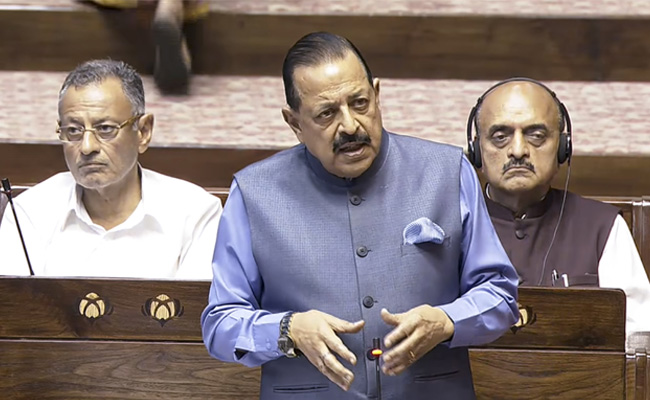
New Delhi (PTI): All central government employees have been mandated to complete competency-linked courses relevant to their role or level on a dedicated online platform annually, which will reflect in their annual performance appraisal reports, the Rajya Sabha was informed on Thursday.
The government has adopted a competency-based capacity building approach, focusing on role-based learning, continuous skill development, and alignment of training with role requirements, Union Minister of State for Personnel Jitendra Singh said in a written reply.
"The Department of Personnel and Training (DoPT) has mandated all central government employees and officers of the all-India services to complete competency-linked courses mapped to their role/level and comprehensive assessments prescribed by their ministries/ departments/organisations (MDOs) or cadre controlling authorities (CCAs) on iGOT (integrated government online training) portal annually, which is to be also reflected in their annual performance appraisal reports (APARs)," he said.
ALSO READ: FIR against Rajasthan MLA Ravindra Singh Bhati for threatening folk singer
The minister was responding to a query about the government's plans to incorporate competency-based scores for promotion and appraisal processes of its employees.
A framework of roles, activities and competencies (FRAC) aims to align all positions in government with clearly defined roles, activities, and required competencies (behavioural, functional, and domain), Singh added.
In a separate reply, the minister said that details of the engagement of consultants are maintained by respective ministries and departments.
The General Financial Rules (GFR), 2017, administered by the Department of Expenditure, Ministry of Finance, provides for the fundamental principles applicable to all ministries or departments concerning the engagement of consultants and external professionals or consultancy firms for specific jobs, he said.
"As informed by the Department of Expenditure, data regarding engagement of consultants is maintained by respective ministries and departments," Singh said.
The minister was asked the year-wise number of consultants engaged by all the central ministries and departments during the last five years.