New prison chief sets Dec 31 deadline for Bengaluru central jail clean-up
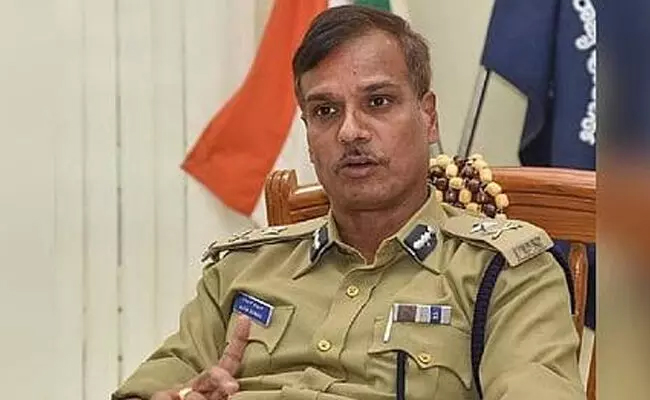
Bengaluru (PTI): Karnataka Director General of Police (Prisons) Alok Kumar on Monday set December 31 as the deadline for the authorities at the Parappana Agrahara Central Prison here to put an end to all illegal activities at the jail and set things right at the facility.
He also stressed the need to meet the staff requirements at the prisons in the state, aimed at improving their overall functioning and the conditions there.
Kumar, who recently took over as DGP Prisons, on Monday visited the Parappana Agrahara central prison here, which was in the news recently, after videos purportedly showed inmates, including notorious criminals and a terror suspect, enjoying preferential treatment inside.
ALSO READ: Brahmavar: Four arrested in Kotathattu murder case
"As there was lots of news and controversies surrounding Parappana Agrahara prison, I visited to inquire about the system, staff, issues faced by prisoners and staff, also security arrangements, among other things. I have got the preliminary idea, and actions have to be initiated stage by stage," Kumar said.
Speaking to reporters here, he said the Karnataka State Industrial Security Force (KSISF), which guards the prison, jail staff and the local police need to work as a team.
"Directions have been issued to put an end to illegal activities at the prison, I have given 15 days' time to set things right. December 31 deadline has been set, to set right the system, and deficiencies if any. If anything happens thereafter, strict action will be taken," he added.
Noting that 151 cases have been registered in 2025 and chargesheets have been filed in 72 cases in connection with activities at prisons, the DGP said the quality of the investigation needs to improve and breach the network responsible for bringing mobiles inside.
"If investigation is conducted, under whose name the sim card was purchased, action needs to be taken against the shop owners if the sim cards are fake. If such action is taken, it will affect those involved in such activities inside the prison. Those involved inside the jail should be taken into custody and investigated. Similar is the case of ganja supply," he said, adding that the network has to be breached to put an end to such things.
Pointing to understaffing of jail warders, Kumar said, against the sanctioned strength of 2,900 warders, actual strength is 1,700, and this is a serious issue.
According to the official, the strength of warders in Parappana Agrahara prison is 280.
ALSO READ: Bantwal police arrest two men for illegal sale of narcotics, seize two vehicles, 810 gm ganja
"These very people have to make arrangements for court VCs, do registrations among other things, which will take about 100 warders. Out of 180 remaining warders in jail, each shift will have 40 warders, and one warder will have to control 100 prisoners, who are criminals, it is not a small thing....I will try to improve the situation."
He promised to take up the issue of staff requirements and service conditions with the government.
Highlighting that actions have been taken against the past illegal activities in the prison, the DGP said six mobiles were seized a couple of days ago, in a bathroom.
"It needs to be ascertained whether prisoners or warders or anyone outside are involved... if investigated in depth, things will be known, and instructions have been given in this regard," he said.
He also met with the Telecommunication Consultants India Limited (TCIL) and discussed the signal blocking technology in prisons, to make it more effective. "10 days' time was given to them to study and get back on how to improve."
Responding to a question on jailed actor Darshan, the DGP said he has not shared any concerns and that he was inquired about his court hearing dates and issues if any.
Let the Truth be known. If you read VB and like VB, please be a VB Supporter and Help us deliver the Truth to one and all.
EAM Jaishankar meets Jamaican PM, gifts over 10 BHISHM Cubes
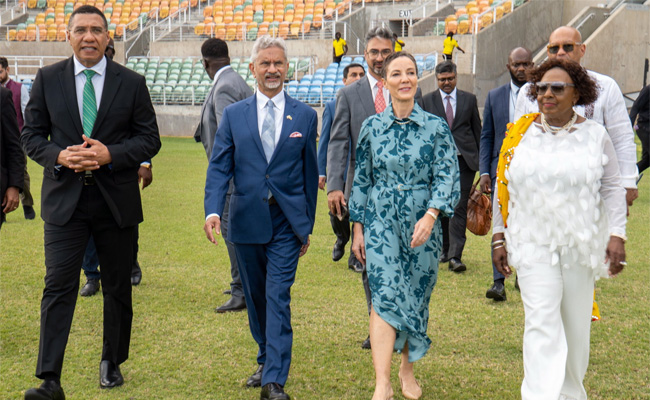
Kingston (PTI): External Affairs Minister S Jaishankar on Monday met Jamaican Prime Minister Andrew Holness and discussed ways to further deepen "political, economic and people-to-people cooperation."
Jaishankar also conveyed greetings from Prime Minister Narendra Modi to Holness.
"Pleased to call on Prime Minister @AndrewHolnessJM in Kingston. Conveyed the greetings of PM @narendramodi," Jaishankar posted on X.
"Discussed deepening our political, economic and people-to-people cooperation. Value his commitment towards further strengthening India-Jamaica relations," the post further read.
Also, the external affairs minister handed over 10 BHISHM (Bharat Health Initiative for Sahyog Hita & Maitri) Cubes as a gift to Jamaica.
"Formally handed over 10 BHISHM Cubes as a gift from India to Jamaica, in the presence of PM @AndrewHolnessJM, Health Minister @christufton and FM @kaminajsmith," Jaishankar posted on X.
"The BHISHM Cube mobile hospital system, designed for rapid deployment, will help Jamaica during disasters and emergencies. The gift of these cubes is a statement of friendship, a commitment to disaster preparedness, and an outcome of innovation," the post said.
Jaishankar arrived in Kingston on Saturday evening, marking the first leg of his nine-day tour of Jamaica, Suriname, and Trinidad and Tobago, aimed at further strengthening India's strategic and cultural ties with the Caribbean nations.
Earlier in the day, he interacted with the Indian diaspora and discussed India's ongoing transformation in infrastructure, human development and technology-driven governance and entrepreneurship with them.
He also highlighted the cricket bond between both countries as India gifted a scoreboard to Jamaica.
A scoreboard was dedicated at Sabina Park in Kingston. It is the home of the Jamaica cricket team and is the only Test cricket ground in the Caribbean island nation.
The minister expressed hope that the new scoreboard would witness many memorable innings, including those symbolising the enduring friendship between the two countries.
Cricket has long been a strong cultural bridge between India and Jamaica, which is part of the West Indies cricket team.
Jamaican players, including Chris Gayle, Courtney Walsh and Michael Holding, have played a major role in shaping the legacy of West Indies cricket in the international arena, contributing to its dominance in earlier decades and its continued global appeal.