NGT halts Karnataka govt plan to divert ₹400 crore from KSPCB
Bengaluru: The Karnataka government’s move to divert over ₹400 crore from the Karnataka State Pollution Control Board (KSPCB) for non-environmental works has hit a legal hurdle, after the National Green Tribunal (NGT) took suo motu cognisance of the issue.
According to a report published by Deccan Herald, the state government had sought ₹100 crore as a grant, a ₹126 crore interest-free loan, and an additional ₹200 crore loan at an interest rate of 7.5% from the KSPCB. The funds were proposed to be used for projects related to preventing man-animal conflict and for coastal resilience works.
ALSO READ: Dense fog disrupts Delhi airport operations, over 130 flights impacted
The principal bench of the NGT, while issuing notices to Karnataka and other states, observed that pollution control boards are already facing severe staff shortages and increasing responsibilities. It noted that while boards are not allowed to fill vacancies to carry out their statutory duties, their funds are being sought for activities not covered under the Air Act or Water Act, which govern their functioning.
Of the total ₹426 crore sought by the state, ₹300 crore was proposed for constructing railway barricades to prevent man-elephant conflict, while ₹126 crore was earmarked for coastal protection works under a climate change mitigation programme.
The report also pointed out that diverting KSPCB funds lacks legal backing under the Water and Air Acts. It referred to a 2023 NGT order that questioned a similar attempt by the Punjab government to divert ₹250 crore, following which Punjab withdrew its proposal.
Officials within the KSPCB have raised concerns over the move, stating that the board requires greater autonomy and urgent reforms. They also flagged acute staff shortages, which have affected the board’s ability to effectively carry out environmental monitoring and regulatory functions.
Let the Truth be known. If you read VB and like VB, please be a VB Supporter and Help us deliver the Truth to one and all.
Pawan Khera denied anticipatory bail in passport case: Cong stands up for senior member
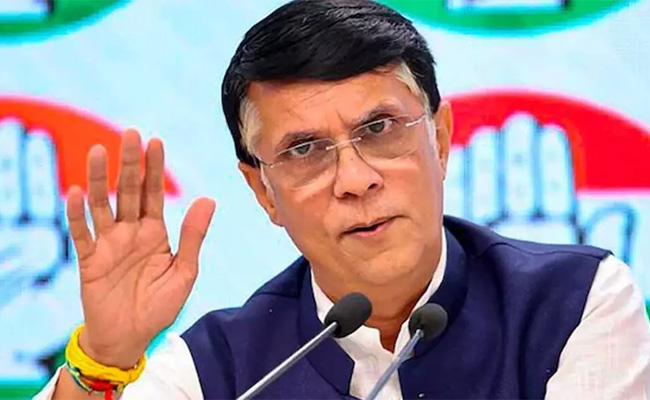
New Delhi: The Congress party has stood by Pawan Khera, the Chairman of the party’s Media and Publicity Department, expressing confidence that regardless of hurdles like politics of threat and intimidation, justice would emerge victorious.
Khera was denied anticipatory bail by the Gauhati High Court on Friday in the case filed against him by Assam Chief Minister Himanta Biswa Sarma's wife Riniki Bhuyan Sarma for alleging that she possessed not only multiple passports but also undisclosed properties abroad.
Senior Congress leader Jairam Ramesh has said in a post in Hindi on his ‘X’ account, “The entire Indian National Congress stands in solidarity with Pawan Khera, the Chairman of its Media and Publicity Department. The process to challenge the Gauhati High Court’s decision in the Supreme Court is underway.” In the post, which he put up on Friday, Ramesh has added, “We are confident that justice will prevail over the politics of threats, intimidation, and harassment.”
Bhuyan Sarma has lodged also an FIR seeking legal action against Pawan Khera for his allegations that she possesses passports of three countries and owns a company in the US, which had invested Rs. 50,000 crores. She has filed criminal cases against the Congress leader at the Guwahati Crime Branch Police Station under various sections of the Bharatiya Nyaya Sanhita (BNS).