No benefit for K'taka from union budget: Deputy CM Shivakumar
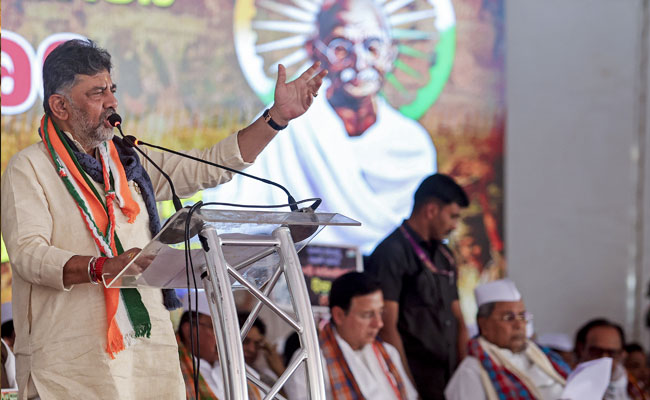
Bengaluru (PTI): Karnataka Deputy Chief Minister D K Shivakumar on Sunday said that there was no benefit for the state from the union budget presented by Finance Minister Nirmala Sitharaman in the Parliament.
He, however, said that he is yet to go through the budget in detail.
"There is no benefit for our state from the central budget. I was observing it. They have named a programme after Mahatma Gandhi now (after repealing the MGNREGA act that was named after Gandhi) ," Shivakumar said.
Speaking to reporters here, he demanded that the MGNREGA act be restored, as he also made it clear that the new rural employment legislation -- VB-G RAM G -- that has been enacted with a 60:40 percent fund sharing formula between the Centre and state governments, cannot be implemented.
"I don't see any major share for our state from this budget," he added.
Stating that there were expectations for Bengaluru from the central budget, Shivakumar, who is also the Minister in-charge of the city's development, said that Prime Minister Narendra Modi had called it a "global city", "but what has the central government done for it."
He further pointed out at the troubles that sugar factories, especially those from the cooperative sector, face, due to alleged lack of decisions or measures by the central government to help them.
The Centre has the right to fix MSP for the farmers' produce. "They will have to take necessary measures to help the farmers," Shivakumar added.
Let the Truth be known. If you read VB and like VB, please be a VB Supporter and Help us deliver the Truth to one and all.
Mercury likely to touch 44 deg C in Delhi; IMD issues alert for heatwave-like conditions
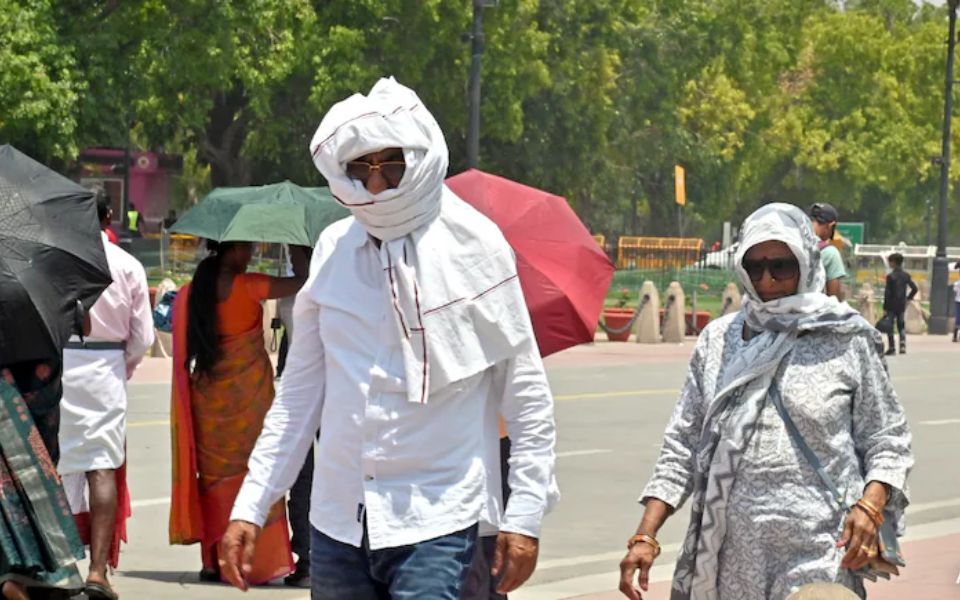
New Delhi (PTI): Delhi recorded a minimum temperature of 26.2 degrees Celsius on Sunday, 2.4 notches below the seasonal average, according to the India Meteorological Department.
The weather department has forecast partly cloudy sky with an orange alert for heatwave-like conditions at isolated places by the evening.
The maximum temperature is expected to reach around 44 degrees Celsius on Sunday, the IMD said.
The relative humidity in the capital was recorded at 43 per cent at 8.30 am.
The air quality was 'poor' at 9 am, with an Air Quality Index (AQI) reading of 223, Central Pollution Control Board (CPCB) data showed.
According to the CPCB, an AQI between zero and 50 is considered 'good', 51 and 100 'satisfactory', 101 and 200 'moderate', 201 and 300 'poor', 301 and 400 'very poor', and 401 and 500 'severe'.