No confusion in Cong, party is united, says Shivakumar amid power tussle
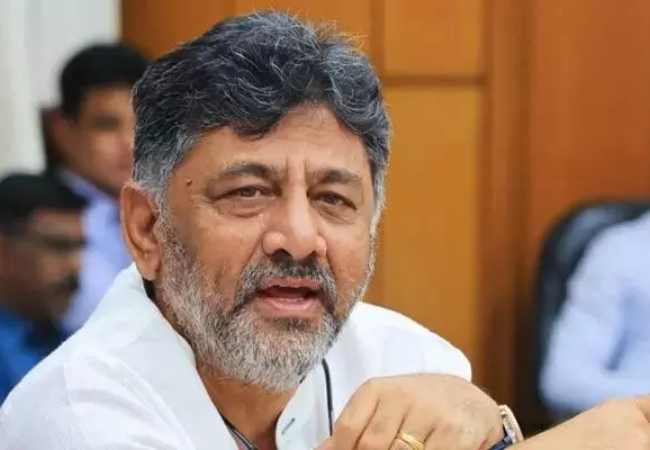
Bengaluru (PTI): Karnataka Deputy Chief Minister D K Shivakumar on Wednesday asserted that the party is united and focused on the 2028 assembly and 2029 Lok Sabha elections.
His remarks come as the Congress government in the state reached the halfway mark of its five-year term on November 20, intensifying rumours of a "power-sharing" pact between him and Siddaramaiah that was allegedly made after the 2023 assembly elections.
Shivakumar, who is also the state Congress chief, was reluctant to disclose the message he is said to have received from Congress leader Rahul Gandhi, amid the CM change speculations, and gave indications that he may visit Delhi to meet the party high command in the days ahead.
Denying any confusion or existence of factions, he said, "... no one should demand anything. There are no groups in the party, there is only one group, that is the Congress. Our group has 140 MLAs."
Accusing the opposition BJP of "trying to create confusion", he said the ruling party should not give them the opportunity.
"They are making comments unnecessarily. All 140 of us are together. No one can shake us. I don't want anyone's offer....I'm a Congressman by birth."
Amid reports that Rahul Gandhi had sent a personal message to him, the Deputy CM replied, "What Rahul Gandhi has communicated to me is not a matter to be discussed before the media. There is no need for me to speak about it."
"Our goal is to win Karnataka in 2028 and to win at the national level in 2029, and to make Rahul Gandhi the Prime Minister. We will work towards this goal."
Asked whether the party would return to power in 2028 under his leadership, Shivakumar said he believed in collective leadership.
"I've been working as the party president for six years. I believe in collective leadership. I believe in party worship, not personality worship," he said.
Declining to comment on the alleged power-sharing agreement for 2.5 years, Shivakumar said, "I don't want to speak about anything in the media. Whatever is there -- party issues, we will discuss within four walls. I will not discuss any political issues in the media."
The Deputy CM indicated that he may visit Delhi to meet the party high command, saying he would seek time if required.
"Today is Samvidhan Day, I could not have gone. Tomorrow there is a cabinet meet, I will not be able to go. After that, definitely, I will seek time if anything is there. Because I want to finalise four MLC seats. I want to reorganise the KPCC trust also. I want to discuss the party properties with senior leaders," he said.
Responding to a question regarding his meeting with senior Minister Satish Jarkiholi, who is considered close to CM Siddaramaiah, Shivakumar said they discussed political strategy and strengthening the party.
He maintained that he has been meeting a lot of other senior party leaders like Zameer Ahmed Khan, K H Muniyappa, and Priyank Kharge, to discuss political strategy. "We want to ensure that the party remains in power in the state and see to it that Rahul Gandhi takes over as the Prime Minister of the country after the 2029 Lok Sabha polls."
"Of course, Satish Jarkiholi had worked with me as a working president (of the party). We have worked together. We are cabinet colleagues, we want to see that in 2028 we come back to power... I always keep meeting them. What's wrong? he is my colleague and senior leader of the party," he said.
To a question that a dinner meeting reportedly called by a section of party leaders has been called off, the Deputy CM said it is good, otherwise a wrong message would have been sent.
He dismissed questions about him planning a meeting with AICC President Mallikarjun Kharge, during his visit to the state, saying Kharge is coming to attend a marriage in his home state. "This is his Karmabhoomi, he keeps coming, what's wrong?"
Regarding MLAs backing him flying to Delhi to pitch for his CM post, before the high command, Shivakumar claimed he was unaware of it.
"They (MLAs) are ministerial aspirants, and are making efforts for that, after the CM spoke about cabinet reshuffle," he said.
Meanwhile, Shivakumar made a politically loaded statement at the Constitution Day event organised by the state Congress, saying "word power is world power," while referring to fulfilling promises.
"Keeping our word is the biggest power. Be it a judge, the president, me or anybody else, we must keep our word," he emphasised.
This statement came amidst speculations that Shivakumar wants Chief Minister Siddaramaiah to keep his word by stepping down and allowing him to take over as the CM, after the government completed two-and-a-half years.
Let the Truth be known. If you read VB and like VB, please be a VB Supporter and Help us deliver the Truth to one and all.
Congress using hijab issue to pacify minority anger, alleges Karnataka LoP R Ashoka
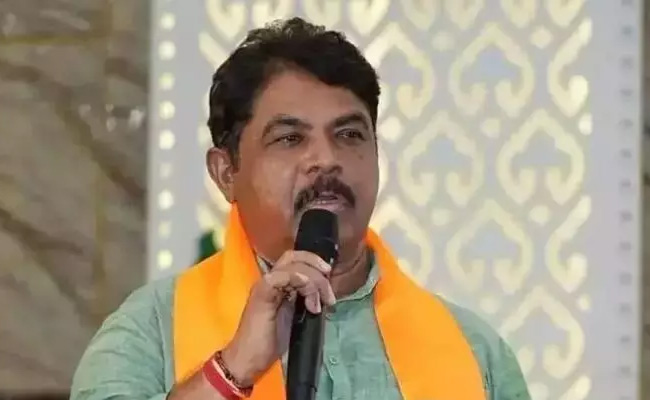
Bengaluru: Leader of Opposition in the Assembly R. Ashoka has accused the Congress government of using the hijab issue to placate what he described as discontent among minority voters after the Davanagere by-election.
In a post on X on Wednesday, Ashoka alleged that the state government, instead of addressing issues such as price rise, corruption, farmers’ distress and law and order, was attempting to retain its minority vote base by reviving the hijab issue.
Referring to the 2022 dress code introduced by the BJP government, which prohibited hijab in schools and colleges, Ashoka said the Karnataka High Court had upheld the policy and emphasised the importance of discipline in educational institutions.
He questioned the Congress government’s move to revisit the issue and asked whether setting aside the court-backed policy to benefit one community could be described as secularism.
Ashoka further alleged that while the government was willing to permit hijab, it continued to prohibit saffron shawls.
He accused the government of dividing students on religious lines rather than treating schools and colleges as spaces of equality.
Drawing a comparison with Mamata Banerjee’s government in West Bengal, Ashoka claimed that excessive appeasement politics had harmed the state and warned that the Congress in Karnataka could face a similar political response.
He said voters in Karnataka would teach the Congress a lesson for what he termed “vote-bank politics” and for compromising constitutional and judicial principles.