
“No political agenda behind meeting JD(S) supremo Deve Gowda,” clarifies Satish Jarkiholi
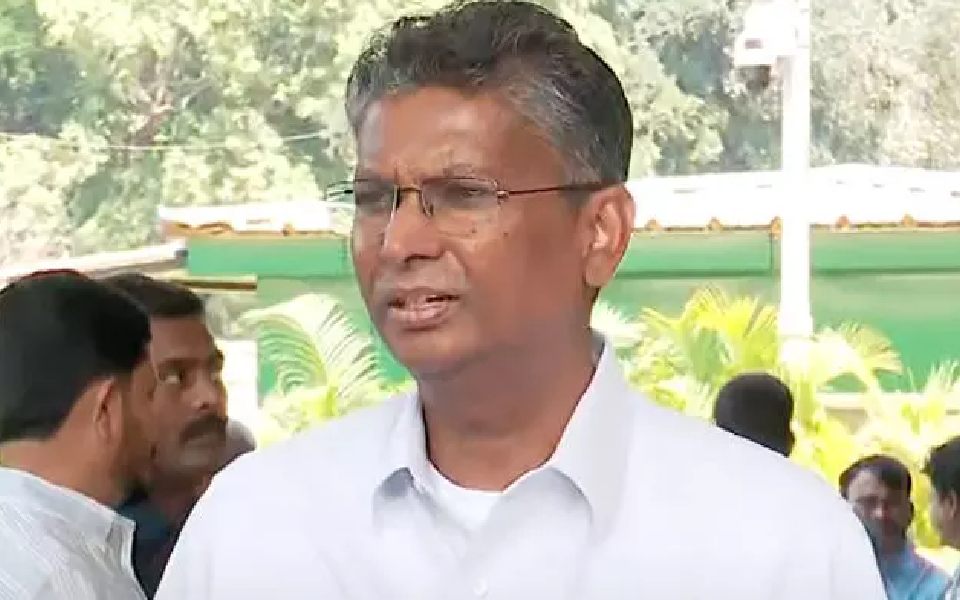
Bengaluru: Public Works Minister Satish Jarkiholi clarified on Friday that there was no political motive behind the recent meeting with former Prime Minister H.D. Deve Gowda. He stated that the discussions held were purely related to developmental issues.
Addressing reporters in Bengaluru, Jarkiholi said that the visits of Union Ministers H.D. Kumaraswamy and V. Somanna were pre-planned, while Deve Gowda’s meeting was incidental. “My office is located on the way to Parliament, and I met him there casually,” he explained.
He also mentioned that the Hassan highway issue was supposed to be discussed with H.D. Revanna, but the meeting couldn’t take place as Revanna had already proceeded to meet Union Minister for Road Transport and Highways, Nitin Gadkari.
Jarkiholi firmly denied any discussion on the recent "honey trap" controversy during the Delhi visit. “There is no need to go to New Delhi to file political complaints,” he said, dismissing speculation about political undercurrents.
Speaking on coalition rumors, he reiterated that with the Congress holding 138 MLAs, there is no question of seeking support from the JD(S) or H.D. Kumaraswamy. “Just like Somanna, Kumaraswamy also met Prahlad Joshi. As for Belagavi airport, work has stalled, and discussions were held to expedite the project,” he added.
He further noted that he had met several senior Congress leaders, including K.C. Venugopal and Randeep Singh Surjewala, during the Delhi visit. “It is normal to meet party leaders and consult with them while in New Delhi. There is nothing unusual about it,” he said.
When asked about his political ambitions, Jarkiholi made a cryptic remark:, “I am not an aspirant for the Chief Minister's post. Siddaramaiah is already the CM. My time will come in 2028. Even if we get a chance during a traffic jam in Majestic, might take it,” he added.
Let the Truth be known. If you read VB and like VB, please be a VB Supporter and Help us deliver the Truth to one and all.
Karnataka issues nutrition advisory for govt events; recommends millets, healthier options
_vb_61.jpeg)
Bengaluru (PTI): The Karnataka government on Monday issued a nutrition advisory recommending healthier food and beverage options at meetings, functions, and other official gatherings held in the state.
The advisory has been issued by the Department of Karnataka Health and Family Welfare Services to promote healthy dietary and nutritional habits among officials and staff, noting that food, refreshments and beverages served in government offices and official programmes are "often not aligned with nutrition standards."
The advisory recommends serving snacks such as millet-based, low-fat and low-sugar foods, fresh fruits, vegetable salads, sprouts, roasted nuts and seeds during in-house office meetings and breaks.
Beverages such as green tea, low-fat buttermilk, and locally filtered or boiled water served in glass bottles or steel flasks have also been suggested.
According to the advisory, for larger government events, conferences and exhibitions, departments have been advised to include at least one millet-based item during snacks and a minimum of two millet dishes in meals, along with local cuisine and at least one regional recipe.
It also recommends the use of brown rice instead of white rice, freshly prepared vegetable salads, and fresh fruits or low-sugar fruit juices.
If non-vegetarian food is served, it should consist of well-cooked lean or white meat, the advisory stated.
In eateries operating within government office campuses, the department has recommended millet-based foods, fresh vegetable salads, boiled pulses such as horse gram or chickpeas, and low-fat beverages.
It suggests serving food using reusable metal plates and glasses.
The advisory also recommends avoiding microwave-heated food, industrially processed food, fried snacks, high-fat or heavily spiced dishes, carbonated drinks, high-sugar fruit juices, and alcoholic beverages.
It further discourages serving milk-based tea or coffee and plastic-bottled water during official events.
“Overall, hygiene and cleanliness should be maintained while serving food and water. Local cottage industries, self-help groups, prison kitchens, nutri-gardens and others should be preferred for placing food and beverage orders,” the advisory added.
_vb_54.jpeg)
_vb_07.jpeg)
_vb_34.jpeg)