No timeframe set for Siddaramaiah's tenure as CM: Minister Parameshwara
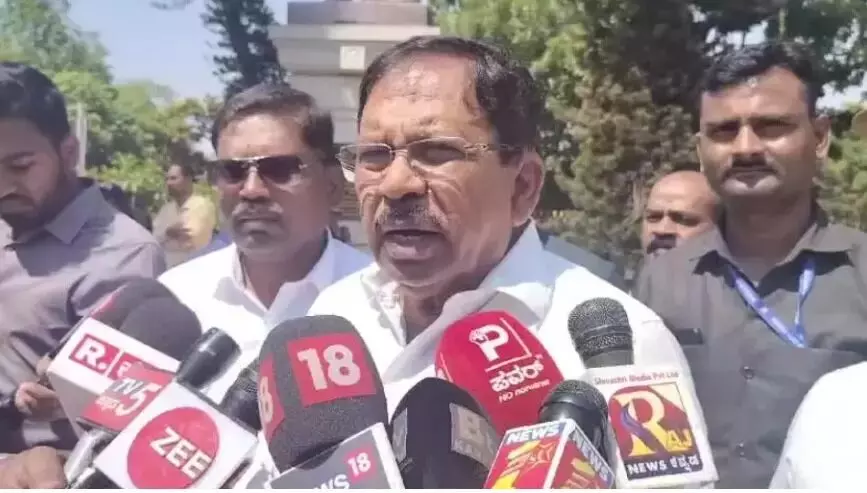
Bengaluru (PTI): Karnataka Home Minister G Parameshwara on Tuesday said when Siddaramaiah was elected leader of the Congress Legislature Party (CLP) after the 2023 Assembly polls to become the chief minister, no timeframe was specified for his tenure.
He, however, added that everyone in the party would abide by whatever the high command decides and urged the Congress leadership to put an end to the confusion surrounding the issue.
Speculation has been rife about a possible change in the chief minister's post when the Congress government reaches the halfway mark of its five-year term next month—a development referred to by some as the "November revolution".
Parameshwara was speaking to reporters after meeting State Social Welfare Minister H C Mahadevappa at his residence. Both are prominent Dalit leaders in the ruling Congress party.
Amid speculation about the nature of their meeting, the two clarified that it had "nothing to do with politics" but was to discuss funds for a cooperative in Tumakuru led by Parameshwara.
"After our party secured a majority in the May 2023 Assembly polls and came to power, the CLP leader (Siddaramaiah) was elected in a meeting of all legislators. We were not told then that Siddaramaiah would be Chief Minister for only 2.5 years," Parameshwara said, responding to a question.
He said the high command, while announcing Siddaramaiah as CLP leader, had not fixed any time frame for his tenure.
"We are not aware of any developments since then. In our view, we chose Siddaramaiah to be the CM for five years. If the high command decides otherwise, we will accept it—that is all we can do. We had not fixed any time frame while choosing the CLP leader; if the high command decides anything else, it is up to them," he added.
Siddaramaiah, on Monday, had said he would continue in office for the full five-year term, subject to the Congress high command's decision.
There has been ongoing speculation within the state's political circles, particularly in the ruling Congress, about a possible power-sharing arrangement between Siddaramaiah and Deputy Chief Minister D K Shivakumar.
Noting that it was not right for everyone to make daily statements about leadership change, the minister said that all party members would abide by the high command's decision.
"Siddaramaiah has also said that he will remain CM for five years if the high command agrees. The high command must put an end to this confusion. They are aware of it. If needed, I too will request them to clarify," he added.
Responding to a question on the demand for a Dalit chief minister in the event of a leadership change, Parameshwara said, "Is it wrong to make such a demand? If it is wrong, let us respond to it. People express their opinions."
Replying to another question, he said many capable leaders in the Congress could become the CM, but it was up to the high command to decide depending on the situation.
"Many people in our party are capable. The Congress has produced several leaders for the country; some have even gone on to other parties and grown there, too. In a way, our party is a training school. So, there are many capable leaders. Whom to choose is left to the high command, if such a situation arises. As far as I know, such a situation does not exist now," he said.
Asked about Siddaramaiah's recent comment indicating he may contest the 2028 Assembly polls, Parameshwara said, "That is his (personal) decision. He said yesterday that some leaders are pressuring him to contest, and that he will decide later."
Speaking to a Kannada news channel, Siddaramaiah had said he was under pressure from "friends and well-wishers" to contest the 2028 election.
"I had earlier announced that I wouldn't contest in 2028. But my friends and well-wishers want me to. They say my candidature will help the party return to power. I haven't decided seriously about this yet," he said.
Later in the day, Mahadevappa also reiterated that it is the high command that must decide on cabinet reshuffles or the continuation of the CM.
"Has the chief minister said he will share power? He has said that if the high command decides, he will be CM for five years. There is nothing wrong with that. The high command decides what happens—the rest is speculation, and one cannot respond to speculation," he said.
Asked if Dalit leaders in the Congress would seek a chance for a Dalit CM if the situation arose, Mahadevappa said, "Such a situation doesn't exist now. If it arises, the high command will consult everyone, and we will share our views then."
He added that there are several Dalit leaders in the party with administrative experience, and the final decision would rest with the high command.
On Siddaramaiah not ruling out contesting the 2028 polls, Mahadevappa said, "There is no retirement in politics. Those in public life should work for the people till the end."
Let the Truth be known. If you read VB and like VB, please be a VB Supporter and Help us deliver the Truth to one and all.
Iran reimposes restrictions on Strait of Hormuz, accusing US of violating deal to reopen it
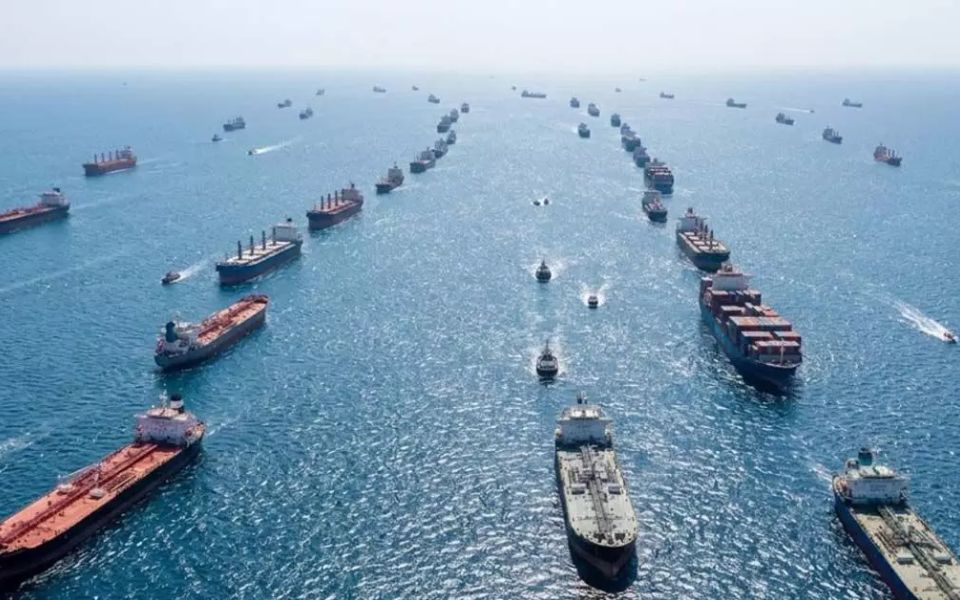
Cairo (AP): Iran swiftly reversed course on reopening the Strait of Hormuz, reimposing restrictions on the critical waterway on Saturday after the US said it would not end its blockade of Iran-linked shipping.
Iran's joint military command said on Saturday that “control of the Strait of Hormuz has returned to its previous state ... under strict management and control of the armed forces.” It warned that it would continue to block transit through the strait as long as the US blockade of Iranian ports remained in effect.
The announcement came the morning after US President Donald Trump said that even after Iran announced the strait's reopening on Friday, the American blockade “will remain in full force” until Tehran reaches a deal with the US, including on its nuclear programme.
The conflict over the chokepoint threatened to deepen the energy crisis roiling the global economy after oil prices began to fall again on Friday on hopes the US and Iran were drawing closer to an agreement. Roughly one-fifth of the world's oil passes through the strait, and further limits would squeeze already constrained supply, driving prices higher once again.
Control over the strait has proven to be one of Iran's main points of leverage and prompted the United States to deploy forces and initiate a blockade on Iranian ports as part of an effort to force Iran to accept a Pakistan-brokered ceasefire to end almost seven weeks of war that has raged between Israel, the US and Iran.
Iran said it fully reopened the Strait of Hormuz to commercial vessels after a 10-day truce was announced between Israel and the Iranian-backed Hezbollah militant group in Lebanon. But after Trump said the blockade would continue, top Iranian officials said his announcement violated last week's ceasefire agreement between Iran and the US and warned the strait would not stay open if the US blockade remained in effect.
A data firm, Kpler, said movement through the strait remained confined to corridors requiring Iran's approval.
US forces have sent 21 ships back to Iran since the blockade began on Monday, US Central Command said on X.
Truce in Lebanon could help US-Iran peace efforts
------------------------------------------------------------
The ceasefire in Lebanon could clear one major obstacle to an agreement. But it was unclear to what extent Hezbollah would abide by a deal it did not play a role in negotiating, and which will leave Israeli troops occupying a stretch of southern Lebanon.
Trump said in another post that Israel is “prohibited” by the US from further strikes on Lebanon and that “enough is enough” in the Israel-Hezbollah war.
The State Department said the prohibition applies only to offensive attacks and not to actions taken in self-defence.
Shortly before Trump's post, Israeli Prime Minister Benjamin Netanyahu said Israel agreed to the ceasefire in Lebanon “at the request of my friend President Trump,” but that the campaign against Hezbollah is not complete.
He claimed Israel had destroyed about 90 per cent of Hezbollah's missile and rocket stockpiles and added that Israeli forces “have not finished yet” with the dismantling of the group.
In Beirut, displaced families began moving toward southern Lebanon and Beirut's southern suburbs despite warnings by officials not to return to their homes until it became clear whether the ceasefire would hold.
The Lebanese army and UN peacekeepers in southern Lebanon reported sporadic artillery shelling in some parts of southern Lebanon in the hours after the ceasefire took effect.
An end to Israel's war with Hezbollah was a key demand of Iranian negotiators, who previously accused Israel of breaking last week's ceasefire with strikes on Lebanon. Israel had said that the deal did not cover Lebanon.
The fighting has killed at least 3,000 people in Iran, more than 2,290 in Lebanon, 23 in Israel and more than a dozen in Gulf Arab states. Thirteen US service members have also been killed.