Nominated MLC can't be minister after disqualification from Assembly till it's remaining term: SC
Verdict on H Vishwanath disqualification case
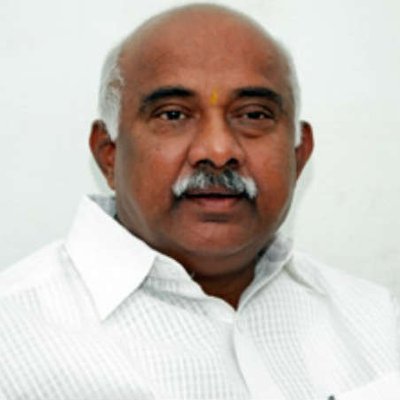
New Delhi, Jan 28: The Supreme Court on Thursday said that if a Member of Legislative Assembly is disqualified under anti-defection law, he cannot be appointed as minister, till the remaining term of the House, even if he is nominated as Member of Legislative Council.
The top court upheld the verdict of Karnataka High Court which had said that disqualification of BJP MLA AH Vishwanath under the anti-defection law continues till May 2021 and had dashed his hopes of becoming minister in the BS Yediyurappa-led government in the state.
The top court said if he was elected as MLA or MLC then it could have been another matter but since he was nominated to legislative council, he cannot become a minister.
A bench of Chief Justice SA Bobde and Justices AS Bopanna and V Ramasubramanian dismissed the appeal filed by Vishwanath against the November 30, last year order of the High Court.
The special leave petitions are dismissed. As a sequel to the above, pending interlocutory applications, if any, stand disposed of , the bench said.
At the outset, senior advocate Gopal Sankaranaryanan, appearing for Vishwanath said that the issue pertains to legal interpretation of the provisions of the Constitution which deals with the disqualification of member of the house.
He said that his disqualification is restricted to the capacity of the office from which he was disqualified.
The bench said that as per the provision, the disqualification will remain effective, if the person is simply nominated to the legislative council and not elected to it.
If you are elected as a MLA or MLC, you can become minister in the government but if you are nominated, you cannot become minister. The High Court is right. We are dismissing your SLP, the bench said.
Sankarnarayanan said that the court will be setting a wrong precedent by upholding a verdict given on a PIL, which had sought restraining of a person from becoming a minister on the ground that he was disqualified as MLA.
The bench said that he cannot be granted relief on the technical ground and the fact of the matter is that, You are not entitled to become a minister .
On November 30, last year, the High Court had held that Vishwanath's disqualification as MLA under the anti-defection law continues till May 2021 and hence he cannot be appointed as a minister on being nominated as member of legislative council.
The high court has passed the order on a PIL filed by advocate AS Harish contending that Vishwanath has incurred disqualification under Article 164 (1) (b) and Article 361 (B) of the Constitution, till the expiry of the term of the Legislative Council-May 2021.
It has, however, given reprieve to two other MLCs R Shankar, and M T B Nagaraj saying that their disqualification did not subsist as they were elected to the legislative council.
The three MLCs, Vishwanath, Shankar and Nagaraj were among the 17 MLAs who were disqualified from the Karnataka assembly in 2019, which led to the fall of the Congress and JD(S) coalition government, led by H D Kumaraswamy.
While Shankar and Nagaraj were from the Congress, Vishwanath was elected on the JD(S) ticket to the assembly.
After their disqualification, the trio joined the BJP.
Nagaraj and Vishwanath contested the December 2019 assembly by-polls unsuccessfully, whereas Shankar did not contest the polls. They were all made MLCs by the BJP.
Harish has alleged that the three MLC's were given a back door entry into the Legislative Council with the sole purpose of inducting them into the Council of Ministers even though Vishwanath and Nagaraj had lost in the by-elections in their respective Assembly constituencies, after their disqualification.
Let the Truth be known. If you read VB and like VB, please be a VB Supporter and Help us deliver the Truth to one and all.
TVK chief Vijay files nomination from Perambur in Chennai

Chennai (PTI): TVK chief, actor-politician Vijay on Monday filed his nomination to contest Assembly polls from Perambur constituency in Chennai.
This is the debut polls for Vijay and he has chosen to fight from Perambur in north Chennai, which has a sizable population of the working classes.