Non-Resident Kannadigas seek government support, separate ministry for their welfare
The delegation was invited by Legislative Assembly Speaker UT Khader to Vidhan Soudha
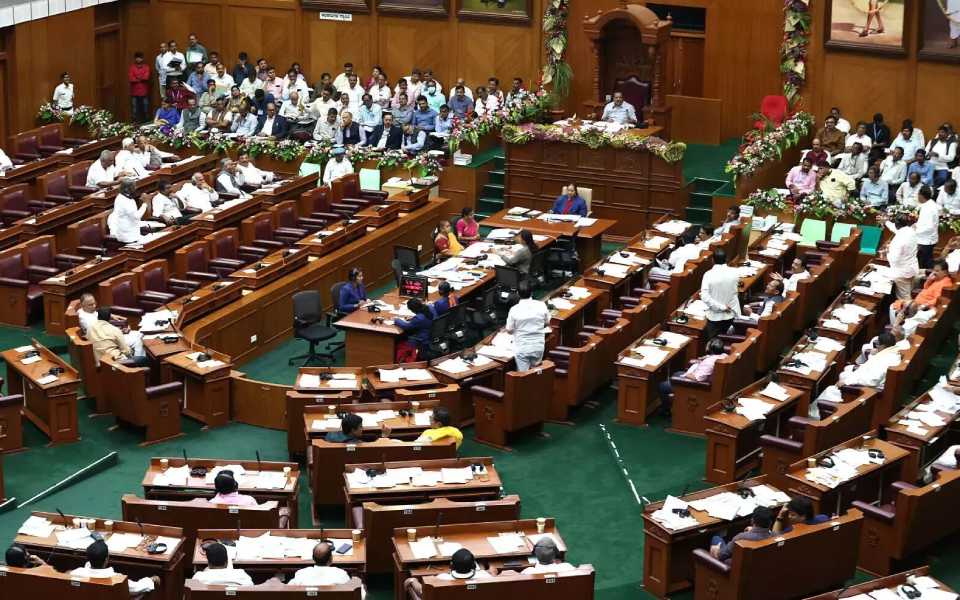
Bengaluru: A delegation of non-resident Kannadigas from over 15 countries has appealed to the state government for financial aid and the establishment of a dedicated ministry to address their concerns. The delegation, invited by Legislative Assembly Speaker UT Khader, met with Chief Minister Siddaramaiah at Vidhana Soudha to submit their requests.
Led by Dr. Aarti Krishna, Vice Chairman of the State Government NRI Cell, the delegation included members from the USA, Canada, Australia, UAE, Qatar, Dubai, Kuwait, Oman, and Bahrain. They urged the government to allocate Rs 100 crore for the welfare of non-resident Kannadigas and proposed the creation of a separate ministry to address their unique challenges.
The NRI Cell had been inactive for the past five years, leaving non-resident Kannadiga workers without support. Dr. Aarti Krishna emphasized the need to revitalize the cell for the career development of Kannadigas working abroad.
The delegation highlighted various problems faced by non-resident Kannadigas and requested immediate financial assistance of Rs 100 crore. Chief Minister Siddaramaiah responded positively to their request and agreed to establish a separate ministry for NRIs in the state, following the Kerala model.
Among the specific demands were the establishment of a center for the study of Kannada, culture, heritage, and a research center for Indian students in Bahrain, along with skill development facilities to create job opportunities for Karnataka youth in Gulf countries.
Amarnath Rai, President of Bahrain Kannada Sangh, stressed the difficulties faced by laborers trying to transport the remains of deceased family members back to Karnataka. He called for the formation of a high-level committee to address the concerns of non-residents.
The delegation included representatives from various countries, such as Muhammad Mansoor from Bahrain, Ramanand Prabhu from Muscat, Advocate Ibrahim Khalil from UAE, Hidayat Addur from Dubai, and others.
In response, the government promised to establish a separate ministry for NRIs and address the challenges faced by non-resident Kannadigas during the lockdown.
“Non-resident Kannadigas students and workers faced hardship in many ways during the lockdown. But in the coming days any non-resident Kannadigas should be able to lead a comfortable life in the Gulf countries. MLAs of all parties have joined hands in this regard,” Lakshmi Bidar Non-Resident Kannadathi from Qatar said.
Let the Truth be known. If you read VB and like VB, please be a VB Supporter and Help us deliver the Truth to one and all.
Air India resorts to cost-cutting ways amid 'tough times'; layoffs not anticipated
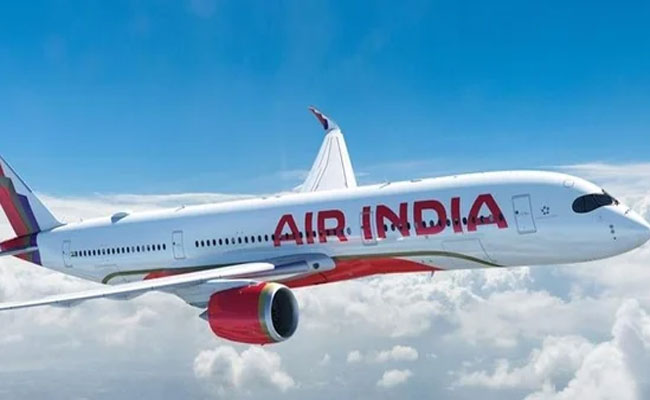
New Delhi/Mumbai (PTI): Hit hard by Pakistan airspace closure and Iran war, Air India has resorted to cost-cutting measures, including holding back annual increments for staff and asking them to cut discretionary spending as well as non-critical expenditures, warning of "tough times".
On Friday, Air India Chief Executive Officer & Managing Director (CEO & MD) Campbell Wilson told the staff it is going to be a "very, very difficult year" if things don't improve on the Middle East front.
A day after the loss-making airline's board discussed various cost-saving steps, Wilson, along with Chief Financial Officer (CFO) Sanjay Sharma and Chief Human Resources Officer (CHRO) Ravindra Kumar GP, addressed the employees during a townhall on Friday where the emphasis on the need to keep a close watch on costs.
With higher jet fuel prices due to the West Asia conflict and airspace curbs, the loss-making airline's expenses have spiralled in recent times and against this backdrop, Sharma also told staffers that FY26 has seen a softening in revenue amid heightened external uncertainties.
Calling for a relentless focus on costs in these tough times, Wilson urged employees to suspend discretionary spending, renegotiate rates where feasible, and defer non-critical expenditures.
"There must be a laser-sharp focus on eliminating wastage and leakages," he said.
Stressing the need to tighten the belt for a while, Wilson sounded optimistic that travel demand would rebound and the industry would continue on its upward path.
CHRO Ravindra Kumar told staff that the airline will proceed with variable pay for the last financial year and continue with planned promotions while noting that annual increments will be deferred by at least one quarter.
"We don't anticipate layoffs," he said.
At the airline's board meeting on Thursday, various cost-saving steps, including likely furloughs, were discussed. The Tata Group-owned airline has around 24,000 employees.
Generally, furlough refers to sending staff on unpaid leaves by companies during a tough financial situation.
During the townhall, CFO Sanjay Sharma said while strong revenue growth and fleet expansion drove financial momentum through FY25, FY26 has seen a softening in revenue amid heightened external uncertainties.
Air India has seen around 40 per cent CAGR (Compounded Annual Growth Rate) in revenue between 2022 and 2025, he added.
The airline was acquired by the Tata Group from the government in January 2022.
The Air India CEO mentioned the external challenges being facing the aviation industry as a whole, including the continued closure of Pakistan airspace that is expected to persist for the foreseeable future and geopolitical conflicts leading to disruptions and airspace closures across West Asia.
Wilson, who is set to step down later this year, also flagged a sharp depreciation of the rupee and a 2.5-3 times increase in jet fuel prices, and added that these factors have adversely affected travel sentiment and consumer confidence, as per the sources.
If the Strait of Hormuz opens, oil prices fall and consumer as well as business confidence come back, there is a decent chance of a solid recovery, Wilson said, adding that unless those circumstances happen, it was going to be "a very, very difficult year".
"I feel somewhat responsible that we ended up with probably the biggest surprise of the year in the external environment which was a full-scale war in our neighbouring region in the Gulf. That has had a huge impact on airspace," he said.
For Air India, Wilson said the situation is compounded by the fact that the airline cannot fly over the neighbouring country and has to take a much longer routing for any west-bound destination.
"Every airline is reporting that they are under some sort of financial pressure as a result of higher fuel prices and economic uncertainty. So, it is unfortunately not a great environment to be running an airline," the Air India CEO said.
The Air India Group -- Air India and Air India Express -- is projected to have incurred more than Rs 22,000 crore loss in the financial year ended March 2026.
At the townhall, Wilson also highlighted various initiatives, including completion of the retrofit of its legacy narrow-body aircraft and rapid network optimisation to redeploy capacity more efficiently.