Number of smart classrooms to go up to 8,500 this year: Deputy CM Ashwath Narayan
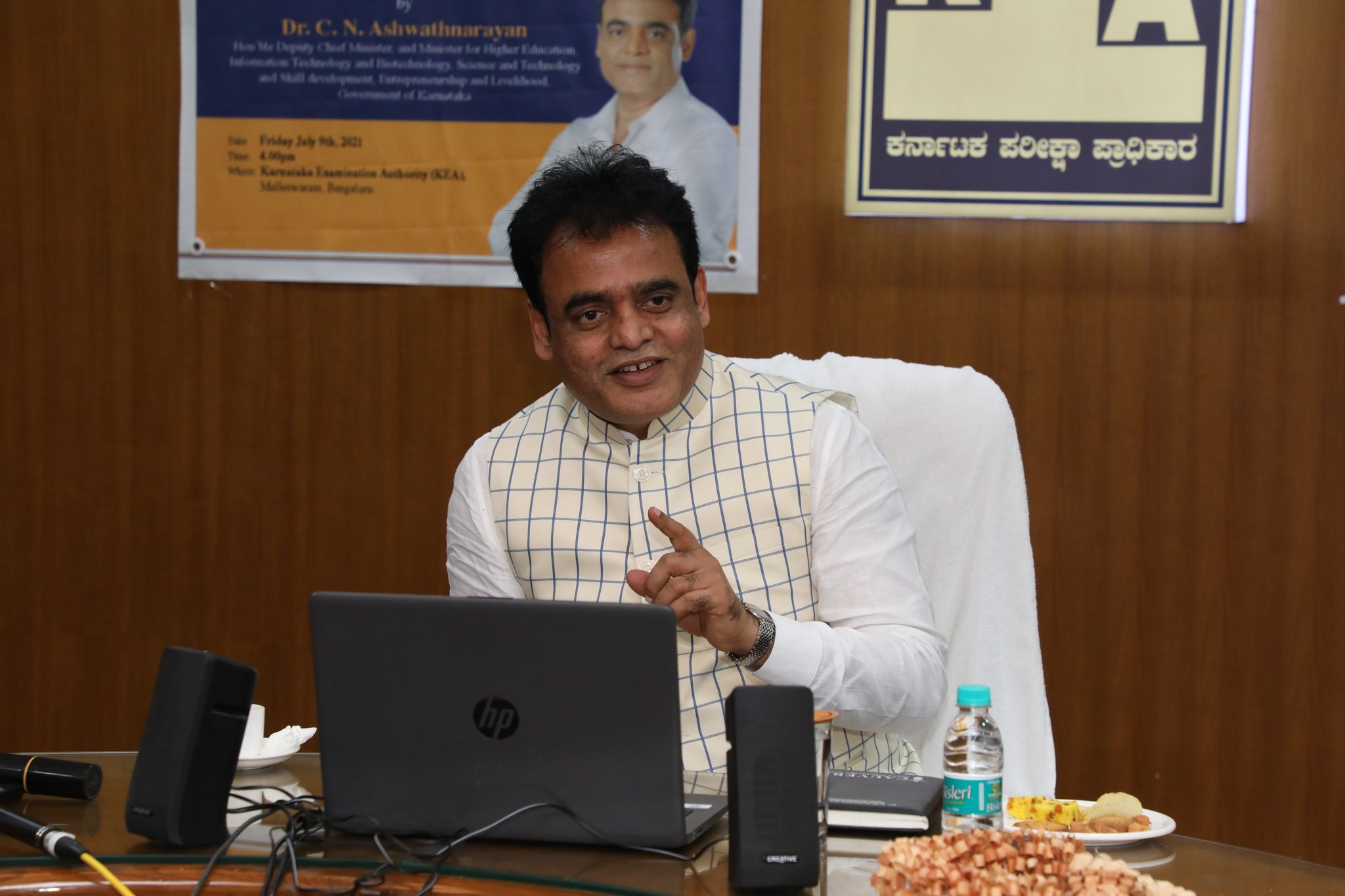
Bengaluru, July 10: Karnataka Deputy Chief Minister C N Ashwath Narayan on Saturday said the number of smart classrooms in the State would be increased to 8,500 this year.
"The government is giving importance to digital education to ensure students are not affected in times of the Covid-19 crisis," he said.
The government has set a target of converting 8,500 classrooms of higher education into smart classes.
Out of this, 2,500 smart classrooms have been launched, he was quoted as saying by his office in a press release.
As part of digital learning, 1.10 lakh laptops were given to degree students last year at a cost of Rs 330 crore.
This year, about 1.6 lakh Tablet PCs were being distributed to students of first grade degree, polytechnic and engineering colleges, he said.
To make digital education a reality, the government created an alternate effective teaching- learning system.
This comprises the best of the contents on each topic and 3.5 lakh classes developed by the faculty of the college education department have been uploaded, he said, adding that this involved an expenditure of Rs 4 crore.
Let the Truth be known. If you read VB and like VB, please be a VB Supporter and Help us deliver the Truth to one and all.
Three trampled to death by wild elephants in Jharkhand's Ramgarh
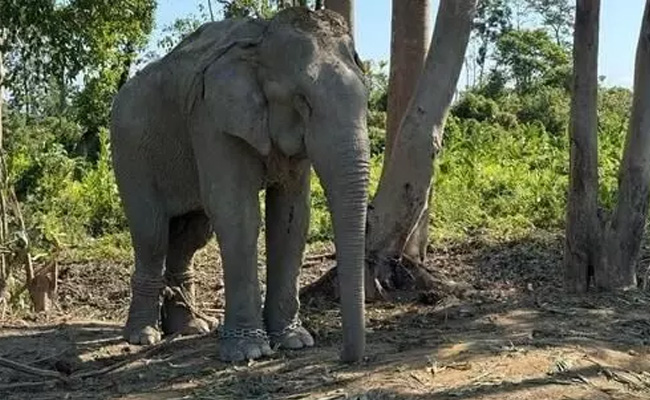
Ramgarh (PTI): Three persons, including an elderly man, were trampled to death by wild elephants in two separate incidents in Jharkhand's Ramgarh district on Friday, police said.
Both incidents happened within the Gola police station limits. One incident occurred at Banda village, where two persons died, while the second took place at Murpa village, where an elderly man was trampled to death by wild elephants, they said.
"Three people were killed by wild elephants on Friday at two different locations. All three were male. The bodies of the deceased have been recovered and are being sent for post-mortem examination at a government hospital," Officer in-charge of Gola police station, Abhishek Kumar, told PTI.
The deceased have been identified as Dheeraj Kumar (26) of Talatand in Patratu, Jugal Bhuiyan (30) of Murpa village, and Samdev Saw (73) of Murpa village, another police officer said.
"We have provided Rs 25,000 each to the victims' families as immediate relief, while the rest of the compensation will be given after completion of some official formalities," said DFO, Ramgarh, Nitish Kumar.
The Jharkhand government provides Rs 4 lakh as compensation in case of death caused by an elephant.