Odisha train crash: Karnataka CM deputes minister-led team to ensure safety of people from state

Bengaluru (PTI): Karnataka Chief Minister Siddaramaiah on Saturday deputed a team led by Labour Minister Santosh Lad to ensure the safety of people from the state in the aftermath of the Odisha train accident.
He sought reports from the Chief Secretary and discussed with the officers concerned by directing them to visit the spot to ensure the safety of people from the state, and provide all necessary support to them, the Chief Minister's Office (CMO) said in a release.
A team headed by Minister Lad, accompanied by Manoj Rajan, Commissioner, Disaster Management and other officers has already left for Balasore where the accident occurred, it said.
Helpline numbers 1070, 080-22253707, 080-22340676 have been opened for the convenience of citizens at the State Emergency Operations Centre (SEOC).
At least 261 people have been killed and over 650 injured in the crash in Balasore district of Odisha on Friday involving the Bengaluru-Howrah Superfast Express, the Shalimar-Chennai Central Coromandel Express and a goods train.
Helplines have been started in the State Emergency Operations Centre to address the needs of the Balasore train accident victims and their families.
— CM of Karnataka (@CMofKarnataka) June 3, 2023
Helpline numbers are: 1070, 080-22253707, 080-22340676
Let the Truth be known. If you read VB and like VB, please be a VB Supporter and Help us deliver the Truth to one and all.
Will let my work talk: Raghav Chadha in Instagram post amid rift with AAP
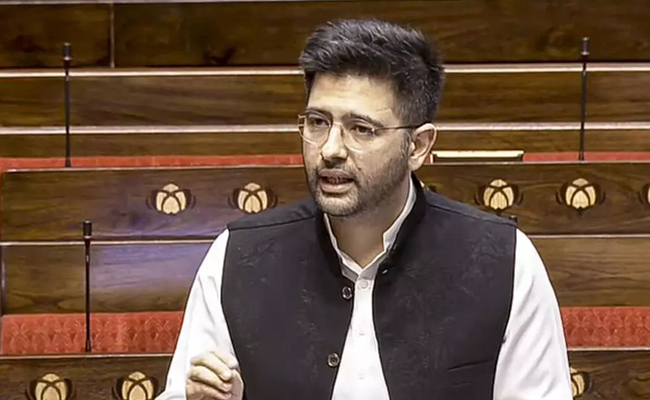
New Delhi (PTI): Sidelined AAP Rajya Sabha MP Raghav Chadha on Friday shared on Instagram a video titled "Voice Raised Price Paid", a compilation of clips of him raising various issues in Parliament, amid his ongoing rift with his party.
"With due respect, to those who are questioning my parliamentary performance, I will let my work do the talking," he said in the post.
The AAP on April 2 removed Chadha as its deputy leader in the Rajya Sabha and has accused him of shying away from raising his voice against Prime Minister Narendra Modi and the Centre in Parliament and instead engaging in "soft PR".
A combative Chadha has dismissed the party's allegations as "lies" and said that he went to Parliament to raise people's issues and not to create ruckus.
Since his removal as the AAP's deputy leader in the Upper House, Chadha has shared several videos and posts on social media, making it clear that he will not take his demotion lying down.