Onion costliest at Rs 100/kg in Bengaluru; lowest at Rs 35/kg in just 2 cities
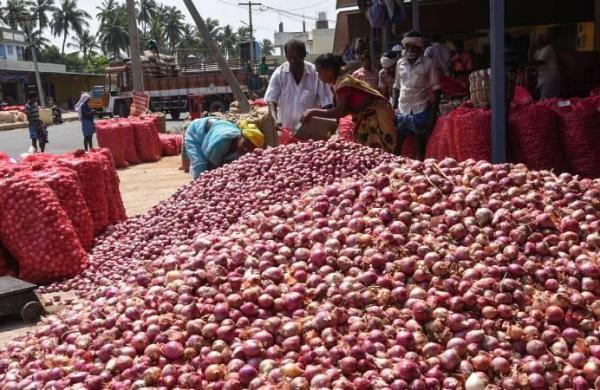
New Delhi: Onion, a politically-sensitive commodity, remained costliest in the retail markets of Bengaluru at Rs 100 per kg on Monday despite Karnataka being the third-largest producer of the kitchen staple in the country, according to government data.
The lowest price quoted was Rs 35/kg in only two cities -- Udaipur in Rajasthan and Rampurhat in Birbhum district of West Bengal -- out of the 114 cities where price trends are monitored on a daily basis by the government.
The average all-India daily price of onion was ruling as high as Rs 70/kg on Monday.
Consumers even in the growing regions are paying elevated rates for the key kitchen item.
Despite Maharashtra being the top onion producing state in the country, the retail price of the commodity in Mumbai was a hefty Rs 77/kg.
A similar situation prevailed in Delhi, one of the major consuming markets, where retail prices were firm at Rs 65 per kg, in Kolkata at Rs 70 per kg, and Chennai at Rs 72 per kg on Monday, as per the government data.
Retail prices maintained by the government are normally lower by Rs 10-20 per kg than the trade data as prices differ depending on the quality and locality.
Onion prices have soared for the last few weeks due to tight supplies following damage to this year's Kharif crop in the wake of heavy rainfall in the key growing states of Maharashtra and Karnataka.
However, the government has taken several measures, including banning exports and imposition of stock limits on traders, to boost the domestic supply and keep the prices under check till the arrival of the fresh crop by end of this month.
The government is also increasing domestic availability by releasing buffer stock of onion as well as relaxing norms for imports via private trade till December.
Maharashtra, Madhya Pradesh, and Karnataka are the top three onion growing states in India.
Let the Truth be known. If you read VB and like VB, please be a VB Supporter and Help us deliver the Truth to one and all.
Chhattisgarh govt enforces austerity measures, restricts foreign travel and cuts convoy vehicles
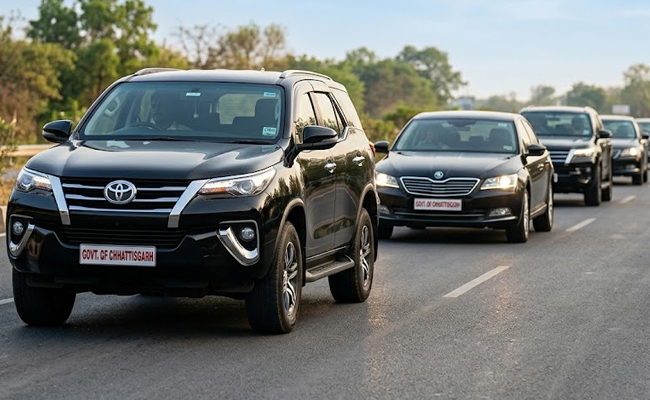
Raipur (PTI): The Chhattisgarh government on Saturday rolled out a set of austerity measures, including restricted use of convoy vehicles for the chief minister, ministers and heads of state-run bodies, besides curbs on foreign travel at government expense.
The state has decided to implement the cost-saving steps with immediate effect to ensure efficient management of financial resources and discipline in public spending, said a directive issued by Finance Secretary Rohit Yadav.
The move follows Prime Minister Narendra Modi’s appeal for austerity amid the ongoing conflict in West Asia.
The order said that only essential vehicles should be used in the convoys of the CM, ministers and office-bearers of corporations, boards and commissions, while ensuring restrained use of other government resources.
It also directed departments to take steps for a phased conversion of all official vehicles into electric vehicles in order to promote the use of EVs.
As part of fuel-saving measures, expenditure on petrol and diesel for government vehicles should be kept to a minimum, the directive said.
Vehicle pooling arrangements should also be implemented for officials of departments travelling to the same destination, it added.
The order further stated that foreign travel of government employees at state expenses will be completely prohibited except under extremely unavoidable circumstances. In such cases, prior approval of the CM will be mandatory.
To reduce administrative expenditure, departments have been instructed to hold physical meetings preferably only once a month and encourage virtual and online meetings. Regular departmental review meetings should compulsorily be conducted through video conferencing, it said.
The government also stressed the need for energy conservation in its offices, directing that all electrical equipment, including lights, fans, air-conditioners and computers, must be switched off after office hours.
The directive will remain effective till September 30 this year.
Amid the war involving the US, Israel and Iran, Modi has suggested reducing petrol and diesel consumption, using metro rail services in cities, carpooling, increased use of EVs, utilising railway services for parcel movement and working from home to conserve foreign exchange.