Opposition meet in Bengaluru will have no impact: Bommai
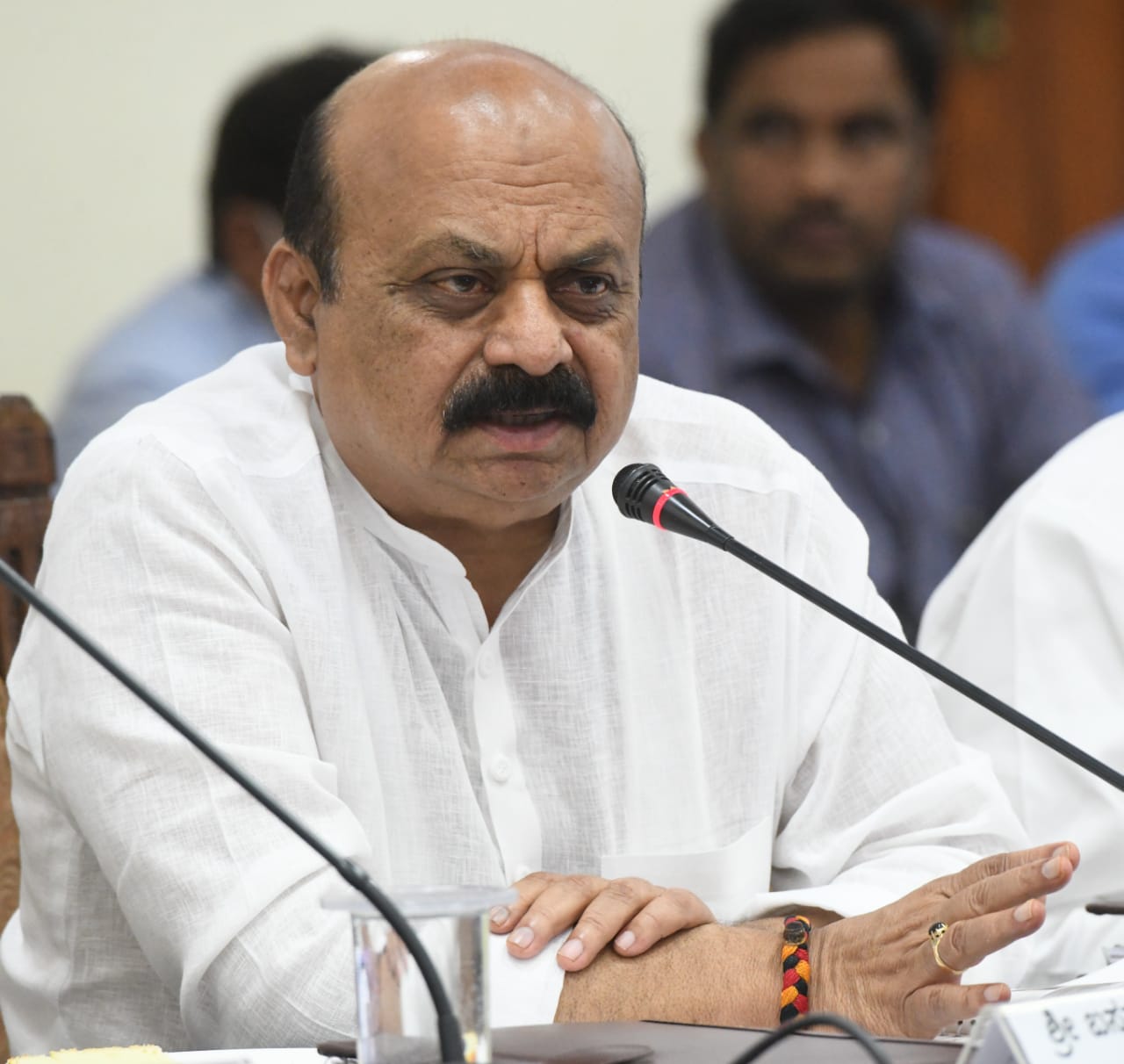
Hubballi, July 16: Ahead of the meeting of opposition parties in Bengaluru, senior BJP leader Basavaraj Bommai on Sunday said such gatherings have no political meaning, and many such meetings may take place in the days ahead, but will not have any impact.
The former Chief Minister said opposition parties don't have any specific programme to unite, other than to defeat Prime Minister Narendra Modi and the BJP.
Leaders of 24 non-BJP parties have been invited for the meeting of opposition grouping being convened by Congress, on June 17 and 18, aimed at taking on the saffron party in the 2024 Lok Sabha polls.
"There is no strong opposition party at the all India level, there are more regional parties, so formation of a federation of opposition parties and them holding meetings has no political meaning, nor will it result in any political profit (to them)," Bommai said.
Speaking to reporters here, he said with the only intention of defeating Modi and BJP they are uniting, which shows that they don't have their own strength.
"They don't have any specific programme to unite, their only intention is to defeat Modi," he added.
Further noting that the country today has progressed economically and socially, Bommai said, post COVID-19 the country has made a swift economic recovery.
"The developments that have taken place in the country after controlling the COVID has got international recognition to Modi. People are well aware that the country's security, progress, economic development, education and social growth is only possible by Modi," he said, adding that many such opposition meetings may take place in the days ahead, but it will not have any impact.
This meeting convened by the Congress, is the second such unity meeting of opposition parties, the first edition in Bihar's Patna on June 23, saw the participation of 15 parties.
Congress Parliamentary Party chairperson Sonia Gandhi is also expected to attend a dinner meeting on July 17 where leaders of these parties will be present.
Let the Truth be known. If you read VB and like VB, please be a VB Supporter and Help us deliver the Truth to one and all.
SC asks states to treat rising child trafficking cases as grave; seeks coordinated action
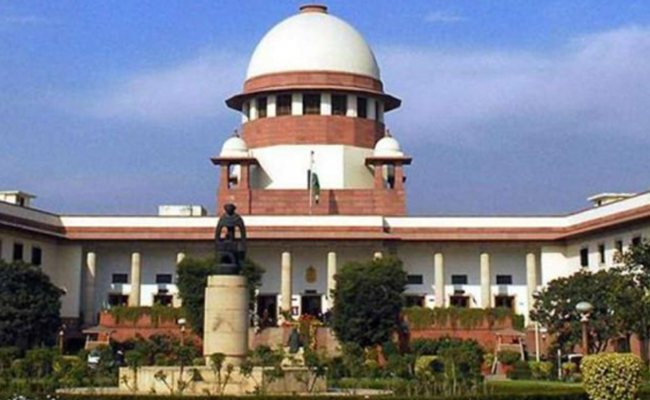
New Delhi (PTI): The Supreme Court has voiced grave concern over rising cases of child trafficking, saying gangs are operating across the country and if States and Union territories do not take immediate action, thing will go beyond control.
The court said only the state government and its home department can act vigilantly in this regard.
“As a court we can monitor, but ultimately the action has to be on the part of the state government, the police, and other agencies. Therefore, this is our humble request”, a bench comprising Justices JB Pardiwala and K V Viswanathan said during the hearing of a plea on Wednesday.
The bench was irked over the "lackadaisical" approach of several states and UTs in implementing a 2025 judgment aimed at dismantling organised trafficking networks.
Justice Viswanathan said the retrieval of children in some cases proves the problem can be tackled, but it requires a level of political and administrative will which is lacking at present.
The verdict, delivered on April 15, 2025, had mandated several institutional reforms, including completion of trials in trafficking cases within six months on a day-to-day basis.
It had also directed strengthening of Anti-Human Trafficking Units (AHTUs) and improving investigation standards.
Besides asking for setting up of state-level committees to monitor vulnerable trafficking hotspots, it had asked the authorities to treat missing children cases as trafficking unless proven otherwise.
Earlier, the bench had termed the compliance reports filed by a few states as "nothing but an eye wash."
On Wednesday, the bench noted that Madhya Pradesh, Goa, Haryana, Lakshadweep, Mizoram, Odisha, and Punjab had still failed to file reports in the prescribed format.
When the home secretary of Madhya Pradesh offered an apology for the lapse, the bench granted a "final opportunity" but warned that continued failure would lead to states being officially branded as "defaulting".
The bench noted that at least 15 states are yet to constitute review committees mandated to identify and monitor trafficking-prone areas.
The matter will now be heard on April 29.