Opposition raking up Dalit CM issue to divert attention: Karnataka Minister
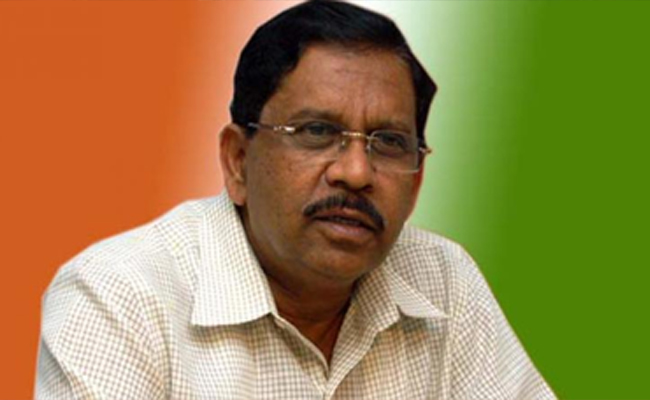
Bengaluru (PTI): Karnataka Home Minister G Parameshwara on Monday accused the opposition of "unnecessarily stoking" the debate over a Dalit Chief Minister to deflect attention from governance.
He asserted that only the Congress has the commitment to elevate a Dalit leader to the top post.
Speaking to reporters here, Parameshwara said the ongoing discussion on a Dalit Chief Minister was being amplified by opposition parties.
“This is the work of the opposition. To hide their own failures, they are raising the issue of the Chief Minister. Isn’t the administration running smoothly? Isn’t the Chief Minister governing?” he asked.
The Minister noted that for the past 10–12 days, detailed budget discussions had been held across departments and governance was progressing normally.
Parameshwara, who is a Dalit, said the Congress alone had the history and political will to make a Dalit Chief Minister.
“Yes, it must be the Congress party. Who else will do it?” he said, while clarifying that the timing of any such decision would be determined by the party high command.
On Chief Minister Siddaramaiah’s media statement targeting the JD(S) and invoking social justice, Parameshwara said Siddaramaiah had earlier been part of the JD(S) and even served as its president before being expelled.
He noted that the internal history of that party was best known to those within it and declined to comment on specific internal matters.
Defending the Chief Minister’s ideological position, Parameshwara said Siddaramaiah’s politics had always been rooted in social justice and that there was nothing new or opportunistic about his stance.
The Chief Minister, he said, had consistently built his political career on that foundation.
Let the Truth be known. If you read VB and like VB, please be a VB Supporter and Help us deliver the Truth to one and all.
KKR defeat LSG via Super Over
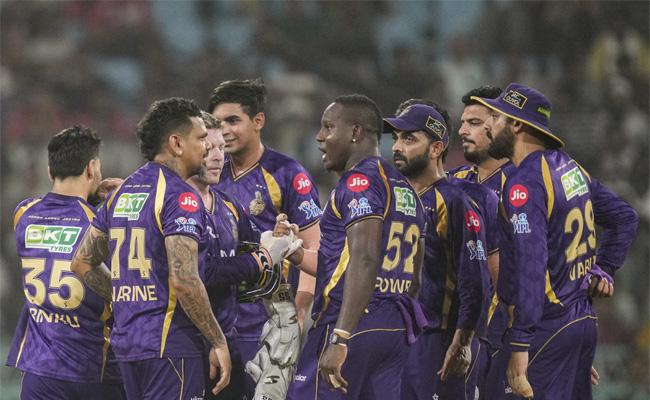
Lucknow (PTI): Kolkata Knight Riders edged Lucknow Super Giants via Super Overs in a battle between two bottom-placed teams in the IPL, here on Sunday.
Chasing a modest 156, LSG suffered a batting collapse and managed to tie the contest and take it to Super Over with No. 9 Mohammed Shami striking a last-ball six against a wayward Kartik Tyagi, who leaked 16 runs in the final over.
But Sunil Narine bowled a stunning Super Over conceding just one run and taking two wickets to give KKR an easy target.
Rinku Singh then finished the chase with a boundary off first ball from Prince Yadav.
Earlier the KKR were in deep trouble with 93/7 in 15 overs but Rinku smashed a sensational 83 not out from 51 balls including four sixes in a row in the final over to lift them to 155/7.
Cameron Green (34) was the only other batter to reach double-digit scores as KKR suffered a familiar batting meltdown with Mohsin taking his maiden fifer.
In reply, LSG continued their dismal show with the bat to succumb to their fifth loss in a row.
Brief Scores:
Kolkata Knight Riders 155/7; 20 overs (Rinku Singh 83 not out, Cameron Green 34; Mohsin Khan 5/23). Lucknow Super Giants 155/8; 20 overs (Rishabh Pant 42). KKR won via Super Over.