Over 400 management quota MBBS seats still vacant in Karnataka

Bengaluru: Over 400 undergraduate medical seats under the management quota at private medical colleges in Karnataka remain vacant, with less than two weeks remaining for admissions for the current academic year.
High fees, ranging from Rs 26 lakh to Rs 45 lakh, are believed to be the primary reason students are declining seats under the management quota, according to a report by Deccan Herald. The lowest fee is Rs 26,12,700 at Navodaya Medical College in Raichur and Srinivas Institute of Medical Sciences and Research in Mangaluru, while the highest fee is Rs 45,41,500 at Sapthagiri Institute of Medical Sciences in Bengaluru.
The Karnataka Examinations Authority (KEA) has announced the schedule for the mop-up round of seat allotment for medical courses, with 596 seats remaining unfilled after the second round. Of these, 453 seats are under the management quota, while 135 are under the private quota. Only seven seats remain available under the affordable government quota in private colleges.
Meanwhile, college managements are optimistic that the remaining seats will be filled in the mop-up round.
“Even last year, around 20 seats were vacant in our college after the second round, but in the mop-up, all the seats were filled. This year too, we are confident of getting admissions for all the available seats,” a management representative of a private medical college in Bengaluru told the publication.
KEA officials have noted that college managements have been instructed not to increase or decrease the fees declared under the management quota after the first round. “Last year, after a few colleges offered seats for a lower fee in the second round in order to fill vacant seats, students who had got seats in the first round by paying the full fees, started approaching the KEA seeking a discount. Considering this, we informed the colleges they cannot change the fee structure mentioned on the KEA website,” H. Prasanna, Executive Director, KEA was quoted as saying by DH.
Prasanna remarked that students who secure a seat but cancel it will be penalised according to KEA regulations and will be barred from participating in any counselling, including All India counselling, for the following academic year.
Let the Truth be known. If you read VB and like VB, please be a VB Supporter and Help us deliver the Truth to one and all.
Cash discovery row: Allahabad High Court judge Justice Yashwant Varma resigns
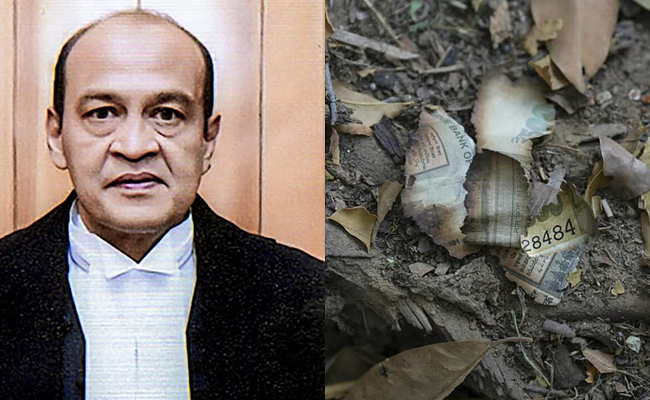
New Delhi (PTI): Embattled Allahabad High Court judge Yashwant Varma, who was facing heat after wads of burnt currency notes were recovered from his residence here last year, has submitted his resignation to President Droupadi Murmu, rendering the impeachment proceedings against him as infructuous.
The purported discovery of a huge stash of cash took place after a fire broke out at Lutyens' Delhi residence of Justice Varma, then a Delhi High Court judge, at around 11:35 pm on the night of Holi on March 14, 2025, prompting the fire department personnel to rush to the spot and douse the flames.
In a letter sent to the President on April 9, the 57-year-old Justice Varma said he was tendering his resignation with "deep anguish" and it was an honour to serve the office.
"Your Excellency, While I do not propose to burden your august office with the reasons which have constrained me to submit this missive, it is with deep anguish that I hereby tender my resignation from the office of Judge of the Hon'ble High Court of Judicature at Allahabad, with immediate effect. It has been an honour to serve in this office," the resignation letter sent to the President on April 9 said.
The pending impeachment proceedings, intended to remove Varma from his office, becomes infructuous due to his resignation.
Consequently, a three-member inquiry committee comprising Supreme Court judge Justice Aravind Kumar, Madras High Court Chief Justice Manindra Mohan Shrivastava and senior advocate B V Acharya was conducting an inquiry, a condition precedent, before an impeachment motion.
Justice Varma's case saw many twists and turns after he refused to heed to the advice of then CJI Sanjiv Khanna to resign following two damning reports of judges.
Left with no option, Justice Khanna wrote to the President to proceed further to impeach Justice Varma.
He was later repatriated from the Delhi High Court to the Allahabad High.
The top court on January 16 had dismissed Varma's plea challenging the Lok Sabha Speaker's decision to admit an impeachment motion and the validity of a panel set up to inquire corruption charges against him, saying a provision in law cannot be used as a weapon to scuttle parliamentary proceedings.
Lok Sabha Speaker Om Birla admitted a multi-party motion for Justice Varma's removal on August 12 last year.
In an unprecedented move, the apex court on March 22 last year had uploaded on its website an in-house inquiry report, including photos and videos, into alleged discovery of a huge stash of cash at the residence of Justice Varma.
On March 22, 2025 then CJI Khanna had constituted a three-member committee to conduct an inquiry.
Justice Varma had "unequivocally" stated that no cash was ever placed in the storeroom "either by me or any of my family members and (I) strongly denounce the suggestion that the alleged cash belonged to us".
Justice Varma was enrolled as an advocate on August 8, 1992. He was appointed as an additional judge of the Allahabad High Court on October 13, 2014. High Court judges retire at the age of 62.
He took oath as a permanent judge of the Allahabad High Court on February 1, 2016, before being appointed as a judge of the Delhi High Court on October 11, 2021.
A judge of a constitutional court can only be removed from office through an impeachment motion passed by Parliament.