Parappana Agrahara Jail on brink due to staff shortages, administrative lapses says panel
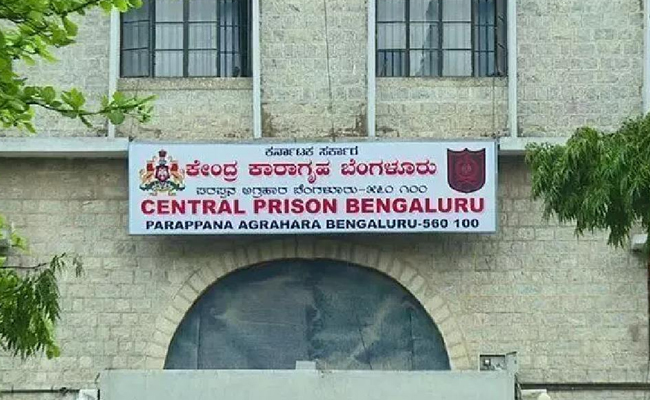
Bengaluru: Karnataka’s largest prison, Parappana Agrahara Central Jail, is functioning under conditions that pose serious risks to security and governance, with acute staff shortages, outdated surveillance systems and deep administrative lapses, a high-level committee has found.
The findings were submitted on Wednesday to Home Minister G Parameshwara by a panel headed by Additional Director General of Police (Law and Order) R Hitendra. The committee was tasked with reviewing central prisons across the state after videos surfaced on social media showing inmates, including high-profile criminals and a terror suspect, allegedly receiving special treatment inside Parappana Agrahara.
According to the report cited by The Indian Express, the Bengaluru prison currently houses 4,834 inmates but has only 571 staff members, with 388 posts lying vacant. This has resulted in a prisoner-to-staff ratio of 1:9, far exceeding the 1:6 benchmark laid down in the Model Prison Manual. When divided across three shifts, the situation becomes more severe, leaving one officer responsible for nearly 30 inmates at any given time.
Similar staffing concerns were noted in other central prisons, including Mysuru, Bellary, Shivamogga and Kalaburagi, though conditions there were marginally better. The panel has called for immediate recruitment to fill vacancies, mandatory rotation of staff every three years followed by a cooling-off period, and regular modern training for prison personnel.
Security vulnerabilities were a major concern in the report. Mobile phone smuggling remains widespread at Parappana Agrahara, largely because existing jammers are incapable of blocking 5G signals. This is despite a Karnataka High Court judgment in 2021 requiring rigorous monitoring over cell phone usage inside jails. To prevent misuse, the committee advised replacing the current system with 5G-compatible jammers, deploying portable devices in blind places, and delegating all controls to the Chief Superintendent.
The report also highlighted weak enforcement and accountability. Between January 2021 and November 15, 2025, as many as 154 FIRs were registered in Bengaluru in connection with illegal activities inside central prisons. None of these cases have progressed beyond the police station stage.
Infrastructure gaps were described as equally alarming. Unlike prisons such as Tihar in Delhi or Chanchalguda in Telangana, Parappana Agrahara lacks a buffer zone, making it vulnerable to smuggling from outside. Boundary walls in several sections are below 20 feet, and watch towers are too low to offer effective oversight. The panel has recommended raising walls to 30 feet, installing anti-throwing nets and solar fencing, and increasing the height of watch towers.
Overcrowding has been compounded by delays in prison construction projects elsewhere in the state. Incomplete barracks at facilities such as Shivamogga and Vijayapura have forced inmates to be accommodated in already congested prisons. The committee noted the importance of moving these projects forward immediately in order to relieve demand on current infrastructure.
Surveillance inside Parappana Agrahara was found to be severely inadequate, where the prison has only 332 CCTV cameras, covering a small fraction of inmates, with barracks largely outside camera range. Toilets remain unmonitored except for limited voice-recording devices. By comparison, Tihar Jail operates thousands of cameras. TIE reported that the panel has recommended continuous monitoring through AI-enabled cameras capable of detecting prohibited activities, body-worn cameras for prison staff, and a central command centre for real-time oversight.
Stressing the gaps in inmate welfare and rehabilitation the report noted that opportunities for vocational training, skill development and structured work are minimal when compared to other large prisons. To aid reintegration after release, the committee proposed setting up of low-cost prison industries, wellness programs like yoga and meditation, mental health counseling, and support structures
Administrative lapses were flagged across multiple areas. First-time offenders are routinely imprisoned alongside habitual criminals, women personnel are not always properly deployed, Prison Visitor Boards meet seldom, and internal intelligence measures are inadequate. The panel recommended clearer segregation of prisoners, better staff allocation, stronger oversight and standardised procedures for lawyer visits, food supplies and medical referrals.
At Parappana Agrahara certain remedial steps are also in place. A Central Prison Command Centre is set to be officially opened on January 21, allowing for round-the-clock monitoring of jails around the state. The facility will monitor around 900 AI-enabled CCTV cameras and will be supplemented by drone surveillance to improve real-time security.
Modelled on existing traffic and police command centres, the new facility is expected to centralise prison monitoring and address long-standing gaps, though the committee has cautioned that technology alone will not be sufficient without urgent structural and administrative reforms.
Let the Truth be known. If you read VB and like VB, please be a VB Supporter and Help us deliver the Truth to one and all.
Trump says he ‘hasn’t even thought about’ continuing Iran ceasefire
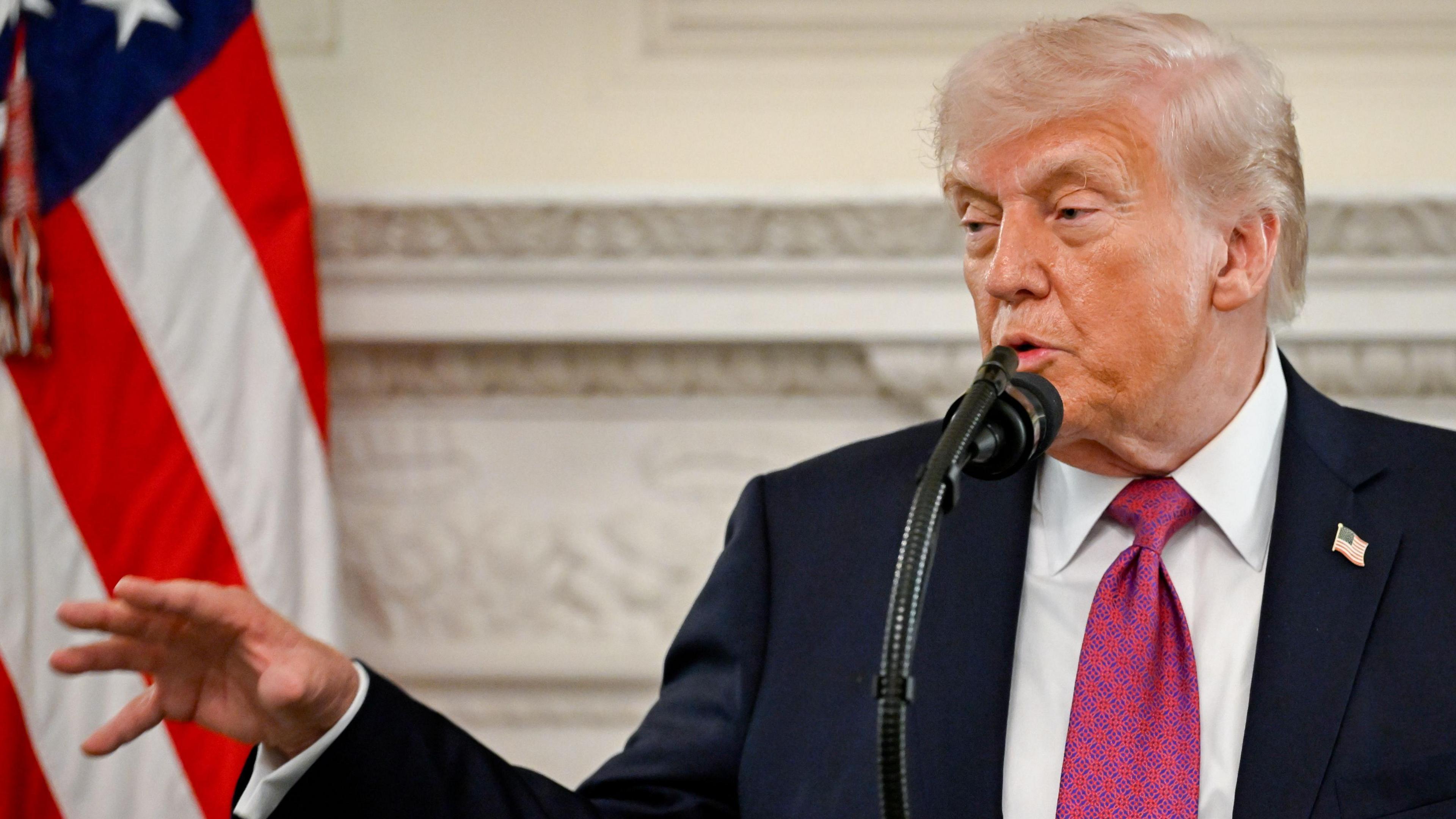
Washington: US President Donald Trump has said he has not yet considered whether he would continue the ceasefire involving Iran, while also claiming the United States holds the advantage in negotiations.
Speaking to reporters, Trump said he was prepared to make a deal with “whoever is running the show” in Iran.
“They are fighting with each other, there’s tremendous infighting. They’re probably fighting for leadership in many cases. I think they’re fighting not to be leader because we knocked out two levels of leaders,” he said.
Trump added, “When they want they can call me. We have all the cards, we’ve won everything.”
Referring to ongoing negotiations, he said, “They gave us a paper that should’ve been better. And, interestingly, immediately when I cancelled it [envoy trip to Pakistan], within 10 minutes we got a new paper that was much better.”
“We talked about they will not have a nuclear weapon, very simple … They offered a lot, but not enough,” he added.
When asked whether he would continue the ceasefire, Trump replied, “I haven’t even thought about it.”
The remarks come as uncertainty remains over the future of the temporary truce and broader negotiations between Washington and Tehran.