Parents fear uncertainty after Karnataka govt rules out age limit relaxation for Class 1 admission
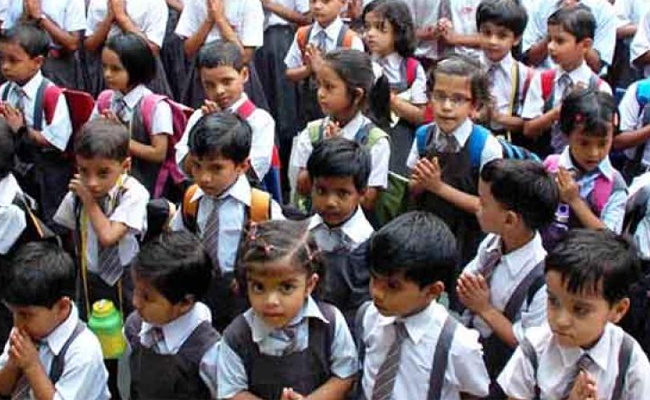
Bengaluru: The Karnataka government has ruled out any relaxation of the minimum age limit for admission to Class 1 beginning with the academic year 2026-27. Following the refusal, a group of parents continues to press for leniency.
Parents of children who fall under the age of six by a small margin on the cut-off date have met Deputy Chief Minister D K Shivakumar and senior officials from the Department of School Education and Literacy to request an exemption. School Education and Literacy Minister Madhu Bangarappa said that the government will not change its decision, as reported by Deccan Herald.
According to the minister, children must be six years old by June 1 to be eligible for admission to Class 1. beginning with the 2026-27 academic year. He noted that the previous relaxation was a one-time measure that was clearly confined to the 2025-26 academic year.
“If such requests are entertained every year, it will never end. While granting relaxation last year, it was explicitly stated that it applied only to one academic year. From 2026-27 onwards, the rule will be strictly implemented,” Bangarappa was quoted by DH.
Parents argue that the rigid cut-off is affecting children who are short by a few days. One parent was quoted by DH as saying that his daughter would be 12 days short of completing six years on June 1. Such parents would be forced to repeat a year despite being academically ready. Others pointed out that children promoted from LKG to UKG during the 2025-26 academic year are now facing uncertainty over their transition to Class 1.
Few parents also recalled that earlier, admissions were allowed for children aged between five years and 10 months and six years. Parents saw it as a more practical approach, with children born in November and December being disproportionately affected.
The issue of age criterion goes back to a government order issued in July 2022. The order mandated six years as the minimum age for Class 1 admission. Parents of children already enrolled in pre-primary classes, protested against the order and the state deferred implementation, announcing that the rule would come into force from the 2025-26 academic year.
After renewed pressure, the government granted a one-year relaxation for 2025-26, citing the large number of students affected and in consultation with the State Education Policy Commission. While announcing the exemption, the minister had stated that no further concessions would be allowed.
Let the Truth be known. If you read VB and like VB, please be a VB Supporter and Help us deliver the Truth to one and all.
Air India flight from Mumbai makes 'priority' landing in Bhopal after snag; return leg cancelled
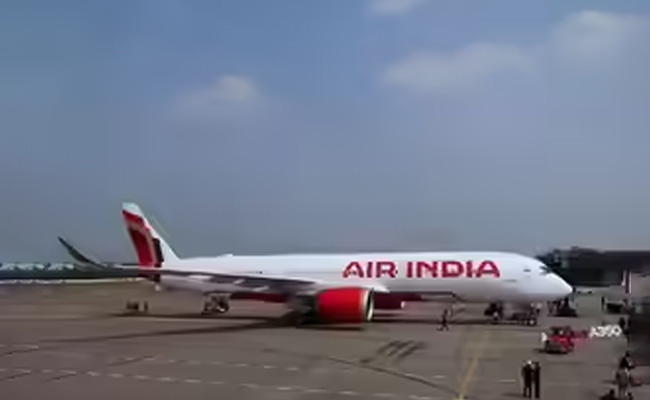
Bhopal (PTI): A Bhopal-bound Air India flight from Mumbai carrying 175 persons on board made a “priority” landing here on Sunday due to a snag, an airport official said.
The aircraft landed safely at Bhopal airport at 3.20 pm, he said.
Consequently, the return leg of the flight from Bhopal to Mumbai, with 178 passengers booked, was cancelled, the official said.
AAI-run Bhopal airport said in a statement that Air India flight AI 633 “reported a technical issue to Air Traffic Control (ATC) during the flight from Mumbai to Bhopal”.
Immediately, all prescribed safety protocols were activated, and seamless coordination was ensured between ATC, airline ground operations, CISF and airpiort fire and rescue team of Bhopal airport, it said in a statement.
The flight, carrying 175 persons, including 166 passengers and nine crew members, landed safely at Bhopal airport at 3.20 pm, the airport operator said.
All necessary assistance and support were extended by the airport and airline teams as per the requirements of the flight crew, it said.
“Due to the technical issue, the aircraft was declared unserviceable, and as a precautionary measure, the return flight AI-634 (Bhopal to Mumbai) was cancelled by the airline to facilitate detailed inspection and rectification,” the statement said.