Passenger held at BLR airport with Rs 87.5 lakh hydroponic ganja

Bengaluru (PTI): A passenger who arrived from Bangkok at Kempegowda International Airport here was arrested for possession of hydroponic ganja valued at Rs 87.5 lakh, officials said on Friday.
The incident occurred on April 23 at Terminal 2 of the airport, they said.
“A passenger arriving from Bangkok was intercepted, and 2.5 kg of hydroponic ganja, valued at Rs 87.5 lakh, was seized from his checked-in baggage. The accused was arrested under the Narcotic Drugs and Psychotropic Substances (NDPS) Act,” Bengaluru Customs said in a post on ‘X’.
The identity of the person has not yet been disclosed, and further investigation is underway.
Let the Truth be known. If you read VB and like VB, please be a VB Supporter and Help us deliver the Truth to one and all.
No evidence of temple demolition at Bhojshala site, Muslim petitioner tells MP High Court
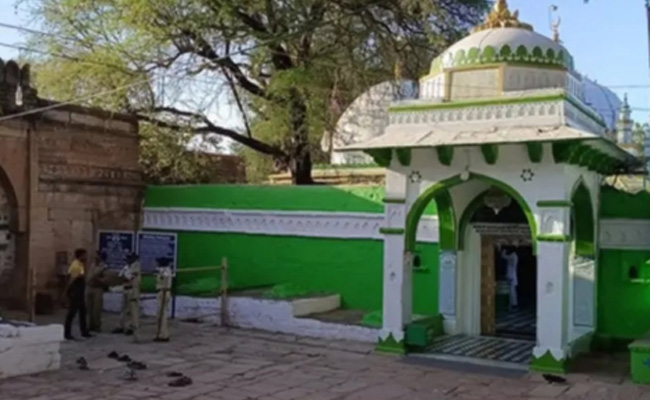
Indore: A Muslim petitioner has told the Madhya Pradesh High Court that there is no historical evidence to support claims that a temple was demolished to construct a mosque at the disputed Bhojshala complex in Dhar district.
Senior advocate Salman Khurshid, appeared for the Maulana Kamaluddin Welfare Society. He submitted before a bench of Justices Vijay Kumar Shukla and Alok Awasthi that assertions regarding demolition lack concrete proof. He argued that there is no verifiable record indicating that a specific temple was destroyed during any particular period to build a mosque at the site.
The court is hearing a batch of petitions concerning the religious character of the Bhojshala complex, claimed by Hindus as a temple and by Muslims as a mosque, as reported by The Observer Post. Hindu petitioners maintain that the site is a Saraswati temple built by Raja Bhoj of the Parmar dynasty, while the Muslim side identifies it as the Kamal Maula Mosque linked to a Sufi saint.
Khurshid contended that the mosque structure was built during the rule of the then administration and not through any act of forcible demolition. He also questioned the historical material relied upon by the opposing side, referring to a 2003 communication attributed to the British High Commission, which he said suggested that a statue believed to be of Goddess Saraswati is in fact that of a Jain deity.
He urged the court to examine all documentary and historical evidence in accordance with legal standards. He also stressed that such disputes must be adjudicated on the basis of established principles governing civil suits.
Referring to the Ayodhya verdict, Khurshid submitted that claims over religious sites must be determined through evidence rather than historical narratives alone.
Citing historical accounts that indicated Dhar as the capital of the Parmar rulers, the senior advocate said, it has witnessed multiple phases of political change and reconstruction. He referred to figures such as Ain-ul-Mulk Multani to argue that shifts in control over the region did not necessarily involve destruction of existing religious structures. The court will resume hearing the matter on Monday.