Petrol price hike: Truck owners to strike from June 18
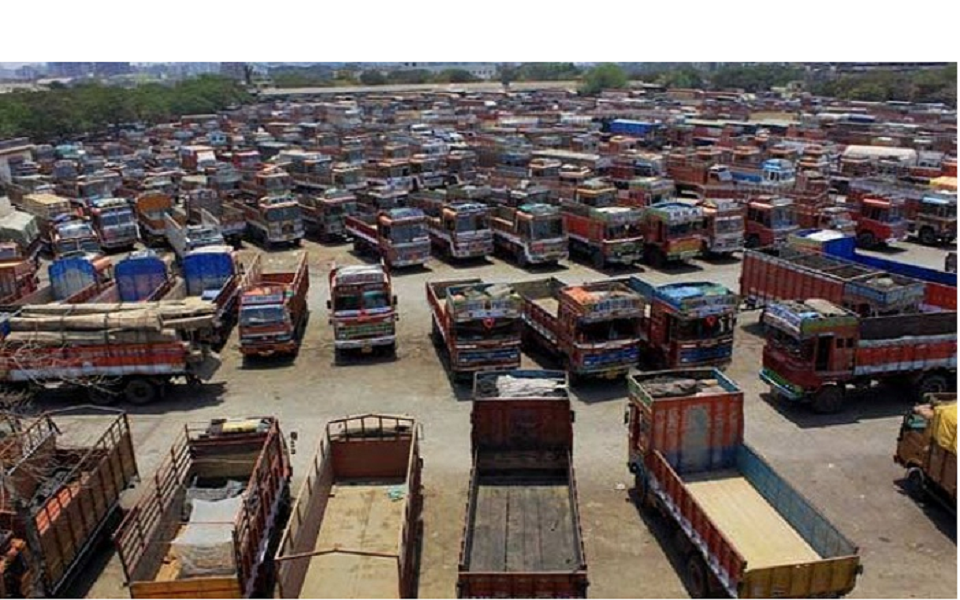
Bengaluru, June 16: The Federation of All India Trucks Owners Association has decided to conduct indefinite strike from June 18 against the central government for hiking the petroleum products and increasing the third party insurance premium.
Speaking to reporters here on Saturday, Federation of All India Goods Transportation Vehicles Owners Associations president B Channa Reddy said that the central government has been increasing the prices of petroleum products regularly. Moreover, it has increased the third party insurance premium amount which is unscientific. This would have a burden on the truck owners and employees, he said.
They have to repay the loans taken to purchase lorries. Every day, they have to pay toll taxes in highways. Lorry owners have been facing lot of problems daily. But without taking their problems into consideration, the central government has been taking anti-lorry owners decisions, he said.
In 2012, one litre of diesel was costing Rs 45.73 and now, it was increased to Rs 66.37. In the same way, petrol price in 2012 was Rs 73.5, but now it was increased to Rs 75.06 and it varies from state to state. As a result, the truck owners were facing lot of problems. So, it has become inevitable for them to conduct indefinite strike seeking fulfillment of their demands, he said.
Let the Truth be known. If you read VB and like VB, please be a VB Supporter and Help us deliver the Truth to one and all.
Centre spent Rs 76.13 lakh on print media ads for RSS centenary, reveals RTI
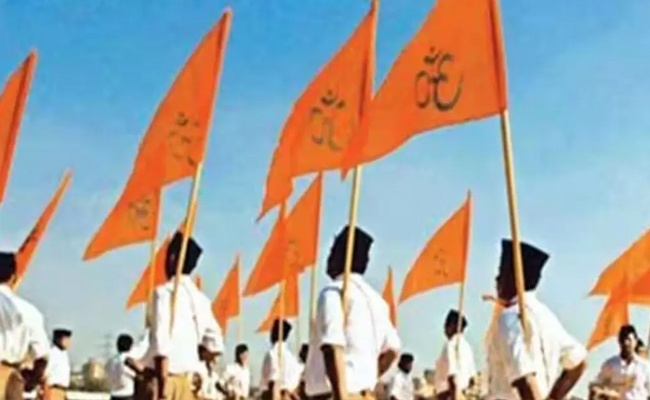
New Delhi: The Union Ministry of Culture allegedly spent Rs 76.13 lakh on print advertisements marking the 100-year celebrations of the Rashtriya Swayamsevak Sangh (RSS), according to a Right to Information (RTI) reply.
The information was sought by RTI activist Ajay Basudev Bose, who filed an application seeking details on expenditure incurred by the ministry for advertisements commemorating the RSS centenary.
Bose shared a picture of the reply from the ministry on his official ‘X’ handle.
“It is informed that an amount of Rs 76,13,129 has been spent on advertisement given in various print media by the Ministry of Culture on the occasion of the completion of 100 years of RSS,” the government’s reply stated.
RTI reply shows Min of Culture Govt of India spent a Whopping Rs 76L,13K,129 on Advertisement in Print Media on occasion of 100 yrs of #RSS
— AJAY Basudev Bose (@AjayBos93388306) April 16, 2026
When Everyone knows RSS is Not Registered & Does not Pay any Tax is it justified to spend Tax Payers Money on such Private event??@RSSorg… pic.twitter.com/dW4IUtdNCg
Bose questioned the expenditure in the post X, “when Everyone knows RSS is Not Registered & Does not Pay any Tax is it justified to spend Tax Payers Money on such Private event??”
Reacting to the development, Karnataka’s IT-BT and Panchayat Raj Minister Priyank Kharge also criticised the spending.
In a post on X, he asked why public money was being used for what he described as a “private ideological project.”
"Modi Sarkar spent Rs 76,13,129 of public money on newspaper advertisements to celebrate 100 years of the RSS. Why is Government spending taxpayers money on an unregistered, non-tax-paying organisation to celebrate their centenary?," he added.
Why is public money being used to serve a private ideological project?
— Priyank Kharge / ಪ್ರಿಯಾಂಕ್ ಖರ್ಗೆ (@PriyankKharge) April 16, 2026
Modi Sarkar spent ₹76,13,129 of public money on newspaper advertisements to celebrate 100 years of the RSS.
Why is Government spending taxpayers money on an unregistered, non-tax-paying organisation to… pic.twitter.com/EoZ6Pim3IM
According to reports, the RSS describes itself as a volunteer-based organisation and has stated that it functions as a body of individuals rather than a registered entity.
Founded by Keshav Baliram Hedgewar in 1925, the organisation is marking its centenary year beginning from Vijaydashami in 2025, with the milestone observed on October 2.