PM Modi to inaugurate Aero India in Feb: CM Bommai
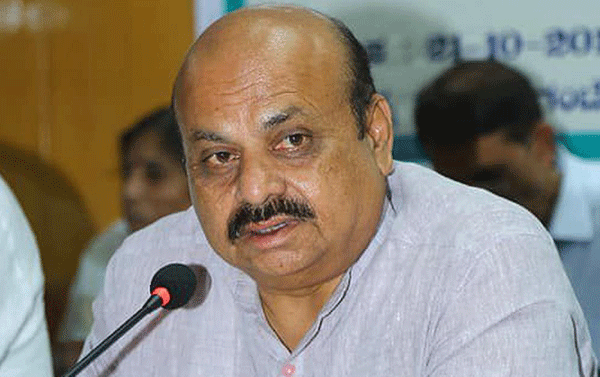
Bengaluru, Nov 7: Karnataka Chief Minister Basavaraj Bommai on Wednesday said Prime Minister Narendra Modi would be inaugurating the 14th edition of Aero India that would be held here from February 13-17, 2023.
The biennial airshow would be held at the Air Force Station at Yelahanka.
The Chief Minister said this at the inauguration of Collins Aerospace's global engineering and technology centre here. He said since it would be an international-level event, the airshow must showcase aerospace research centres, air-travelling opportunities and possibilities in aircraft industry in the State and in Bengaluru.
Highlighting that the capacity of Indian engineers has been good and that he wishes that all the parts of aircraft be manufactured in Bengaluru, the Chief Minister said the State capital is an ideal place for the aerospace sector as there are institutions like DRDO, NAL, and HAL. Besides, there are international-level R&D institutions in the fields of aerospace, artificial Intelligence, renewable energy and semi-conductors in Bengaluru, he added.
Aero India is said to be one of the premier aerospace exhibitions with 13 successful editions organised in Bengaluru since 1996. Further noting that Collins Aerospace Engineering Institution has completed 25 years of its existence in Bengaluru, Bommai said this shows the achievement of the institution which has emerged as an important engineering centre.
Let the Truth be known. If you read VB and like VB, please be a VB Supporter and Help us deliver the Truth to one and all.
4 workers die after being buried under coal slurry in Jharkhand's Dhanbad
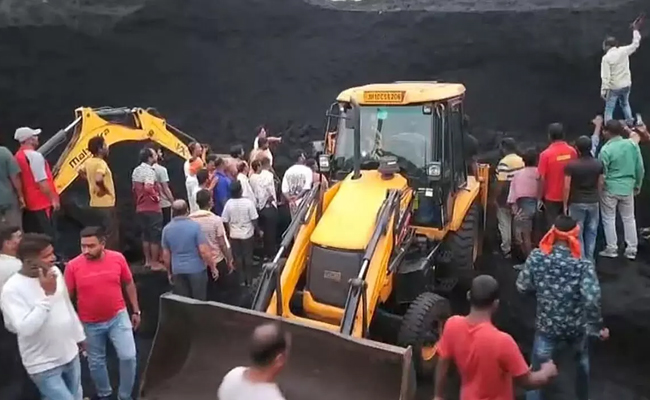
Dhanbad (Jharkhand) (PTI): At least four workers died after being buried under coal slurry in Jharkhand's Dhanbad district on Saturday, a police official said.
The incident took place at Moonidih coal washery in the command area of Bharat Coking Coal Limited (BCCL).
"Bodies of all four workers were dug out of debris during a rescue operation," Putki police station in-charge Waqar Hussain told PTI.
The incident took place when coal slurry was being loaded into trucks by workers, during which a large chunk of slurry fell and trapped several workers underneath, officials said.
The deceased have been identified as Manik Bauri, Dinesh Bauri, Deepak Bauri, and Hemlal Gope.
Meanwhile, the family members of the deceased and local villagers placed the bodies in front of the washery gate and began a protest.
They demanded compensation, jobs for dependents and action against those responsible for the incident.
Police and administration officials are trying to pacify the protesters, an official said.