Police summons suspended IAS officers accused of voter data theft by pvt firm
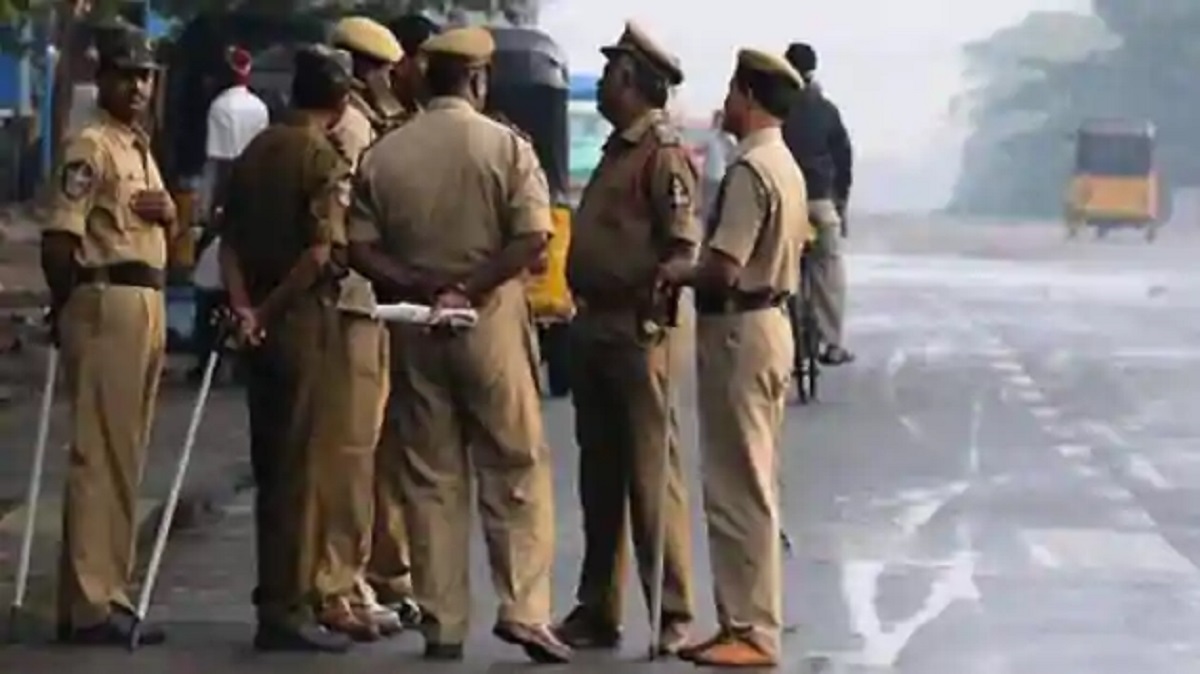
Bengaluru, Dec 7: Two Indian Administrative Services (IAS) officers, suspended in connection with the alleged voter data theft by a private firm, have been summoned, a police officer said on Wednesday.
According to the officer, K Srinivas and S Rangappa were asked to depose before the investigating officer today.
However, they have sought a week's time to appear for questioning, he added.
Srinivas was the deputy commissioner of Bengaluru Urban District, and Rangappa was the Bruhat Bengaluru Mahanagara Palike, who also served as the Additional District Election Officer, when the alleged electoral data theft took place.
They were suspended on November 26 as they were in-charge of those constituencies which allegedly saw large-scale election data fraud.
The Election Commission had ordered reviewing the addition and deletion in the electoral roll in Shivaji Nagar, Chickpet and Mahadevapura Assembly segments.
The investigation would also cover Chilume Educational Cultural and Rural Development Institute (Chilume), which is at the centre of controversy.
"We will probe whether it is a trust or a firm," the police officer said.
The Chilume Trust had allegedly got permission from the BBMP for voter awareness drive free of cost'.
The Congress has charged the Trust with appointing a large number of Block-level Officers (BLOs), which usually should be done by the government, and issuing identity cards to them.
The BLOs then conducted a door-to-door survey of voters using their BLO identity card, the party had alleged.
Congress further said the Trust 'sub-leased' its job to some other agencies as well.
After the matter came to light, the BBMP terminated the permission granted to Chilume Trust. The Chief Electoral Officer of Karnataka, too, intervened and an FIR was registered in this connection. Based on the FIR, the investigations are underway.
Based on the FIR, police arrested many people including the trust director Krishnappa Ravikumar.
Let the Truth be known. If you read VB and like VB, please be a VB Supporter and Help us deliver the Truth to one and all.
4 workers die after being buried under coal slurry in Jharkhand's Dhanbad
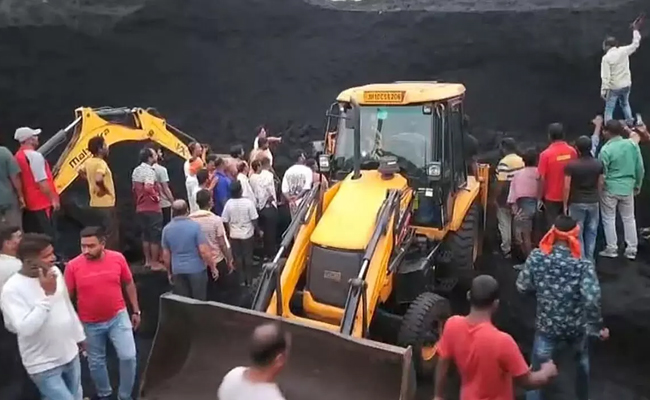
Dhanbad (Jharkhand) (PTI): At least four workers died after being buried under coal slurry in Jharkhand's Dhanbad district on Saturday, a police official said.
The incident took place at Moonidih coal washery in the command area of Bharat Coking Coal Limited (BCCL).
"Bodies of all four workers were dug out of debris during a rescue operation," Putki police station in-charge Waqar Hussain told PTI.
The incident took place when coal slurry was being loaded into trucks by workers, during which a large chunk of slurry fell and trapped several workers underneath, officials said.
The deceased have been identified as Manik Bauri, Dinesh Bauri, Deepak Bauri, and Hemlal Gope.
Meanwhile, the family members of the deceased and local villagers placed the bodies in front of the washery gate and began a protest.
They demanded compensation, jobs for dependents and action against those responsible for the incident.
Police and administration officials are trying to pacify the protesters, an official said.