Portfolio allocation causes displeasure among some Ministers in Karnataka
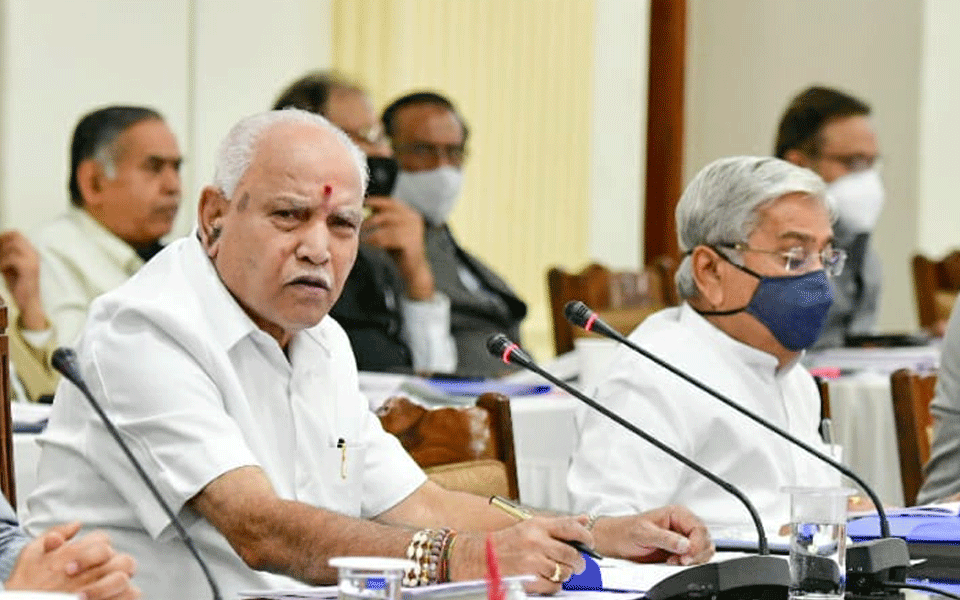
Bengaluru: The allocation of portfolios to seven new Ministers and the reshuffle of departments of some others on Thursday by Karnataka Chief Minister B S Yediyurappa have not gone down well with a section of his cabinet colleagues as they are upset over the ministries allocated to them.
Yediyurappa, however, sought to brush it aside, saying some kind of displeasure was normal whenever portfolios were changed and he has convinced them.
Senior Minister J C Madhuswamy skipped an event of the Chief Minister in his home district Tumakuru, apparently upset over being divested of three key departments, while M T B Nagaraj openly said he does not want the Excise portfolio given to him.
A week after expanding his cabinet, Yediyurappa on Thursday allocated portfolios to the seven new inductees and also effected a reshuffle of the departments of some ministers.
The chief minister relieved Madhuswamy of Law, Parliamentary Affairs, Legislation and Minor Irrigation portfolios and allocated Medical Education, Kannada and Culture departments.
A few Congress-JD(S) rebels-turned BJP ministers including Nagaraj, K Gopalaiah, K C Narayana Gowda, met at Health Minister K Sudhakar's residence and said they will call on the Chief Minister to discuss portfolios allocated to them.
Yediyurappa said all the Ministers were at ease and there was no resentment.
"I have called them (upset Ministers) and spoken to them, everyone is satisfied...I have spoken to everyone personally," he said, cabinet expansion or portfolio allocation was not an easy job as everyone cannot be satisfied.
"Within the limitations, I have shared the responsibilities, let them work, after some days if they still find issues, let's consider changing then," he added.
The Chief Minister is said to have deputed Home minister Basavaraj Bommai and Revenue Minister R Ashok to convince the Ministers.
Ashoka said he has spoken to Gopalaiah and Nagaraj and things will be resolved soon, adding he and Bommai will talk to all of them once again.
"We are all with the Chief Minister and every one has trust in him," he told reporters.
Madhuswamy rejected reports that he was planning to resign, but said he had requested the Chief Minister not to change Minor Irrigation portfolio which was with him.
The Minister said he was not upset with all changes as the Chief Minister had the prerogative to allocate work.
Openly expressing his displeasure, Nagaraj said there was nothing for him to do in the Excise department and he has informed the Chief Minister that he doesn't want it.
Nagaraj said he was a Housing Minister in the previous JDS-Congress coalition government where there were programmes providing houses to poor and developing slums.
"I resigned from the post and came out, I'm now given the Excise portfolio.(in this government). What is there to do in the excise department?" he asked.
Nagaraj said he wanted some portfolio where he "can work for the public and poor and bring a good name" to the party and the government.
Gopalaiah, divested of the Food, Civil Supplies and Consumers Affairs Department and made incharge of Horticulture and Sugar, said he will meet the Chief Minister and discuss about the change in portfolio.
"I had planned several things in the department...
everyone knows how I have been performing," he said. Gopalaiah added that he along with Nagaraj, Sudhakar, Narayana Gowda will meet Yediyurappa and the party president.
"This has happened to four or five of us, we had met at Sudhakar's residence. We will sit with the Chief Minister and ask what is our fault."
While Sudhakar holds the Health department, he was relieved of Medical Education portfolio.
Narayana Gowda has been given Youth Empowerment, Sports, Haj and Wakf Departments in place of Municipal Administration, Horticulture and Sericulture.
Ending a long wait, Yediyurappa had expanded his 17- month old cabinet on January 13, inducting seven ministers, but the exercise led to resentment with several aspirants expressing reservations over not being included in the ministry.
Let the Truth be known. If you read VB and like VB, please be a VB Supporter and Help us deliver the Truth to one and all.
Two-wheeler rider killed after ramming tanker near Arkula Bridge in Mangaluru
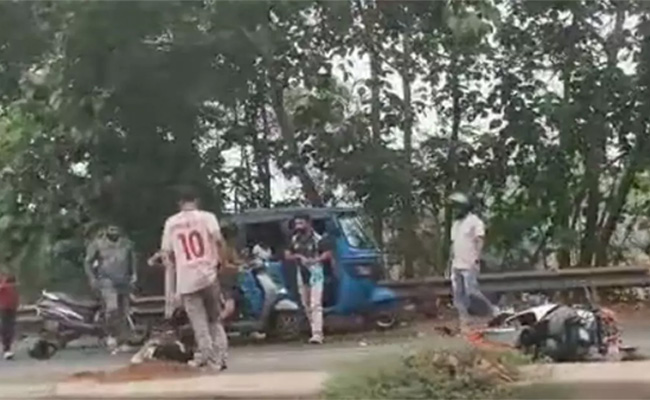
Mangaluru: A two-wheeler rider was killed on Sunday morning after his vehicle collided with a tanker from behind near Arkula Bridge, police said.
The deceased has been identified as Muhammad Ashfaq (22), a resident of Farangipete.
According to reports, the tanker was heading towards BC Road when the two-wheeler rammed into it from behind near a furniture shop close to Arkula Bridge. Ashfaq sustained severe injuries.
He was immediately shifted to a private hospital in Padil where he recived initial treatment. However, he succumbed to his injuries while being taken to another private hospital in the city for further treatment, police added.
Traffic police have registered a case in connection with the incident.