Prajwal Revanna sex scandal: Karnataka State SDMC Coordination Central Forum pens open letter to CM
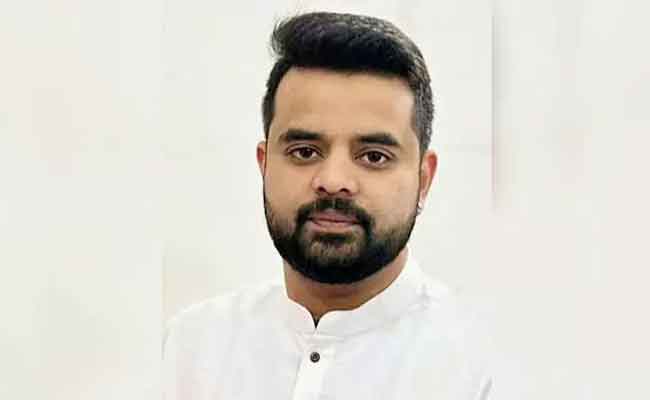
Bengaluru: In light of the Prajwal Revanna sex scandal case, the Karnataka State SDMC Coordination Central Forum has penned an open letter to the Chief Minister, urging the immediate arrest of Hassan MP Prajwal Revanna wherever he may be, and the initiation of legal proceedings against him under the IT Act, IPC, and the UAPA.
The alleged involvement of MP Prajwal Revanna and his father, MLA H. D. Revanna, in a gang-rape scandal has drawn widespread condemnation. The Forum stresses the urgency of locating and arresting the accused and the need for legal action under relevant statutes. Furthermore, the Forum calls for a time-bound investigation by the SIT, targeting not only the accused but also any individuals complicit in the filming of the sexual acts.
The letter shows the gravity of the scandal, which reportedly spans thousands of videos and photos and the disturbing trend of exploiting such crimes for political gain.
It criticises the leniency shown towards the accused, raising questions about the safety of women under the current administration.
Amidst ongoing accusations and counter-accusations among political leaders, the Forum appeals for a serious approach to the scandal and calls for measures to protect the victims' rights. It demands iimmediate action against those involved in covering up the scandal, sharing the illicit videos, or impeding the investigation process.
The Forum also addresses concerns regarding the conduct of Prajwal Revanna's family members, calling for their accountability in light of their positions of authority.
In conclusion, the Forum urges the Chief Minister to uphold the principles of democracy and justice by addressing the demands outlined in the open letter.
The open letter has been signed by Moidin Kutty, convener of the Karnataka State SDMC Coordination Central Forum.
Let the Truth be known. If you read VB and like VB, please be a VB Supporter and Help us deliver the Truth to one and all.
89 killed as storm, rain batter UP; relief work underway
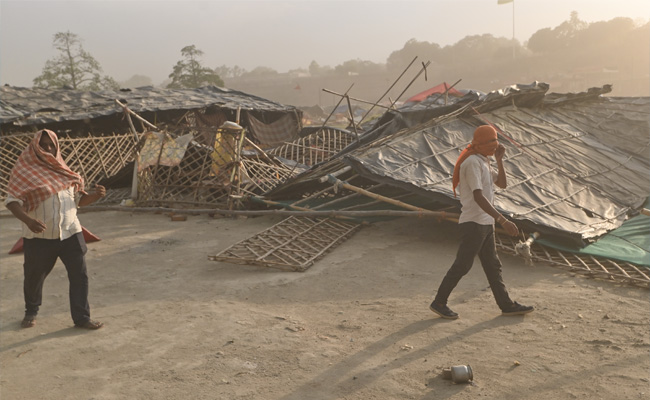
Lucknow (PTI): At least 89 people were killed after a strong storm and heavy rain pounded several districts of Uttar Pradesh, uprooting trees and electric poles and damaging houses, according to the Relief Commissioner's office.
Chief Minister Yogi Adityanath took cognisance of the loss of lives and damage caused by the unseasonal rain, thunderstorms and lightning on Wednesday and directed officials to ensure relief reaches the affected families within 24 hours.
In a post on X on Thursday, the Relief Commissioner's office said, "Due to bad weather on May 13, including storms, rain, hailstorm and lightning, reports of 89 deaths, 53 injured persons, 114 livestock losses and damage to 87 houses have been received in the state, which has been taken cognisance of by the Hon'ble Chief Minister."
It said the chief minister has directed all divisional commissioners and district magistrates to verify the incidents "with full sensitivity" and ensure financial assistance is distributed to affected families within 24 hours while establishing direct communication with them and extending other necessary help.
The Relief Commissioner's office said it is continuously monitoring the situation through direct coordination with district officials and necessary funds are being made available to districts.
According to a list issued by the Prayagraj district administration, seven deaths were reported in the Handia area, four in Phulpur, three in Soraon, two in Meja and one in Sadar due to the storm and rain.
In Bhadohi, district administration sources said at least 16 people died in storm-related incidents.
Additional District Magistrate Kunwar Virendra Kumar Maurya said trees and electric poles were uprooted in several areas while many houses were damaged in the storm.
Fatehpur Additional District Magistrate Avinash Tripathi said nine people were killed and 16 injured in storm-related incidents in the district.
"Eight people, including five women, died in Khaga tehsil, while a woman died after a wall of a house collapsed in Sadar tehsil," he said.
In Pratapgarh, four people died in separate incidents of wall and cemented shed collapses and lightning strikes amid strong winds and rain, officials said.
Superintendent of Police Deepak Bhukar said Bhim Yadav (25) died after he was trapped under the debris of a cemented shed that collapsed in Ojha Ka Purwa village in the Lalganj Kotwali area.
He said Bhushan Pandey (56) died after a wall collapsed in Sari Swami village under the Baghrai police station area.
Bhukar said Shanti Devi (46) of Narangpur village and Lal Bahadur (44) of Chhatrapur Shivala Raghna village also died in storm-related incidents.
In Kanpur Dehat district, two persons died in rain-related incidents, the officials said.
Police sources said a 19-year-old woman, Ruchi, died after being struck by lightning in Bhauthari village under the Rasulabad area while standing under a neem tree with goats during heavy rain. Several goats also died in the incident.
A 60-year-old man standing nearby was injured, they added.
Additional District Magistrate (Finance and Revenue) Dushyant Kumar said reports regarding human and livestock losses have been sought from local officials and financial assistance will be provided as per government rules.
In Deoria, Komal Yadav (62), a resident of Bhimpur Gaura village, died after being struck by lightning, district administration sources said. Two others were injured in the incident.
In another incident, Ramnath Prasad (65), a resident of Neruari village, died in a lightning strike.
In Sonbhadra district, Madhav Singh (38) died after being trapped under a tree uprooted during the rain and the storm.
Adityanath directed the district magistrates and officials of various departments to visit the affected areas and provide all possible assistance to the victims and their families.
He also instructed the officials to remain alert and ordered the revenue and agriculture departments, along with insurance companies, to conduct a survey of the damage and submit a report to the government.