Prevent misuse of system: Ex-SC judge Santosh Hegde on hanging of convicts

Bengaluru: Retired Supreme Court judge N Santosh Hegde expressed concern that it took a "long-time" to give effect to the apex court's final judgement in the Nirbhaya case and called for steps to curb the misuse of the system.
It was overdue, said the former Solicitor General of India on the hanging of four men in Tihar jail early Friday for gang-rape and murder of a young Delhi woman, who came to be known as Nirbhaya.
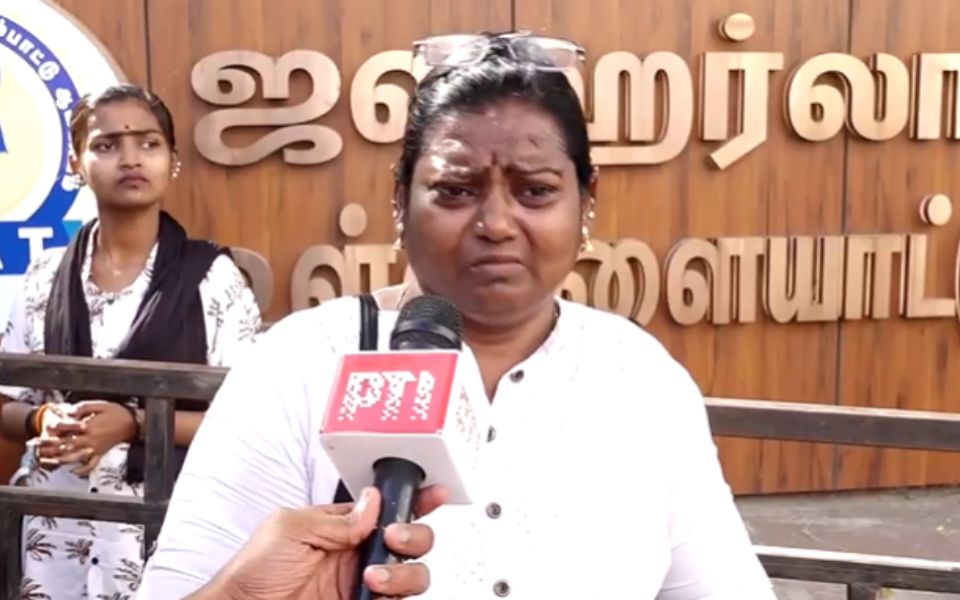
"... the time taken to ultimately give effect to the final judgement of the Supreme Court gives rise to some sort of a thinking in the mind of the people: is justice really functioning?" Hegde told PTI here.
"Because ultimately when the highest court gives a verdict and constitution of law provides one review -- may be a mercy petition before the President, you (the convicts) make a joke out of that. There were multiple petitions", he noted.
Hegde said there should be some system to prevent "such misuse", adding he does not buy the argument that everybody has a right to challenge it as long as it's permissible in law.
On whether he favoured time-bound trial for heinous crimes, Hegde said every trial should be time-bound.
"Unfortunately, the system gives room for large delays; I think all concerned should sit and apply their mind to avoid this large delays and on how fast we can dispose of litigations.
"People take advantage of this, because of large delays lot of speculative litigation comes into the system which will spoil people's confidence in the system", he said.
The former Karnataka Lokayukta said he did not think that the ultimate hanging of Nirbhaya's accused has sent any message in regard to speedy delivery of justice.
"At the most what we can say is justice will ultimately prevail but it took a long time", he said.
Let the Truth be known. If you read VB and like VB, please be a VB Supporter and Help us deliver the Truth to one and all.
No 'bacterial infection' found in bodies of 4 Mumbai family members who died after eating watermelon
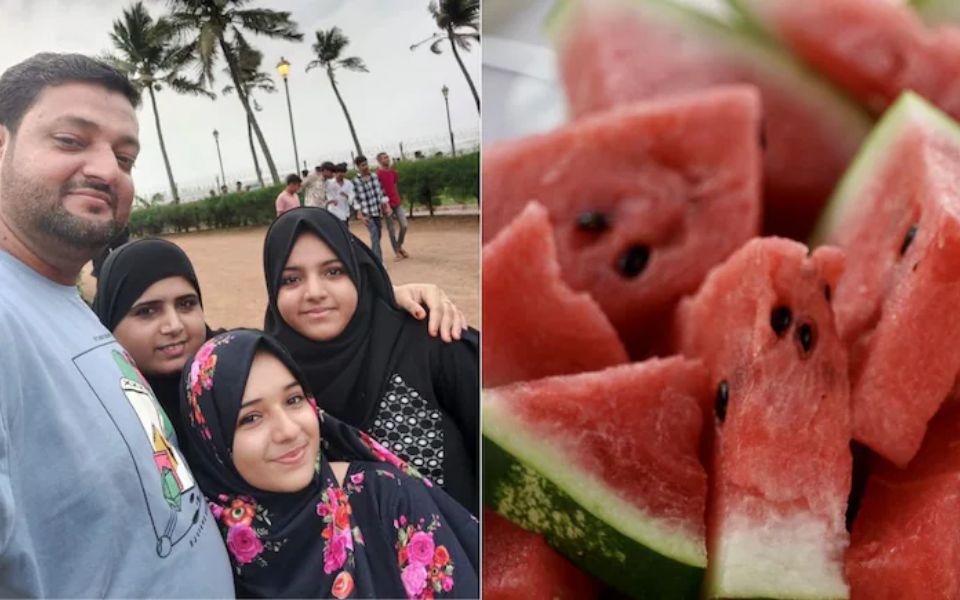
Mumbai (PTI): The initial report submitted by the microbiology department of a Mumbai-based state-run hospital has said no "bacterial infection" was detected in the bodies of four family members, who died after consuming watermelon recently, officials said on Wednesday.
The Dokadia family, residents of Ghari Mohalla on Ismail Kurte Road, had hosted a get-together of relatives on the night of April 25. At around 1 am (on April 26), hours after the guests had left, Abdullah Dokadia (40), his wife Nasreen (35), and daughters Ayesha (16) and Zaineb (13) ate pieces of a watermelon.
They suffered severe bouts of vomiting and diarrhoea in the early hours of April 26 and were rushed to a local hospital before being referred to the government-run J J Hospital where all four died during treatment.
After the incident, Mumbai police, forensic experts and Food and Drug Administration (FDA) officials visited the house and had collected samples of every food item that constituted the family's last meal, including 'chicken pulav', watermelon, water, and other foodstuffs, and sent them to the Forensic Science Laboratory for analysis.
After the post-mortem of the deceased, their viscera was preserved for chemical analysis.
As the probe is underway, the microbiology department of the state-run J J Hospital has submitted its initial report to the police.
"As per the report, no bacterial infection has been detected so far in the bodies of the victims. No bacteria was found in their blood," the official said.
The exact cause of the death will be known once the forensic science lab submits its report, he said.
"The report will also clarify whether any food items consumed by the family members during the day contained anything poisonous," the official said.