Prima facie no role of Priyank Kharge in contractor's suicide case: Minister Parameshwara
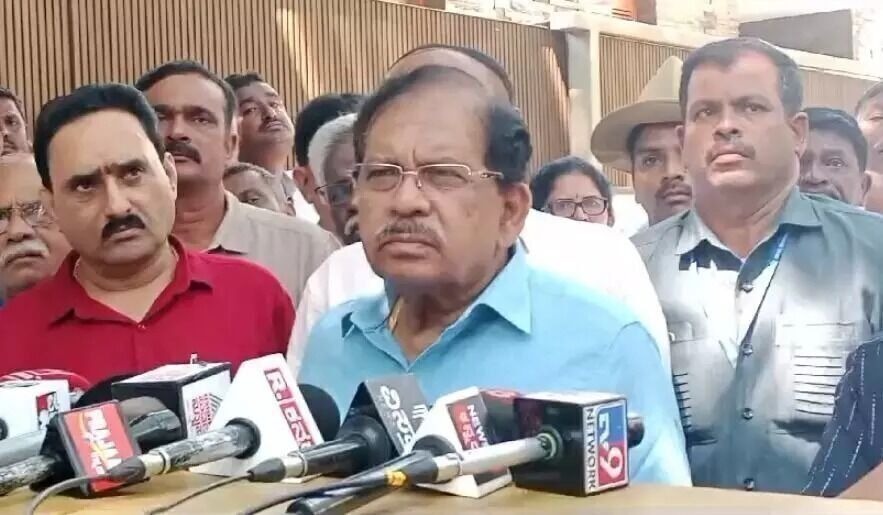
Bengaluru (PTI): With the BJP demanding the resignation of Minister Priyank Kharge in connection with the suicide of a contractor in Bidar, Karnataka Home Minister G Parameshwara on Wednesday citing police department said the former prima facie has no role in the case.
He also said a CID's probe report will bring out the truth.
The contractor had left behind a seven-page note in which he made allegations against a person who is said to be Kharge's aide.
The BJP has demanded that Chief Minister Siddaramaiah should ask Kharge to resign immediately, and has set a January 4 deadline to hand over the case to the CBI, failing which the party has threatened to lay siege to the minister's residence after organising a huge rally in Kalaburagi.
"Priyank Kharge has himself clarified that he has no role in it (suicide case). We have ordered a CID probe. Let's see what comes from the investigation. Our department is also saying that prima facie it has come that Kharge has no role. Let the investigation report come. We will get to know," Parameshwara told reporters in response to a question.
Sachin Monappa Panchal, a 26-year-old contractor, ended his life by falling under a train on December 26, leaving behind a suicide note alleging that Raju Kapanur, a close associate of Kharge, had issued death threats demanding Rs 1 crore for awarding a contract.
The note also mentioned the names of seven others who were accused of cheating by not awarding him a contract, despite taking a Rs 15 lakh bribe.
The contractor alleged that they threatened to kill him if he failed to pay the Rs 1 crore.
An FIR was registered against Kapanur and five other Congress leaders in Kalaburagi on Saturday on the charge of allegedly giving supari (contract) to murder a few BJP leaders, including MLA Basavaraj Mattimadu, based on the suicide note.
Responding to a question on BJP MLC CT Ravi writing to Director General of Police alleging that he was arrested and ill-treated by the police in Belagavi last month, acting on the instructions of Deputy Chief Minister D K Shivakumar and Minister Laxmi Hebbalkar, the home minister said, the DGP will respond to it as it is addressed to him.
"Police usually follow the instructions of the chief minister and the home minister. It will not be possible for them to follow others instructions. He (Ravi) has made allegations, DGP will respond to it," he said.
Ravi was arrested based on Minister Hebbalkar accusing him of using a derogatory word against her in the Legislative Council, during the Legislature session in Belagavi last month.
To questions regarding CID, which is probing the case, seeking Legislative Council Chairman's permission for spot mahajar (spot investigation process) inside Council, and how it will be done and will there be reconstruction of the scene there, Parameshwara said, it is left to CID as to how they will do it.
"The case has been handed over to the CID to investigate and give a report. What methodology they follow, it is left for them...Let's see what the Council Chairman decides on permitting mahajar...," he added.
To a question on his New Year message to the opposition, which he had earlier accused of targeting the government unnecessarily, Parameshwara said, "We (Congress govt) have said that we want to make the state a peaceful garden for all communities. We expect the opposition to cooperate towards achieving this and for the development of the state. I appeal to them. We are not saying don't criticise us, but if there is positive criticism, it will be good."
If the opposition gives suggestions to the government in the interest of the people, it will be accepted, he said.
On the possibility of him getting a bigger responsibility in the New Year if there are political changes in the state, amid speculations about leadership change, Parameshwara said, "I don't know about it...I have always successfully fulfilled all the responsibilities given to me by the party so far.
"I joined the party in 1987, after returning from abroad. From then to till now, I have fulfilled all the responsibilities given to me by the party. I have not done anything against it."
Let the Truth be known. If you read VB and like VB, please be a VB Supporter and Help us deliver the Truth to one and all.
US–Iran first round direct talks conclude in Islamabad: Report
_vb_48.jpeg)
The first round of direct talks between the United States and Iran, held in Islamabad, has concluded, Al Jazeera reported citing sources close to the development.
According to the report, following the discussions, delegations from both sides agreed to exchange written documents, a move aimed at ensuring clarity and consensus on the understandings reached during the meeting.
Both the Iranian and US delegations arrived in Islamabad on Saturday, April 11, amid high security for the peace talks.

_vb_17.jpeg)